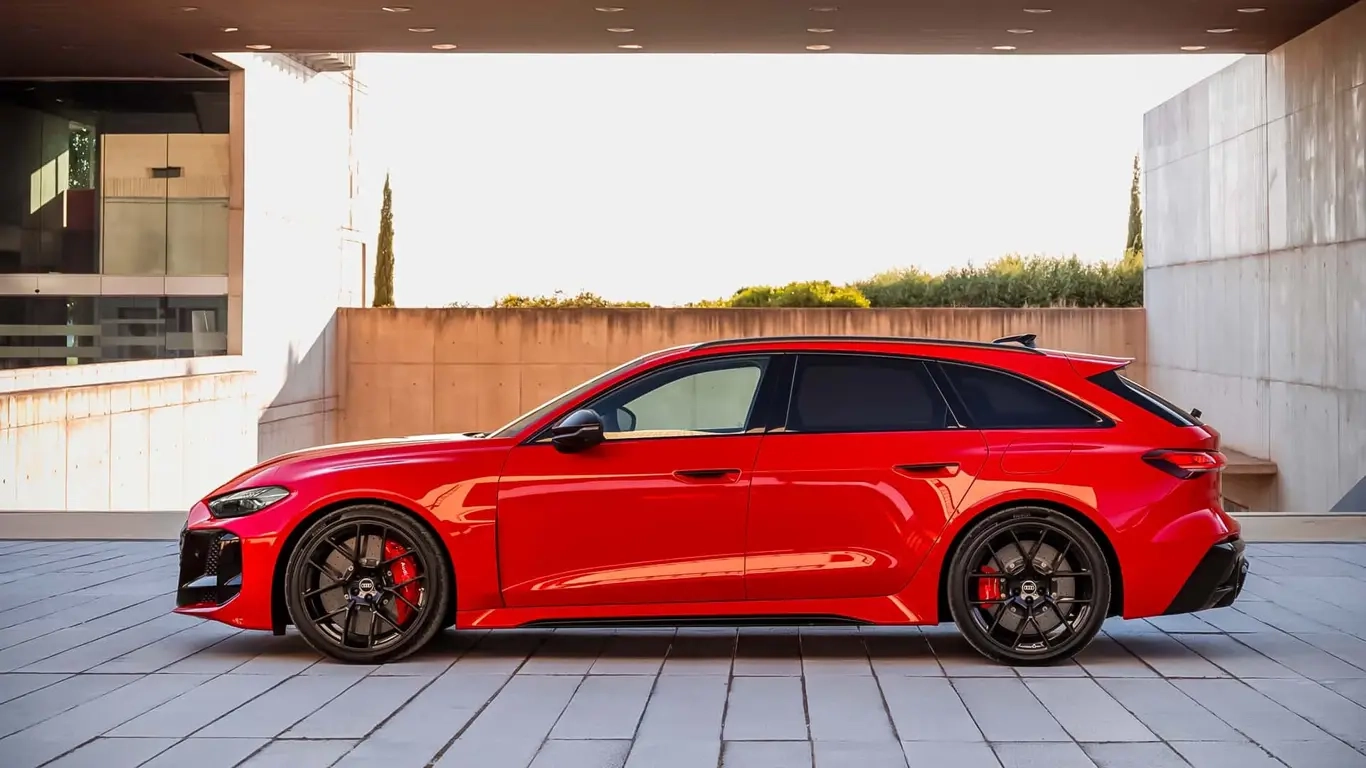

Audi has officially explained why the new RS5 has become the heaviest sport wagon in the brand's history, defending the switch to plug-in hybrid as a strategically inevitable step. The weight has increased to 2,370 kg for the Avant version and 2,355 kg for the sedan—figures that would have seemed incompatible with the philosophy of RS models just a few years ago. The main reasons are the shift to a complex hybrid architecture with a 22 kWh battery and the larger body dimensions.
The head of Audi Sport acknowledged some weight gain in a statement but emphasized that the new RS5 feels light and precise. The company explains this is due to electromechanical torque vectoring on the rear axle and the new RS sport suspension, which leverage the PHEV system to improve responsiveness and stability. Audi assures that these technologies compensate for the heavy battery placed under the cargo area.
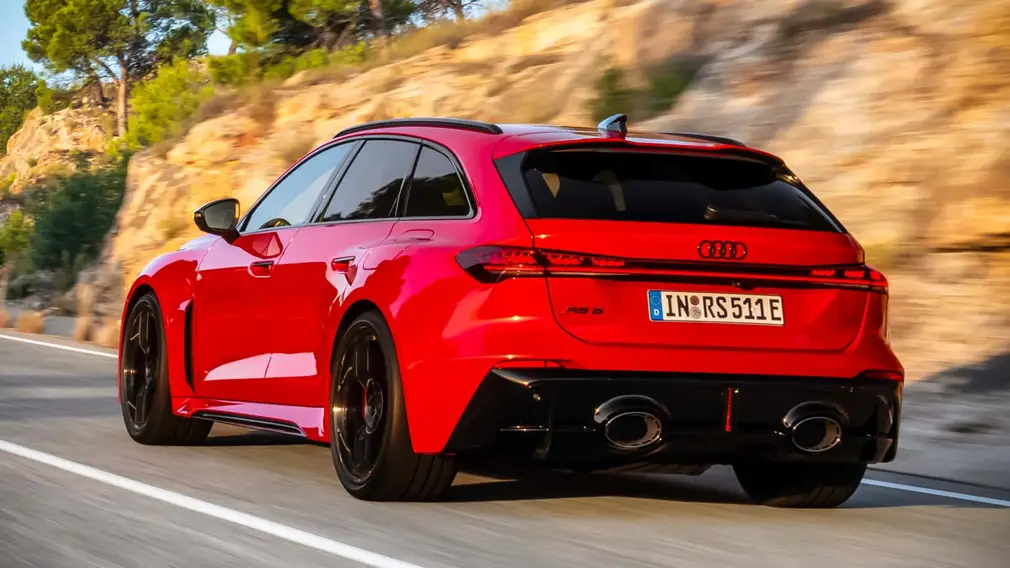
The historical contrast is stark. The first RS2 Avant from 1994 weighed just 1,595 kg. The modern RS5 is 775 kg heavier—a clear indicator of how safety requirements, electronics, and hybridization have transformed sports cars. Compared to the RS4 Avant B9 alone, the gain is 625 kg. Even optional ceramic brakes, which save 30 kg, barely impact the overall mass.
Nevertheless, Audi sees hybridization not as a threat but as a key to the future. The RS5 is the first PHEV from Audi Sport and paves the way for the next, even heavier RS6 with an electrified V8. The reason for the transition is obvious: European eco-regulations give sports cars a chance to survive only if they offer electric capabilities and significant emission reductions.
Audi calls this a necessary compromise: keeping powerful models on sale by fitting them into environmental requirements without losing their driving appeal.