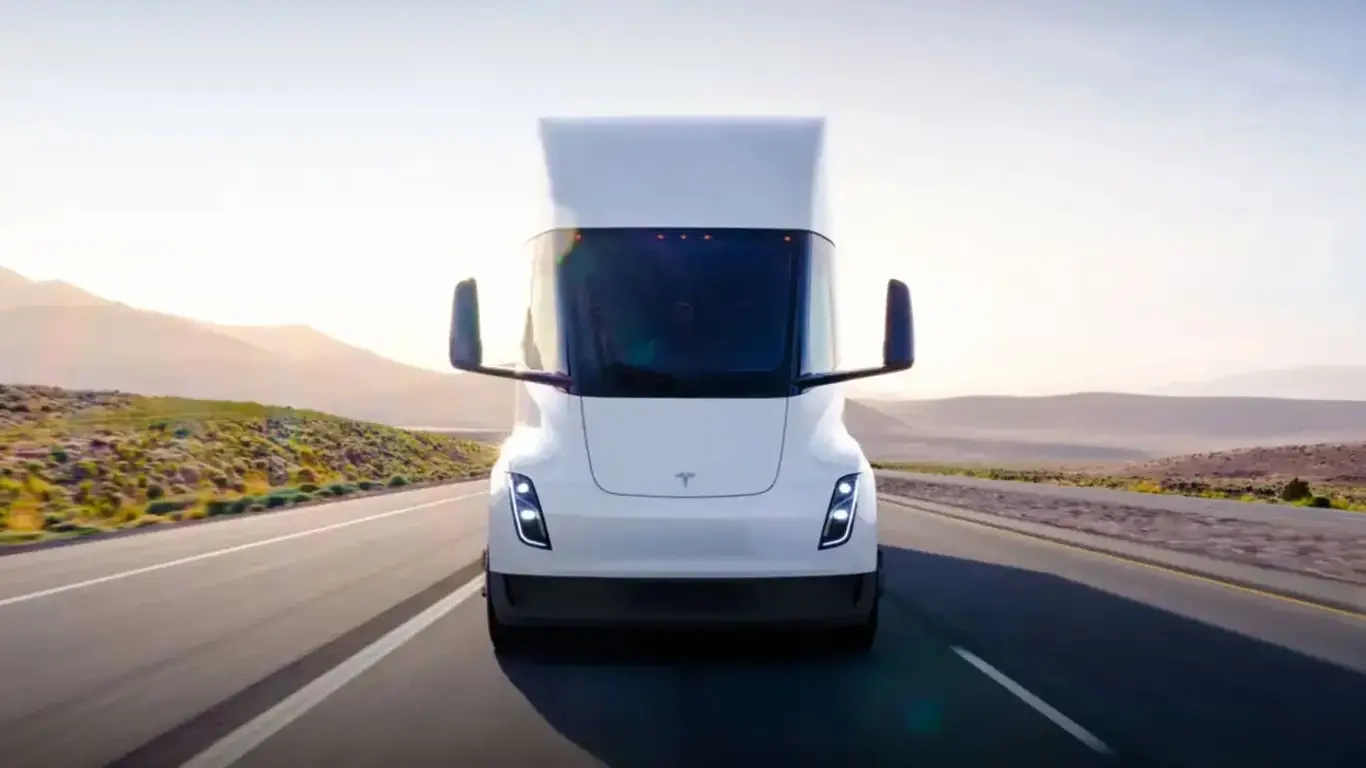

Tesla has revealed new details about its electric Semi truck, with a key claim focusing on battery longevity. According to the company, the battery is designed to last up to a million miles, making the model particularly attractive for commercial carriers.
Weight Issue Addressed
For a long time, the main drawback of electric trucks was considered to be battery weight. However, Tesla states it has managed to reduce the Semi's weight by approximately 450 kg, bringing its payload capacity closer to that of diesel counterparts.
Combined with the weight allowance for electric vehicles permitted in the US, this enables hauling up to 45,000 pounds of cargo without sacrificing efficiency.
New Architecture and Technologies
Tesla employs an unusual powertrain layout with two rear axles. One handles traction and acceleration, while the second is for efficient highway cruising, with the first disengaging at higher speeds.
The truck also incorporates components from the Cybertruck, including battery cells, electronics, and a 48-volt architecture. This move has reduced system complexity and wiring mass.
Charging and Economic Benefit
The Tesla Semi supports charging at up to 1.2 MW, allowing the battery to be replenished to 60% in just 30 minutes. The company has already begun deploying its Megacharger network for commercial transport.
According to Tesla's calculations, operating the Semi costs about 50% less than diesel on energy in California and 20% less on average nationwide, making the model competitive for businesses.
Outlook and Production Launch
Tesla plans to scale production to up to 50,000 trucks per year at a new factory in Nevada. However, the project has already faced delays, so the timeline for reaching full capacity remains uncertain.
Nevertheless, given the stated specifications and reduced ownership costs, the Tesla Semi could become a key player in the electric truck market.