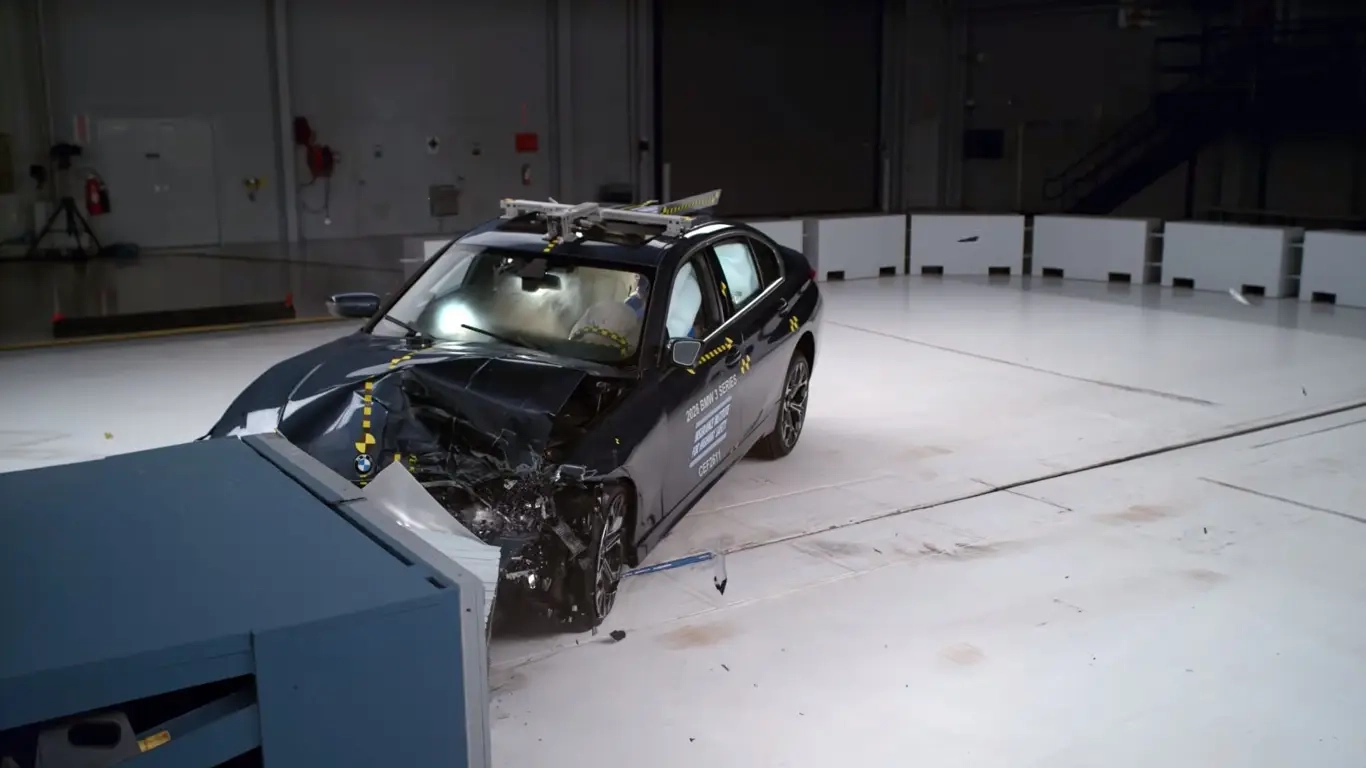

The current-generation BMW 3 Series (G20) is showing its age. In the IIHS moderate overlap front crash test, the 2026 model year sedan earned an Acceptable rating, not the top Good score.
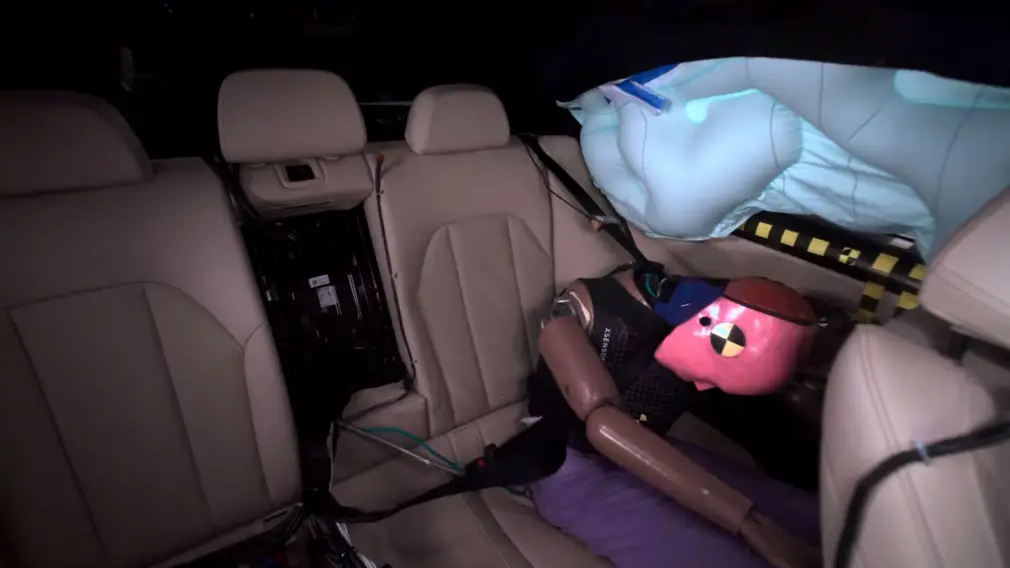
The issue wasn't with the driver but with the rear passenger. During impact, the lap belt slid from the dummy's pelvis onto its abdomen. In a real crash, this increases the risk of abdominal injuries. The test simulates a head-on collision with a stationary barrier at 40 mph (64 km/h), with 40 percent of the car's front end overlapping on the driver's side.
The driver seat holds an average-size adult male dummy, while the rear seat has a dummy representing a small adult female or a 12-year-old child weighing about 49 kg. Protecting such passengers is increasingly becoming a weak point for models that used to breeze through older criteria.
There are also issues with other systems. The US-market BMW 3 Series headlights were criticized for low-beam glare and insufficient high-beam visibility to the left on straight roads. The front crash prevention system was rated Marginal, performing especially poorly with motorcycles. The seatbelt reminders also got a Marginal rating due to insufficient loudness and activation delay.
The good news for BMW is that the next generation is imminent. The G20 is expected to be replaced by the G50 by November 2026 at the latest. In the US, the new 3 Series will initially launch in 330, 330 xDrive, and M350 xDrive versions. The M350 xDrive replaces the M340i xDrive and retains a turbocharged inline-six.
The 330e hybrid is expected to follow later in 2027, with the new M3 arriving in the second half of 2028. For the current 3 Series, this test isn't a disaster but an unpleasant reminder: today's safety isn't just about a rigid body and front-seat protection—it's also about how well the seatbelt restrains a rear passenger.