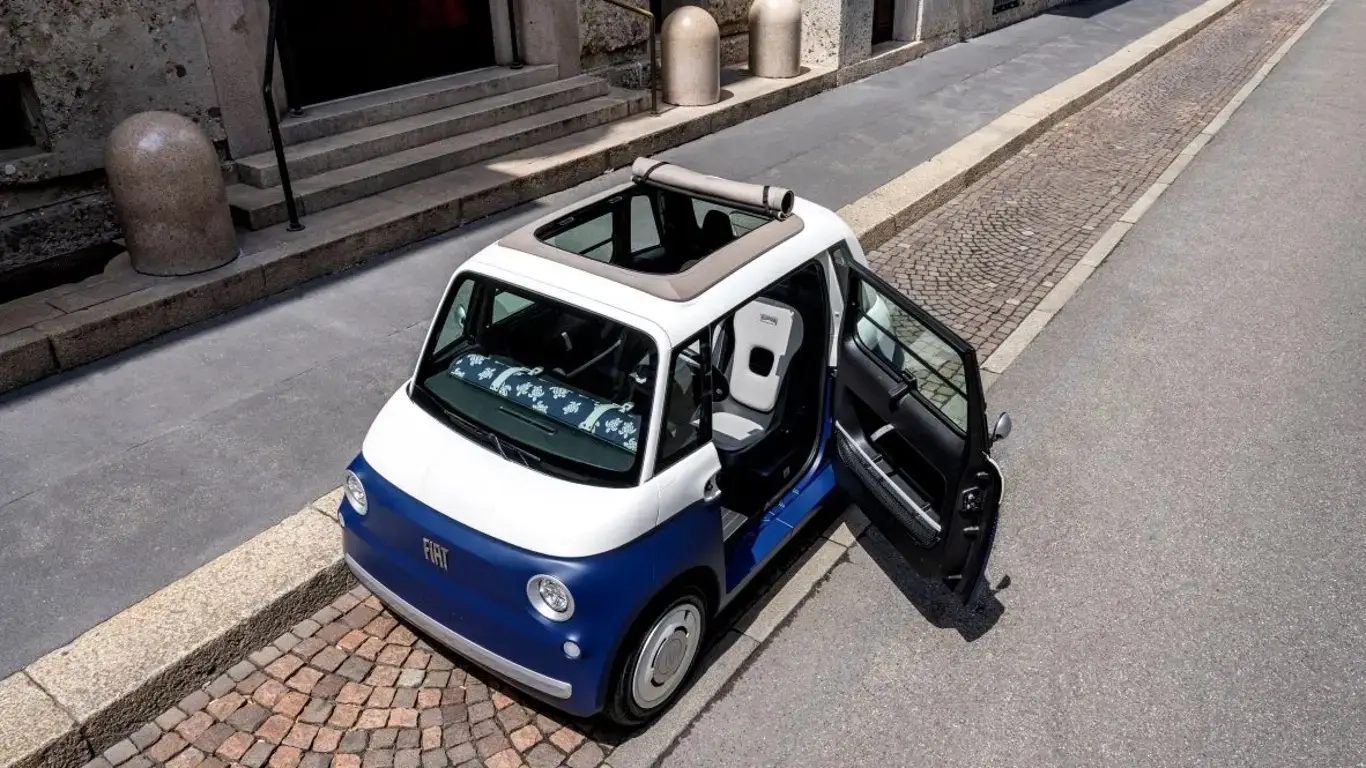

A brand-new electric vehicle. With a factory warranty. And one of the cheapest ways into electric motoring you will find anywhere — it sounds too good to be true. And then the catch turns up: this is not a car at all. Fiat has opened UK orders for the electric Topolino, and technically it is not a car but a quadricycle. Pricing starts at £8995 — around $12,000 at today's rates.
Beneath the modest body sits a 6 kW electric motor and a 5.5 kWh battery. Top speed is 45 km/h, and WLTP range tops out at 75 km. By car standards, that is nothing. But Fiat is not pretending otherwise: the Topolino never sets out to replace a proper car. Its world is city blocks, short hops, small deliveries, weekend runs to the cottage, resort towns and daily routes that never touch a fast road.
The controls could hardly be simpler: a single-speed transmission and a three-way selector — Drive, Neutral, Reverse. Inside are two offset seats and up to 63 litres of storage. There is even a signature touch — the Dolce Vita Box, a fabric bin on the dash for odds and ends. And here lies the whole point: the Topolino is not selling Sandero-style practicality, it is selling an image. The retro design is a direct bow to the legendary Fiat 500 Topolino of 1936–1955.
Its real rival is not the Dacia Spring but the Citroen Ami and other lightweight city EVs. These little machines have one big advantage — a dirt-cheap entry price and minimal running costs. The downside is hard limits on speed, range and versatility. For a family this is a second or third vehicle. It will never be the only car — and it does not pretend to be.
For plenty of buyers a machine like this will always be a hard sell. But for gated communities, parks, resort-town car sharing and corporate fleets, the format suddenly makes sense. The little Fiat proves a simple thing: in Europe, the affordable EV is less and less a car, and more and more something between a car and personal urban transport.