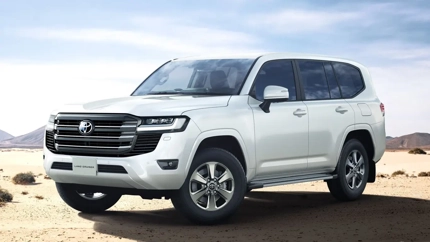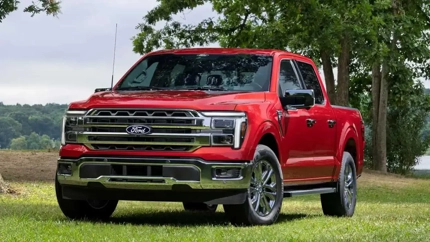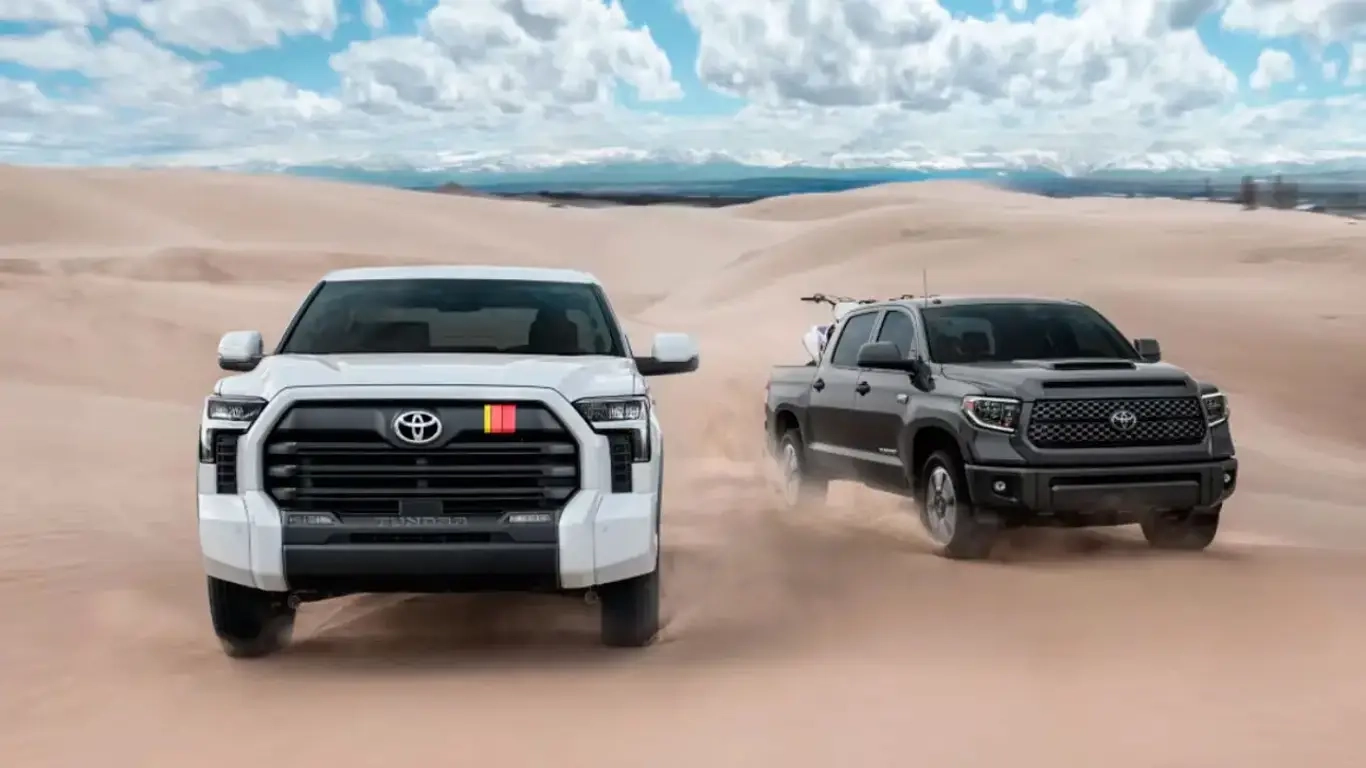

The Toyota Tundra in Japan isn’t a familiar sight in the neighbor’s driveway — it’s a rare, oversized guest. And that guest has a problem: the factory suspension was built for America, not for Japanese roads, tuning culture, or heavy-duty use. KYB decided to answer that exact demand, launching the 2000 Series kit for the 2022-and-newer Tundra on the domestic market.
This isn’t a cosmetic add-on. It’s a full shock absorber kit for the entire truck. The price is 462,000 yen — roughly $2,860. That’s a serious sum. But set against the truck’s own starting price in Japan, around 12 million yen, it starts to look less like an indulgence and more like the cost of doing business: if you’re driving something this big, you budget for it properly.
KYB built the 2000 Series for desert trails and off-road punishment in North America, not for a quiet trip to the supermarket — the kind of use where a truck grinds away at its limits for weeks on end. An aluminum body, a monotube design, a cylinder bore up to 60mm — behind those numbers sits something simple: less heat buildup under hard driving, tighter body control at speed, and none of the wallowing that wears a driver down on a long haul.
The bigger picture here is about ownership costs on a heavy import truck: budgeting not just for fuel and registration, but for suspension, tires, brakes, and parts availability from day one. Anyone running large wheels, driving unpaved roads, or towing a trailer runs into the same wall fast — it’s not really about parts pricing, it’s about the fact that very little on the market is actually built for this truck’s real-world mass.
The real competition here isn’t crossover struts — it’s heavy artillery from Bilstein, Fox, Old Man Emu, and other truck specialists. KYB’s edge is Japanese manufacturing and a reputation you don’t buy in one season. But the price tag immediately filters out anyone just looking to “replace a leaking shock on the cheap.”
None of this is about a fancy name on the box. It’s about a big truck that stops wearing out its driver and stops rocking on its own body once the suspension is right. For the Tundra, that’s closer to a safety question than tuning for tuning’s sake.