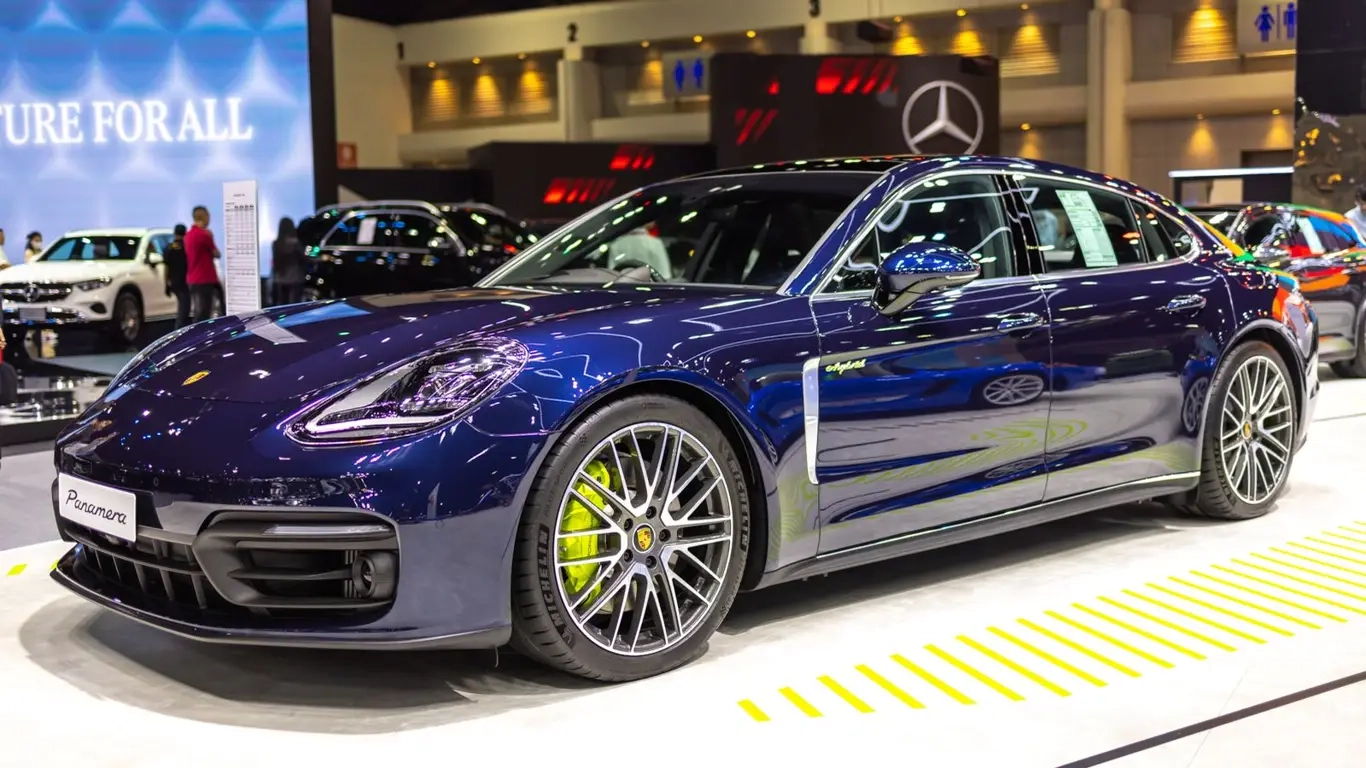

Porsche has begun reviewing the development strategy for its key sedan models—the Panamera and Taycan. New CEO Michael Leiters has initiated a major cost-cutting program amid slowing global sales and rising electrification project costs. The company is openly discussing the scenario of merging the two models into a single product line, according to sources cited by 32CARS.RU.
Currently, the Panamera and Taycan are two flagship models developed independently. The Panamera uses the MSB architecture and is expected to transition to the PPC platform, while the Taycan is built on the J1 platform and was previously slated to move to SSP Sport. Maintaining two full-scale engineering programs is becoming increasingly expensive. Merging them would allow for unified platform solutions, reduced investments, and continued presence in the premium sports segment.
Porsche already has experience with this approach: the brand sells gasoline and electric Macan models under the same name, and a similar strategy is applied to the Cayenne. Therefore, creating a unified Panamera/Taycan lineup, where internal combustion, plug-in hybrid, and electric versions coexist, appears to be a logical extension of the current strategy.
The models' dimensions are nearly identical—with wheelbases of 2950 mm and 2900 mm—which will simplify the design of the next generation. The long-wheelbase Panamera can offer format variability and expand the range of electric versions. Against the backdrop of €1.8 billion already written off due to platform program delays, consolidation becomes financially justified.
What the merged model will look like remains undisclosed for now. However, the Cayenne experience confirms that internal combustion and electric versions can have different stylistic solutions while maintaining Porsche's overall identity.