
Many drivers today consider 150,000 kilometers as significant mileage for a car, with 200,000 kilometers seen as a risk threshold and 300,000 kilometers viewed as exceptional. However, some engines defy these expectations. One such example is the Toyota 3RZ-FE, a naturally aspirated 2.7-liter inline-four that can cover 300,000 miles—over 480,000 kilometers—without requiring a major overhaul.
In the mid-1990s, Toyota replaced the legendary 22R-E with its successor, the 3RZ-FE. Engineers faced the challenge of maintaining simplicity and durability while boosting power and meeting stricter emissions standards. The result was a 2.7-liter engine, unusually large for a four-cylinder. It produced around 150 horsepower and 177 Nm of torque, solid figures for a pickup or SUV at the time.
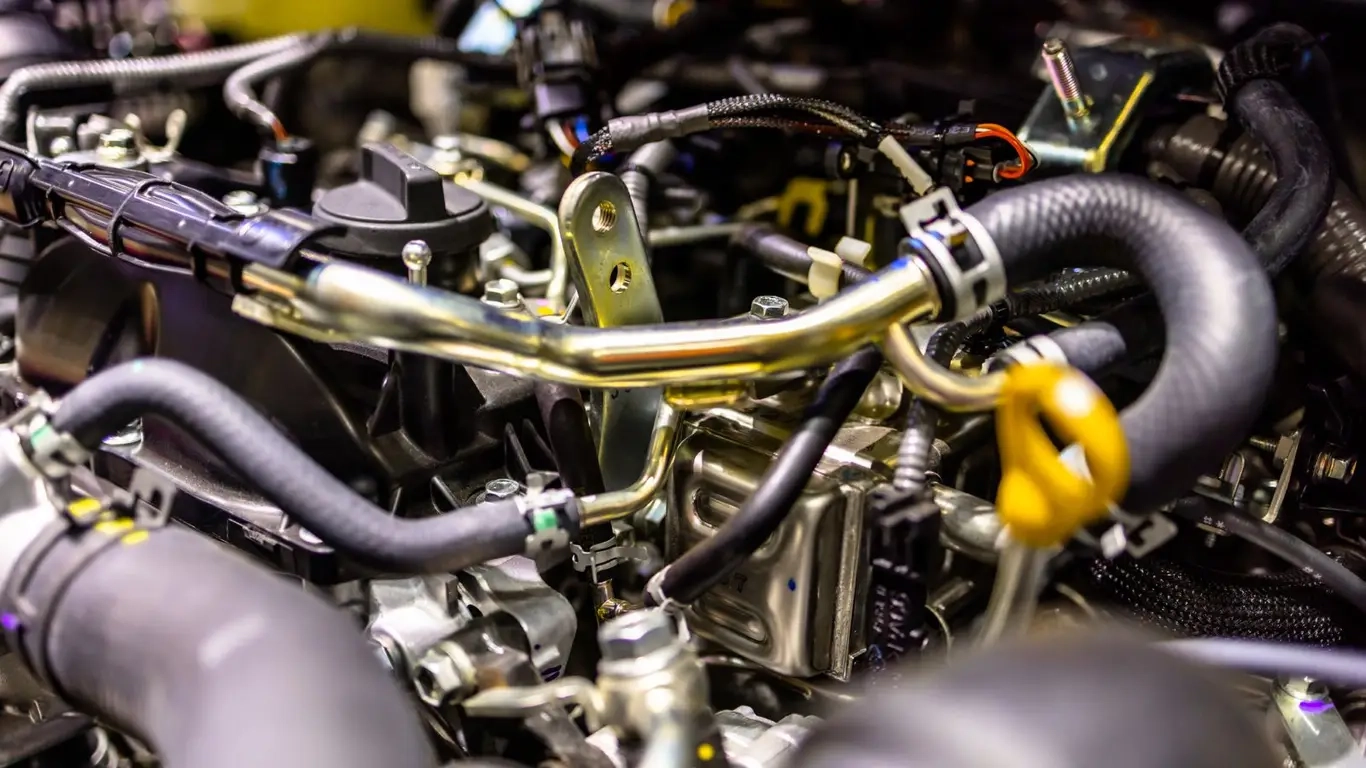
The 3RZ-FE's key strength lies in its robust construction. Its cast-iron block provides rigidity and resistance to overheating, while the forged steel crankshaft and overbuilt internal components ensure longevity. The engine operates without extreme stress, reducing wear. Balance shafts minimize vibrations, helping it run smoothly even after hundreds of thousands of kilometers.
This engine powered the first-generation Toyota Tacoma, Hilux, third-generation 4Runner, Land Cruiser Prado, HiAce vans, and the T100 pickup. The Tacoma paired with the 3RZ-FE became an icon on the American market in the 1990s. Compared to the Ford Ranger of that era, Toyota's 2.7-liter unit offered 150 horsepower versus 145, along with more torque and better fuel efficiency.
Real-world examples back up its durability. Owners have reported exceeding 300,000 miles—roughly 480,000 to 500,000 kilometers—while maintaining factory compression levels. In Russia, these vehicles often log 400,000 to 600,000 kilometers and continue to operate under demanding conditions.
Yet even legends have weaknesses. Over time, the 3RZ-FE's valve clearances can shrink. Without monitoring, this may lead to overheating and burnt valves, causing compression loss. Regular clearance checks are crucial for longevity. It's also advisable to replace the timing chain every 150,000 miles (about 240,000 kilometers) and spark plugs every 30,000 miles. Following standard oil change intervals helps preserve the cylinder-piston group with minimal wear.
The secret to the 3RZ-FE's endurance isn't high power but conservative engineering. While rivals pushed V6 engines to their limits, Toyota built a simple, sturdy motor that operated well within its capacity. This approach made it one of the most resilient four-cylinder engines of its time.
Today, vehicles with the 3RZ-FE remain popular on the used market. They appeal to buyers who prioritize durability and ease of repair over performance. With proper maintenance, reaching 500,000 kilometers isn't a fantasy—it's a realistic goal.