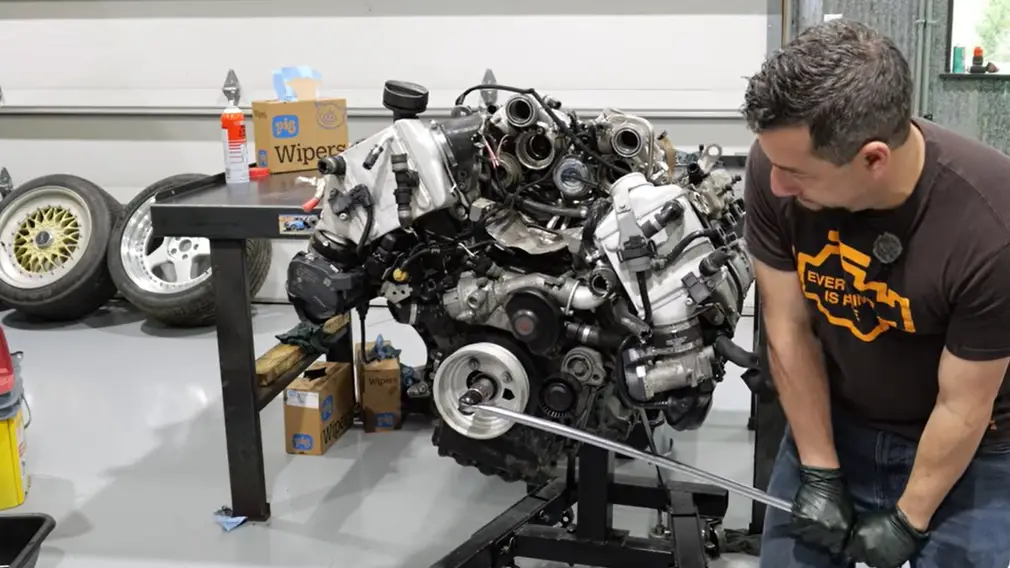
BMW engines have long been considered engineering benchmarks, but not all of the brand's powertrains have been equally successful. A teardown of the 4.0-liter twin-turbo V8 from the N63 series by the I Do Car YouTube channel vividly illustrates how the combination of complex design and real-world use can lead to significant consequences.
A Design with Inherent Risks
The N63's standout feature is its hot-vee layout, where the turbochargers and exhaust manifolds are positioned inside the cylinder block's vee. This approach reduces the engine's size and improves throttle response, but it also dramatically increases thermal stress within the engine bay. In everyday driving conditions, where airflow is much lower than in motorsports, this leads to component overheating. The result is compromised seals, timing chain wear, and lubrication system issues, which over time accelerate degradation and raise the risk of major failures.
Common Failure Points
Early N63 versions are prone to timing chain stretch, fuel system problems, and excessive oil consumption. If these warning signs are ignored, the situation can quickly escalate, potentially causing cascading engine failure. In the disassembled unit examined, nearly all cylinders showed damage, with pistons destroyed and serious block defects. Some components were completely ruined, and metal fragments contaminated the oil system, rendering the engine beyond repair.
Causes and Takeaways
Even with relatively good maintenance, these engines demand extra attention to detail. Regular oil changes, temperature monitoring, and prompt diagnostics are critical. Overlooking early symptoms like unusual noises or high oil consumption can lead to total engine loss. Experience shows that updated N63 versions from 2013 onward have become notably more reliable. However, early models remain a risky proposition on the used market, especially without a clear service history.
Conclusion
The story of this destroyed BMW V8 clearly shows that even high-tech engines require proper care. Otherwise, a premium motor can become a costly headache, with repairs often making little financial sense.