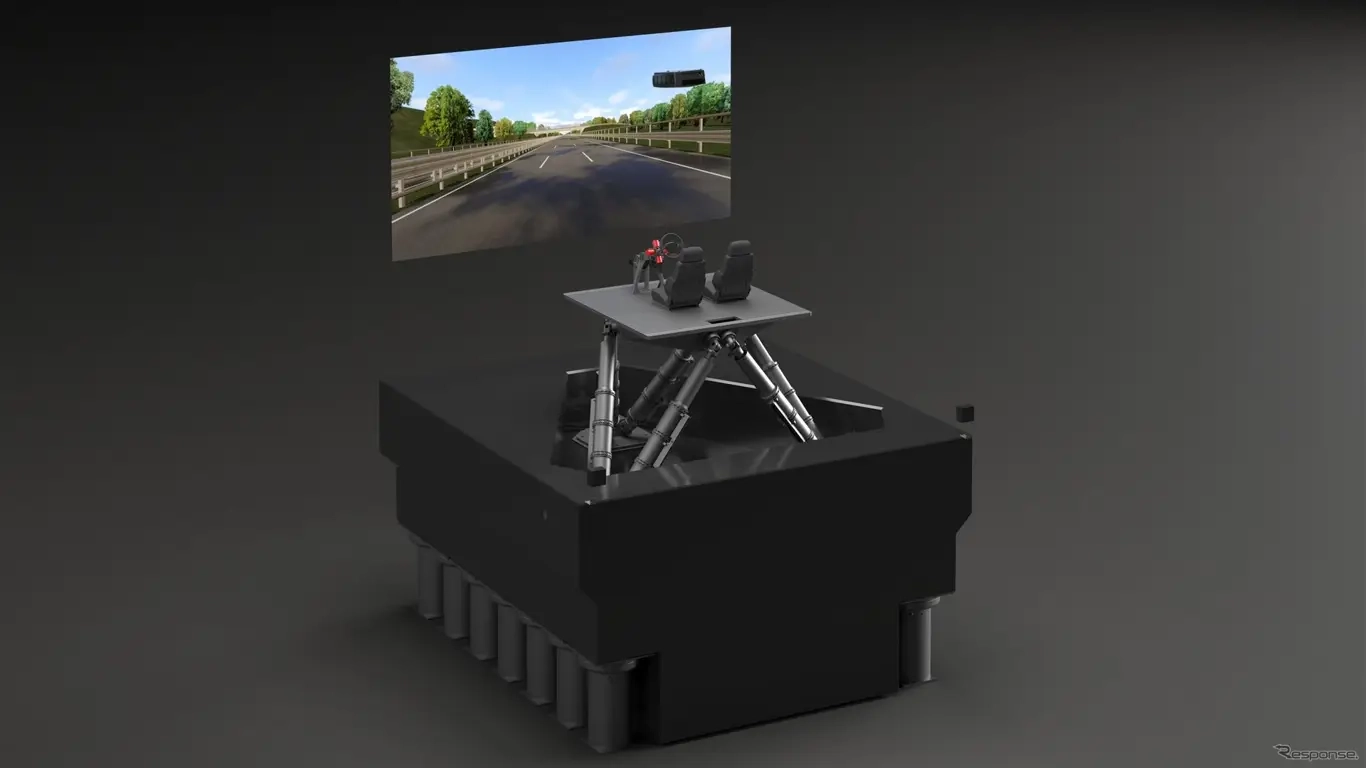

Daimler Truck has put a new simulator to use at its development and testing center in Wörth, Germany, designed to assess ride comfort and smoothness. Developed specifically by VI-grade, it’s not meant for games or flashy demos—its purpose is to give engineers an early feel for how a truck will behave on a real drive.
The system evaluates comfort from two seating positions at once. By reproducing vibrations and chassis responses, it lets engineers understand vehicle behavior before they hit the road for full-scale tests. This matters especially for commercial vehicles: drivers spend hours behind the wheel, and a vibration that might seem negligible in a car can quickly lead to fatigue in a truck.
Integrated measurement systems can collect data from the test bench alongside simulation input parameters simultaneously. The loads come from a mix of sources—computational models and real vehicle data—allowing virtual scenarios to be compared with real-world road conditions.
The setup also uses HBK nCode software for processing measurements, durability analysis, and finite element fatigue calculations. In short, Daimler Truck gains not just a subjective sense of “soft or stiff” but also concrete data on how vibrations affect component lifespan.
A simulator like this doesn’t replace real testing, but it allows bad solutions to be weeded out earlier. For future trucks, that could mean a quieter cab, reduced driver fatigue, and fewer late-stage fixes—when every mistake tends to be far more expensive.