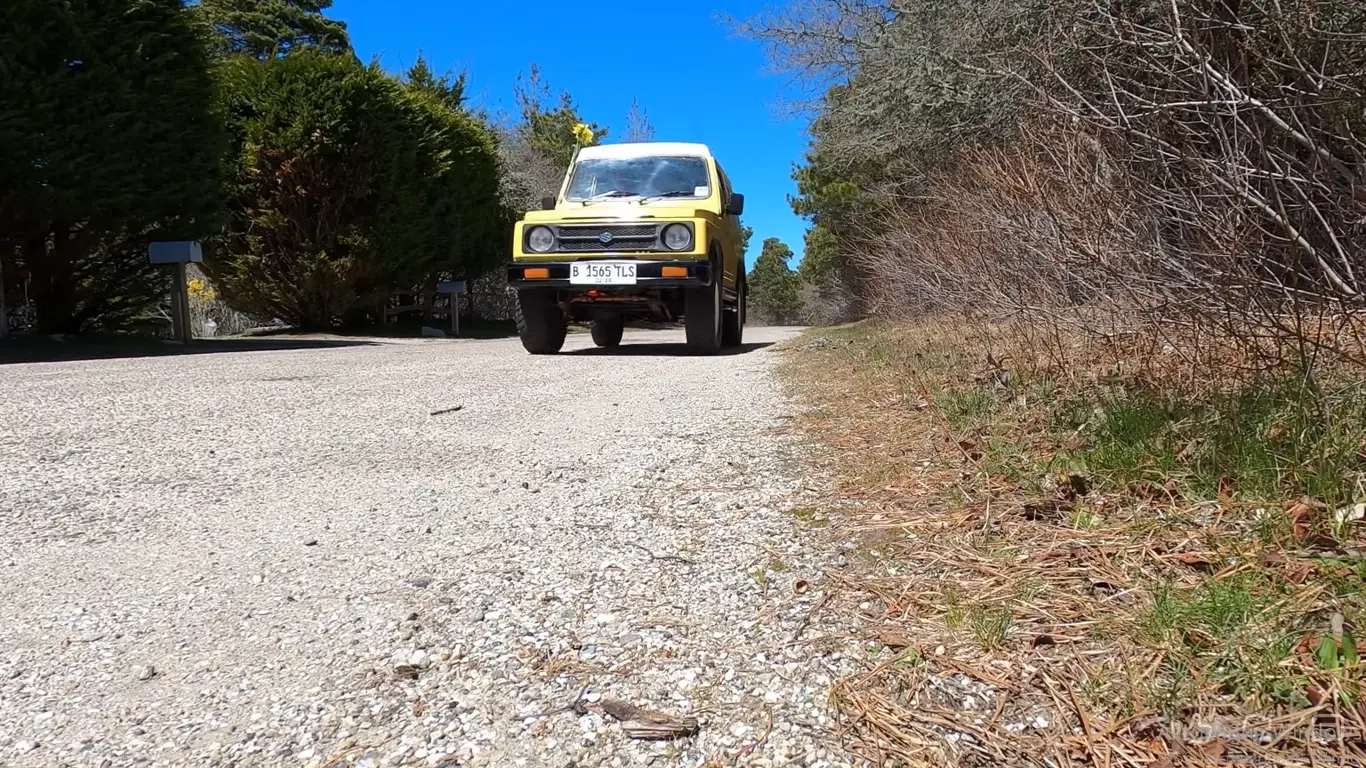

Five days, less than $5,000 — and an old gas engine was sent to the scrapyard of history. The owner of a Suzuki SJ410 blew the head gasket for the second time and decided enough was enough. Instead of repairing the 45-horsepower gasoline engine, the SUV got a 9-horsepower electric motor, and its range shrank to just 20–30 miles. An upgrade? Not exactly — and yet it works.
The builder behind the project, The Life of Troy, used a 72-volt D&D Motor Systems DC motor and a 500-amp Alltrax controller. The motor was mated through an adapter plate to the factory five-speed manual gearbox. The clutch was removed, but the gears and transfer case stayed put — the SUV kept its four-wheel drive. In the original video the car is called a Suzuki SJ410; Jimny and Samurai are market names for the related family of compact Suzuki SUVs.
Power comes from a golf-cart-style lithium iron phosphate battery: 72V, 105Ah. That works out to roughly 7.6 kWh — nearly ten times smaller than the battery in a modern mainstream EV. The pack took the place of the fuel tank, charges from a household 120V outlet in about five hours, and tops out around 50 mph. Not much. But for city driving, it doesn’t need to be.
The three priciest parts came to $3,644: $929 for the motor, $815 for the controller, and roughly $1,900 for the battery. The rest of the budget went to the charger, voltage converter, adapter plate, cables, mounts, and wiring. That’s without counting the donor vehicle itself or the five days of the owner’s own labor — neither made it into the total.
The secret to the speed of the build is cutting everything unnecessary. The SJ410 never had a vacuum brake booster, so there was no need for a separate electric vacuum pump. The owner also skipped any complex integration with modern car electronics and left the factory transmission exactly as it was.
But that low price comes with a price of its own — heavy specialization. Estimated consumption runs around 250–380 Wh/mile, and the 9-horsepower setup is built mainly for short trips around town. Want more range? Add more batteries — and immediately get more weight, more cost, and longer charging times. The next test for this project: data on the car’s weight, battery protection, and how the electric drivetrain handles off-road.