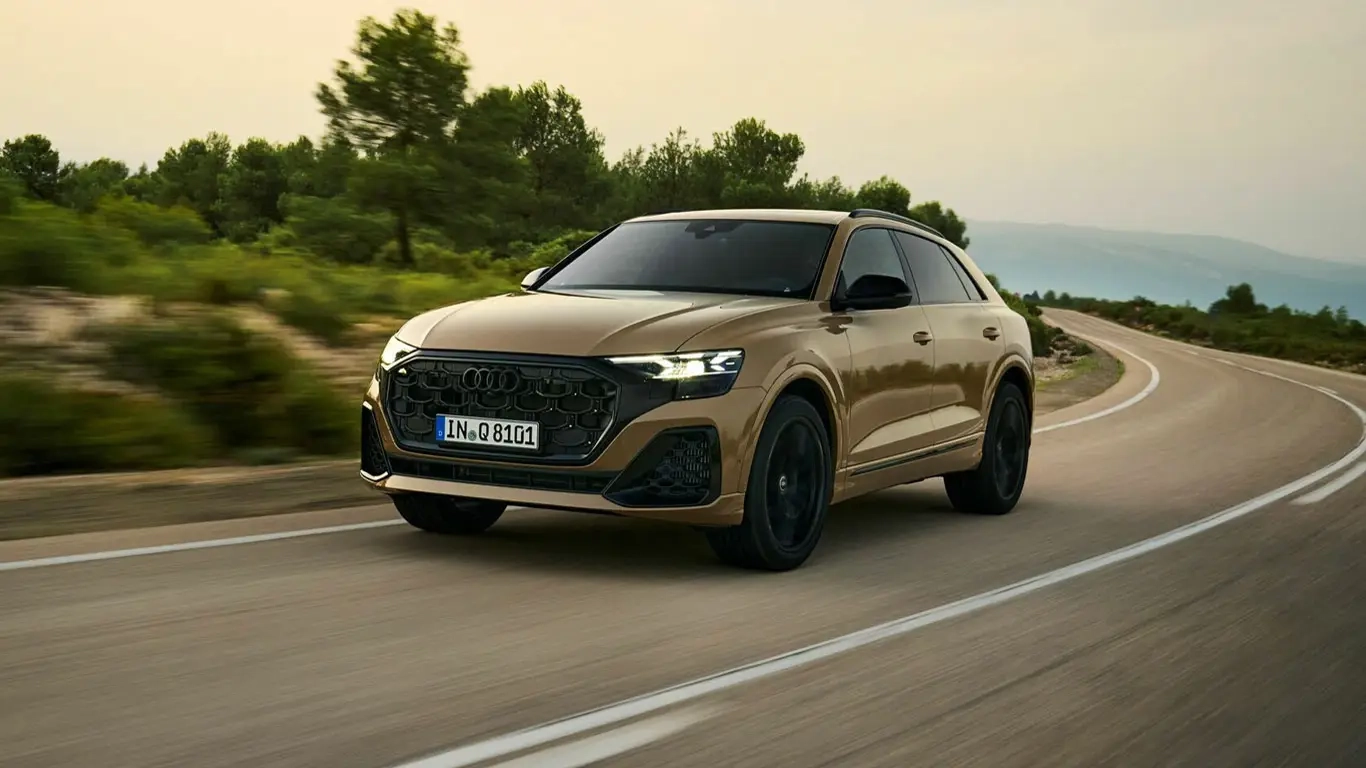

The bigger number in the name sounds like more car. It isn’t — if anything, it’s less. On the American market, the 2026 Audi Q8 starts at $75,600, while the base Q7 is priced at $62,000. That $13,600 premium buys a sleeker body — and costs you an entire row of seats.
The Q7 seats seven, the Q8 only five. The difference goes beyond the chairs. Maximum cargo volume on the Q7 reaches 68.1 cubic feet (about 1,929 liters), versus 60.7 cubic feet (roughly 1,719 liters) on the Q8. More than 200 liters disappear along with the third row.
Comparing starting prices alone wouldn’t be fair. The base Q7 comes with a 2.0-liter turbo four making 261 horsepower, while the Q8 launches straight into a 3.0-liter V6 with 335 horsepower. That same six-cylinder is also available on the Q7 — so buyers can erase the performance gap with a single option-list checkbox. Both models pair with an 8-speed automatic and standard quattro all-wheel drive.
Match the two on V6 power, and the differences come down to body and purpose. The Q7 is taller, longer, and clearly built for families who need a third row and real cargo room. The Q8 sits lower, is wider, and offers more rear legroom — engineers didn’t have to squeeze in an extra row of seats.
So does the pricier Q8 actually make sense? Calling it pointless is one writer’s opinion, not a fact. The Q7 is the more rational pick, especially for a big family. But Q8 buyers aren’t paying for space. They’re paying for design, a lower stance, and a standard V6 with no upcharge. A higher price tag here doesn’t mean more car — it means different priorities.
Audi previously updated the Q3 for the 2027 model year.