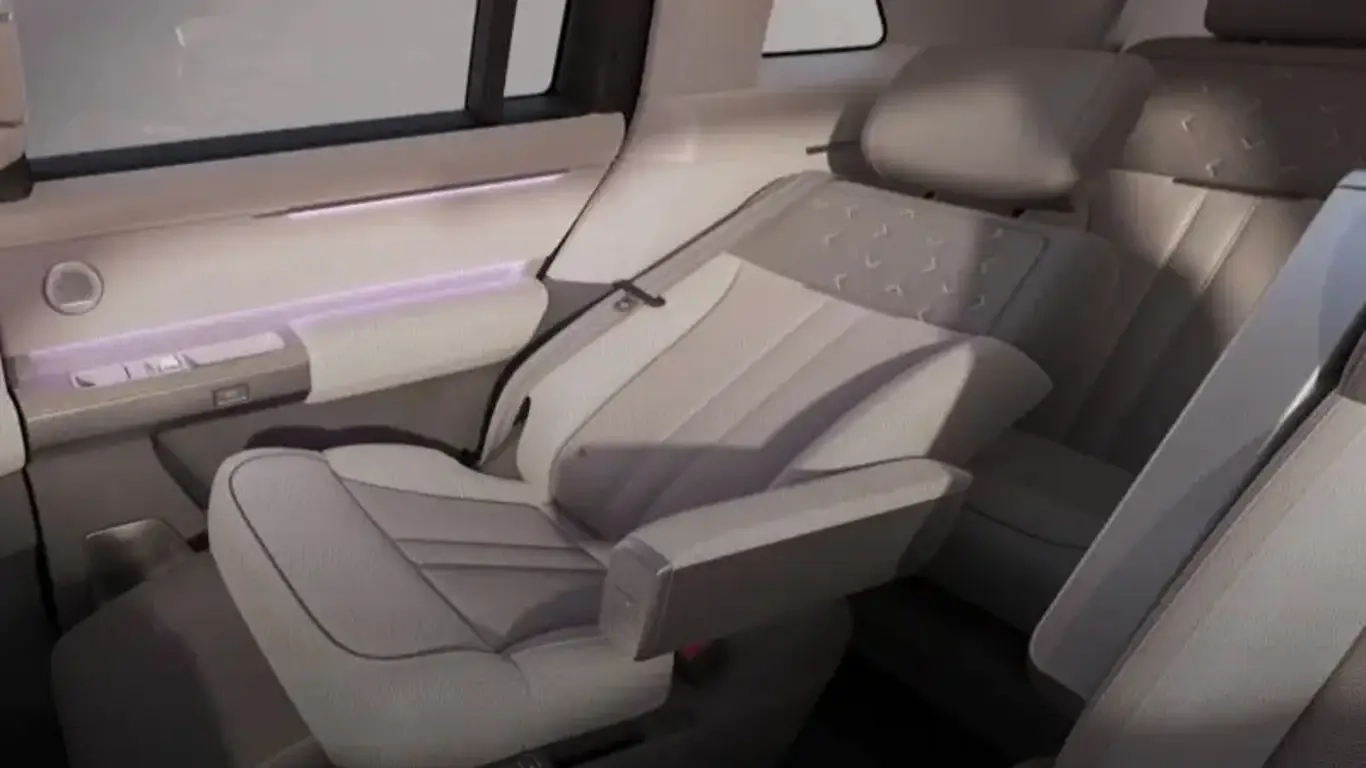

Nobody expected the biggest story about the Freelander 8 to be two individual “zero gravity” seats, not the locking diffs or air suspension. Yet those seats change the picture more than the boxy body or the off-road hardware. Second-row passengers get heating, ventilation, massage function and extendable leg rests, while a fridge, folding tables and a ceiling-mounted entertainment screen sit close by. The Freelander 8 is stepping out of the “big SUV” category altogether and into six-seat family territory, where the rear passengers get all the attention.
The cabin follows a 2+2+2 layout. The maker had already shown off a 46.3-inch panoramic display, a 15.6-inch central screen and physical buttons with separate rotary controllers. At 5,118 or 5,185 mm long with a 3,040 mm wheelbase, the Freelander 8 outgrows the old compact Freelander in more than just numbers: the name now stands for a full-size, three-row vehicle. The difference isn’t a few extra centimeters — it’s a whole new philosophy.
And that’s where the real shift shows up. Early coverage of the model revolved around traction control, locking diffs, air suspension and the angular body. But ahead of the reveal, the brand has been steadily pushing cabin comfort to the front instead of off-road prowess. A fridge and two proper second-row seats are becoming just as commercially important as the claimed off-road capability. An SUV sold on comfort is, in itself, an unexpected move.
Calling the Freelander 8 a new Land Rover, though, would be a mistake. JLR has licensed the Freelander name out to a joint venture with Chery; the new brand operates separately from the core JLR lineup and runs on its Chinese partner’s electric architecture. The first model is due to launch in China in the second half of 2026, with overseas expansion planned for later.
Pricing, the exact trim lineup and how the seats, fridge and screens get split between versions haven’t been revealed yet. So the next thing worth checking won’t be another interior detail — it’ll be the price list. That’s what will show whether business-class second-row seating comes standard or stays a privilege of the pricier trims.