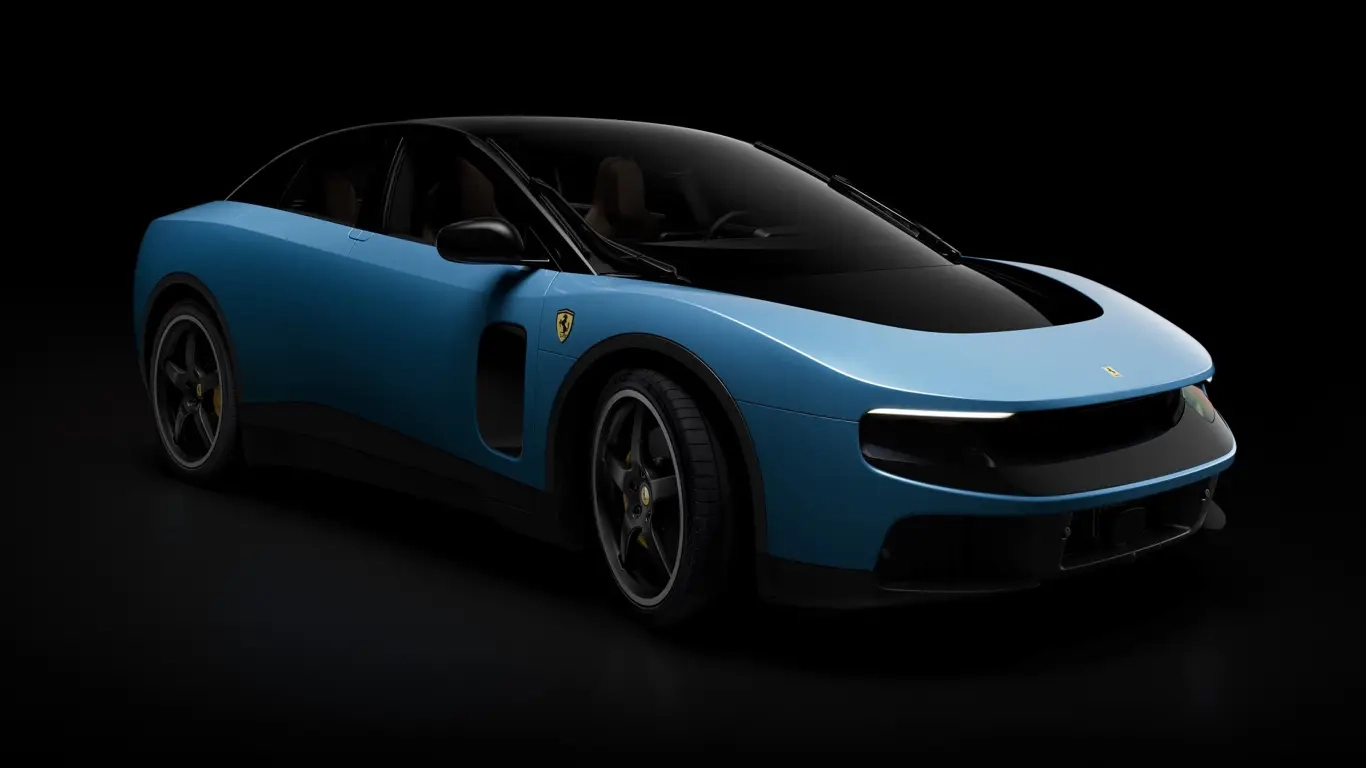

The internet passed sentence on the Ferrari Luce back in May. Buyers never heard it. Ferrari’s first electric car — and the most expensive series-production EV on the market — cleared its entire 2026 sales plan in under two months: just under 500 cars at €550,000 apiece, roughly $626,000. So reports the Financial Times. And not one of them has reached an owner yet, because customer deliveries only start in October.
The four-door, five-seat Luce was shown in Rome on 25 May 2026 — and the reaction was nothing like what Maranello had planned. The styling, shaped by former Apple designers Jony Ive and Marc Newson at LoveFrom together with Ferrari’s own style centre, was torn apart on social media within hours; people lined the Luce up against cars costing a fraction of the price. Former Ferrari boss Luca di Montezemolo suggested the company should “at least take the prancing horse off it”. In the first trading session after the premiere the shares lost more than 8%, the Financial Times notes.
Then the numbers spoke. Two sources told the paper that Ferrari’s quota — a little under 500 cars for 2026 — was already full in early July, roughly eight weeks after the debut. Most of the orders came from China: the Luce went on sale there in late June from 3.988 million yuan, about $589,000, and the 88 cars allocated to the country were taken almost instantly. Ferrari’s press office declined to comment, promising to talk about customer reaction when it publishes its half-year results on 30 July.
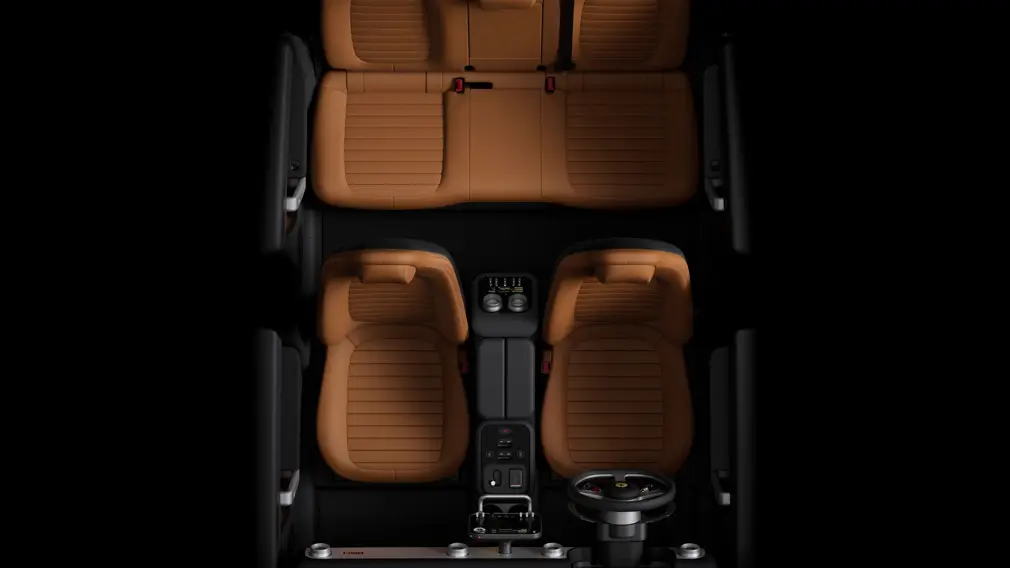
Ferrari boss Benedetto Vigna said back in May that the Luce was “clocking up orders” among existing and new customers alike. The order book stretching towards the end of 2027, though, covers the whole range rather than this single model — the company clarified that separately. A Ferrari spokesman explained the unusual shape as a demand of aerodynamics and admitted the design needs to be “digested” before it makes sense. Dealers, according to the Financial Times, were handed a blunt instruction: do not nudge traditional customers attached to petrol engines towards the electric car.
The run matters more here than the volume of the criticism. Ferrari, according to the Financial Times, plans to build around 2500 examples of the Luce by 2030 — roughly 600 cars a year, or about 5% of the brand’s annual sales. Set against fewer than 14,000 cars sold in the whole of 2025, almost 500 orders look impressive. They say nothing about mass demand for electric Ferraris, though: last year the company itself halved its own target for the share of EVs by 2030. Vigna, for his part, promises electrification will not touch the operating margin of around 30%.
The engineering under the Luce gives Ferrari more than one expensive model. Officially there are four electric motors with a combined output above 1000 hp, a 122 kWh battery, an 880 V architecture and charging at up to 350 kW. Range exceeds 530 km on the WLTP cycle, 0–100 km/h takes 2.5 seconds, 0–200 km/h 6.8 seconds, and top speed sits beyond 310 km/h. The detail nobody noticed while arguing about the styling: full power arrives only with launch control. In Range mode the car runs on 430 hp and rear-wheel drive, in Tour on 617 hp, in Performance on 986 hp.
The real test is Ferrari’s report on 30 July: that is when we learn whether the manufacturer confirms almost 500 orders and reveals how demand splits between China, the United States and Europe. And in August the first production Luce goes under the hammer at a Sotheby’s charity sale during Monterey Car Week — the Financial Times expects more than $1.1 million. For a car that social media compared to a computer mouse.