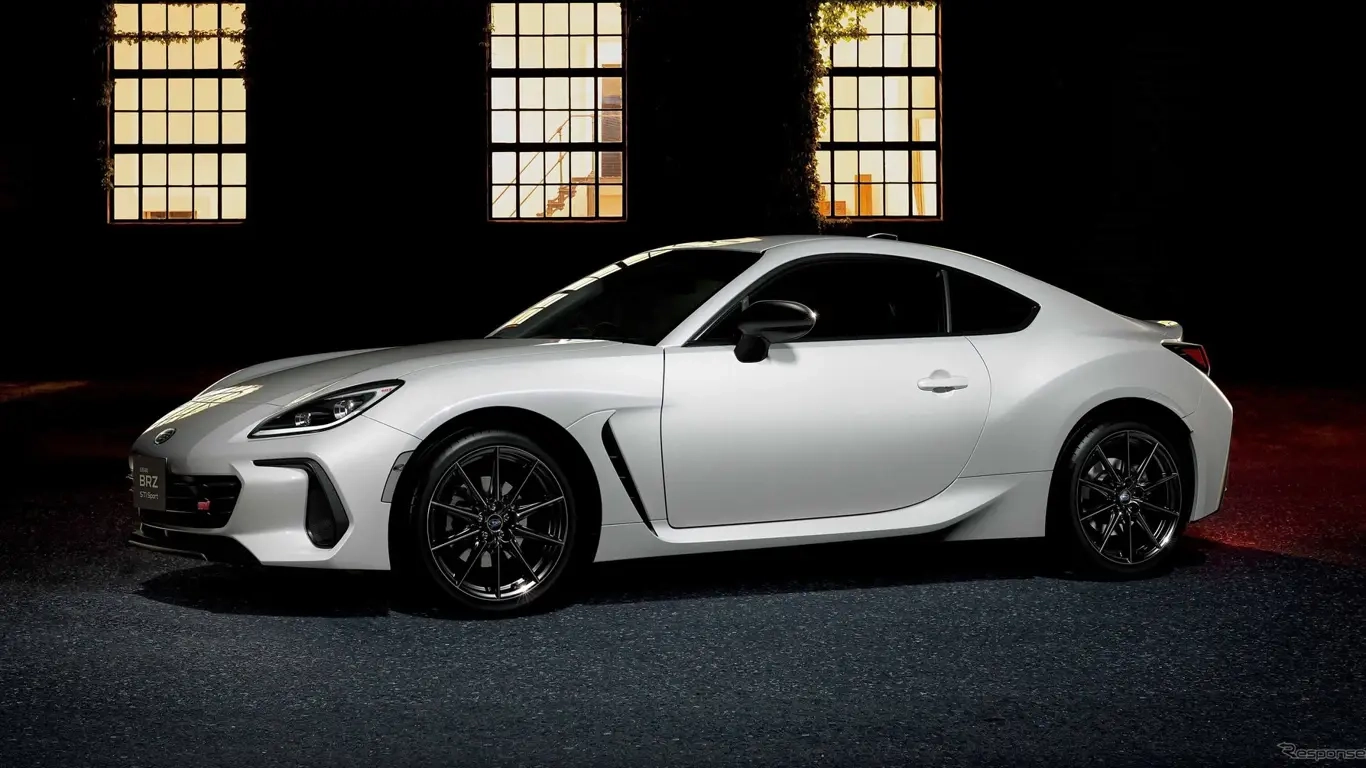

Subaru just did something nobody expected from this particular car. The BRZ — a coupe people buy precisely because there is almost nothing electronic between the pedal and the rear wheels — now carries the most sophisticated EyeSight in its history. And yes, it costs extra: every single version went up by 55,000 yen, with the entry-level six-speed manual now starting at 3,377,000 yen.
Subaru announced the update on 30 July 2026, and Japanese outlet Response.jp led with two things: a new manual shift lever structure and a wide-angle mono camera inside EyeSight. The second one is where the real story hides.
Until now EyeSight watched the road through a stereo camera: two lenses, one point of view. Now a wide-angle mono camera joins it, and the stereo camera itself gets an expanded recognition range — the setup has become a triple-camera system, or, as the Japanese press puts it, “three-eyed”. The field of view roughly doubled, the unit moved to a windscreen mount and gained a lens hood so nobody can touch the optics by accident.
And here is the detail that changes the scale of this news. The wide-angle mono camera does not debut on the BRZ — it debuts on Subaru manual-transmission cars, full stop. The coupe is a test bed once again: back in 2023 it was the first Subaru to get EyeSight for a manual, and now it gets the newest version of that system.
What does that mean on the road? A wider operating range for collision avoidance support at intersections — the system spots cars, cyclists and pedestrians emerging from the side earlier. At low speed the mono camera sees wider than the stereo pair and reads two-wheelers and pedestrians better, so pre-collision braking now covers more scenarios. Cruise control also detects the vehicle ahead more accurately.
One thing has not changed: EyeSight is a driver assistance suite, not autonomy. Subaru still warns that the system depends on weather, lighting, road conditions and how clean the windscreen is.
The second change is aimed at exactly the people who buy this car. The six-speed manual gets a redesigned shift lever structure, developed with lessons from the Japanese Super Taikyu series. Smoother, more precise shifts are promised. Gear ratios and the working principle of the transmission stay untouched.
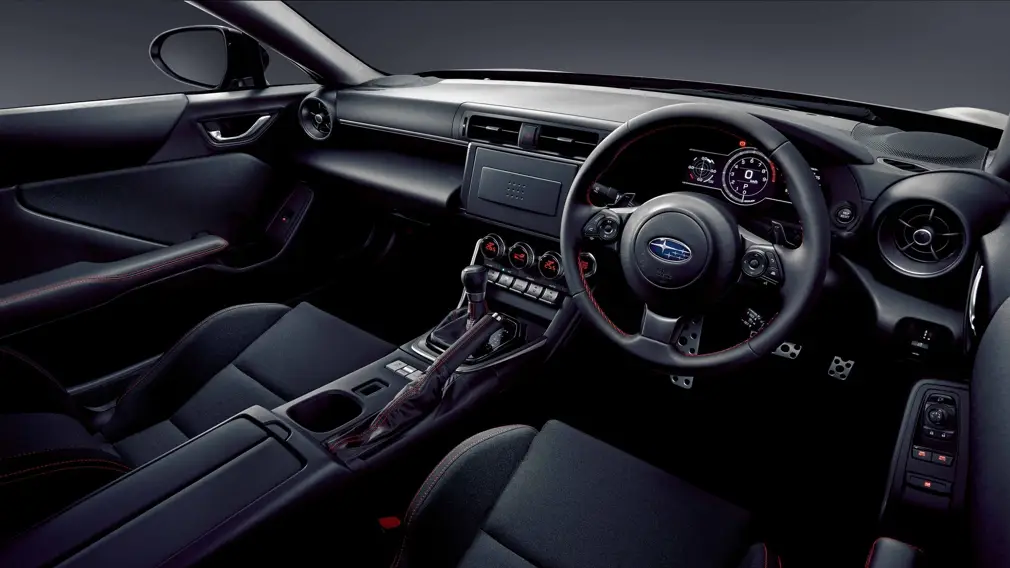
This is a continuation, not a change of direction. In September 2023 EyeSight became standard across the Japanese BRZ range, manual included — the first Subaru manual model with the system. In July 2024 the manual version gained a dedicated SPORT mode. In May 2025 the ignition circuit was reworked and prices stayed put. This time they did not.
Before the update the entry-level BRZ R with the six-speed manual cost 3,322,000 yen. The new Japanese price list reads: R 6MT — 3,377,000 yen, R 6AT — 3,410,000, S 6MT — 3,564,000, S 6AT — 3,597,000, STI Sport 6MT — 3,839,000, STI Sport 6AT — 3,872,000 yen.
All six versions went up, and by exactly the same amount — including the automatics, which never get the new shift lever. For the base car that is 1.7% more, for the STI Sport around 1.5%.
The powertrain concept is unchanged: a 2.4-litre naturally aspirated flat-four with 235 hp and 250 Nm, rear-wheel drive and two types of six-speed gearbox. The exterior and the interior were left alone entirely.
Subaru is planning a modest 250 cars a month. The immediate consequence is a narrower safety gap between the manual BRZ and the brand's mainstream models. The next checkpoint is real deliveries of new model year cars to dealers — and how the twin mirrors the move: Japanese media expect Toyota's GR86 to switch to three cameras in August.