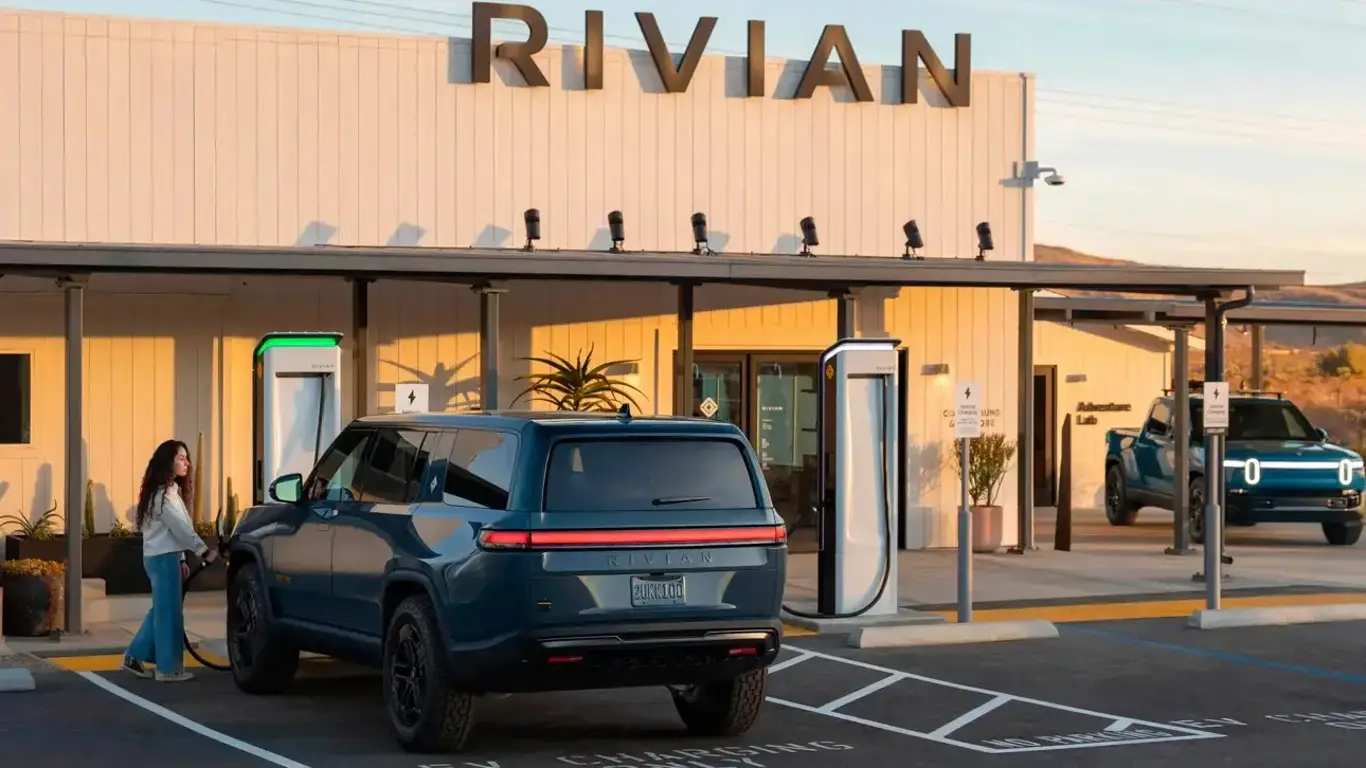

Rivian is aiming straight at Tesla's biggest bragging right — and the shot is set to land before the end of 2026. The company is rolling out its Point-to-Point system: type in an address, and the second-generation R1S, R1T and the new R2 are supposed to get you there on their own. Hands off the wheel? Fine. Eyes off the road? Not yet — drivers still have to watch the road and be ready to take over at any moment. So calling this a true self-driving car would be premature.
Rivian CEO RJ Scaringe himself draws the comparison to Tesla's Full Self-Driving Supervised — and that's clearly not by accident. Once a destination is entered, the car is supposed to handle not just highways but city streets and turns, the exact kind of chaos that usually trips up autopilot systems. Eyes-off driving, though, isn't promised until 2027 — and that's a whole different milestone.
Today's Universal Hands-Free looks fairly modest by comparison. Sure, it lets you drive hands-free on clearly marked US and Canadian roads. But it's powerless at a red light or a stop sign — it can't slow down or stop on its own. That's exactly the gap Point-to-Point is meant to close: the space between a basic assist system and one that can carry a car through an entire route from start to finish.
None of this comes free, of course. Access to the expanded features is bundled into the Autonomy+ package: $49.99 a month, or a one-time payment of $2,500. New vehicle buyers get a 60-day free trial.
Not everyone gets it, though. The limit here is purely about hardware. The system is promised to all second-generation R1 vehicles and R2, including the first LiDAR-free R2 units. Owners of early first-generation R1T and R1S trucks didn't make the list — full stop. Vehicles with the future hardware platform and a laser scanner are expected to eventually get broader hands-free capability.
Remember this: even after Point-to-Point launches, the driver stays responsible behind the wheel. This only becomes true autonomy once Rivian officially allows drivers to take their eyes off the road, not just their hands off the wheel. And that, as a reminder, isn't promised until 2027.