
Volkswagen found a way to intrigue before it explains. SAIC Volkswagen has teased the first fully electric car in its ID.ERA family — and it clearly isn't in a hurry to share details. A new lidar unit has been shown off, and the Xingyun driver-assistance system confirmed. But the questions buyers actually care about — how far it goes on a charge, what battery it carries, how much power it makes, how fast it charges — remain unanswered. Even the model's name hasn't been confirmed.
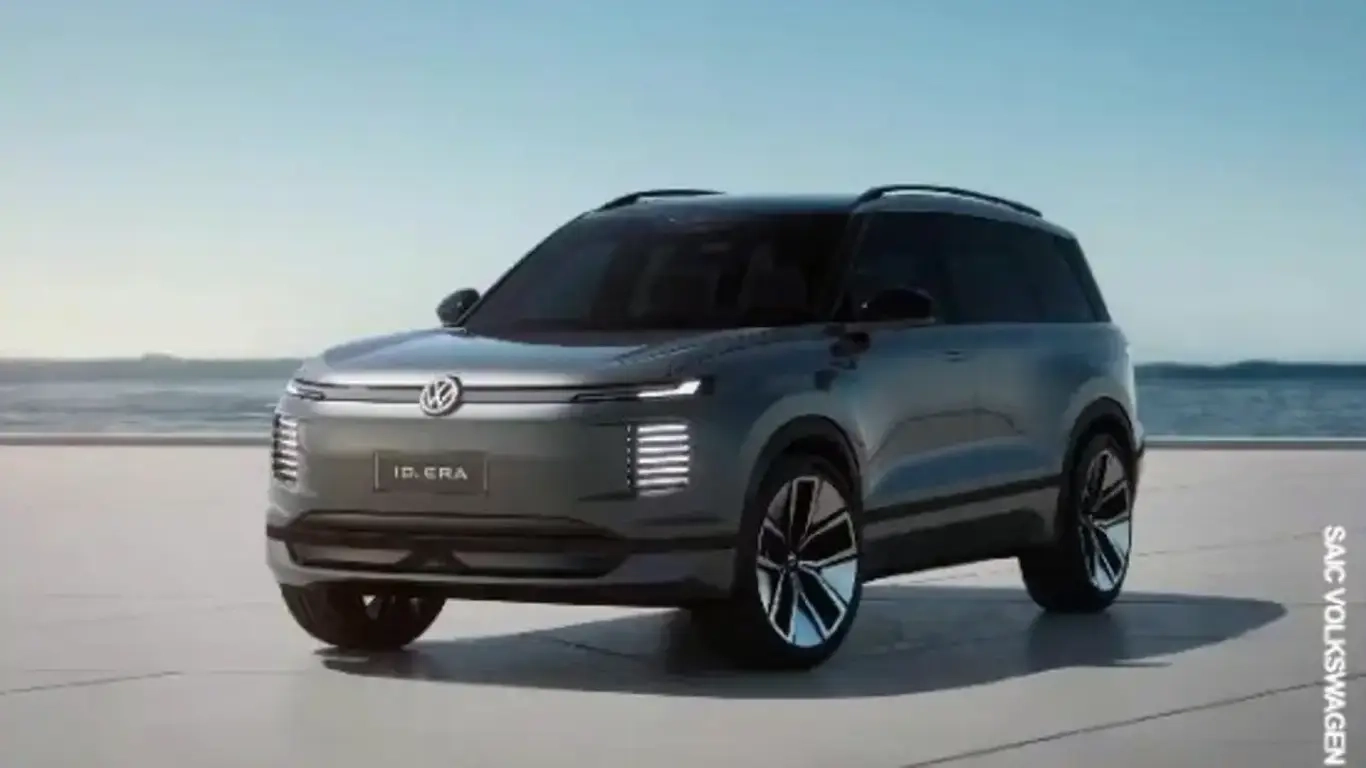
The teaser shows the front end, with a narrow LED strip and an illuminated Volkswagen badge. The design echoes the already-launched ID.ERA 9X — but that resemblance is misleading. Underneath, this is a completely different machine. The 9X uses a petrol engine purely as a generator to top up its battery on the go. The new model will be the lineup's first fully electric member — with no fuel tank safety net.
The Xingyun system is described generously: driver assistance on city streets and highways, plus the ability to navigate from one parking spot straight to another. It's built on a physical AI model already proven on the ID.ERA 9X. The lidar sharpens obstacle detection, but it doesn't turn the car into a robotaxi — the driver still has to watch the road. All that tech, and you still can't take your hands off the wheel.
For scale: the ID.ERA 9X, launched this spring, starts at 299,800 yuan under a limited-time program in China. Its traction battery delivers over 400 km on the CLTC cycle, and combined with its petrol generator, total range reaches 1,651 km. A pure EV won't have that safety margin by definition — there's no generator to bail it out if the battery runs low. That's exactly why the battery, efficiency and charging speed will decide whether this newcomer can survive against the competition.
SAIC Volkswagen previously promised the ID.ERA lineup would span three formats: battery-electric, plug-in hybrid and range-extended hybrid. This new car is the first real proof of that promise. But for now, the automaker has only shown off lighting and a sensor array. Without a price or specs, there's no way yet to judge its chances against China's electric crossovers.