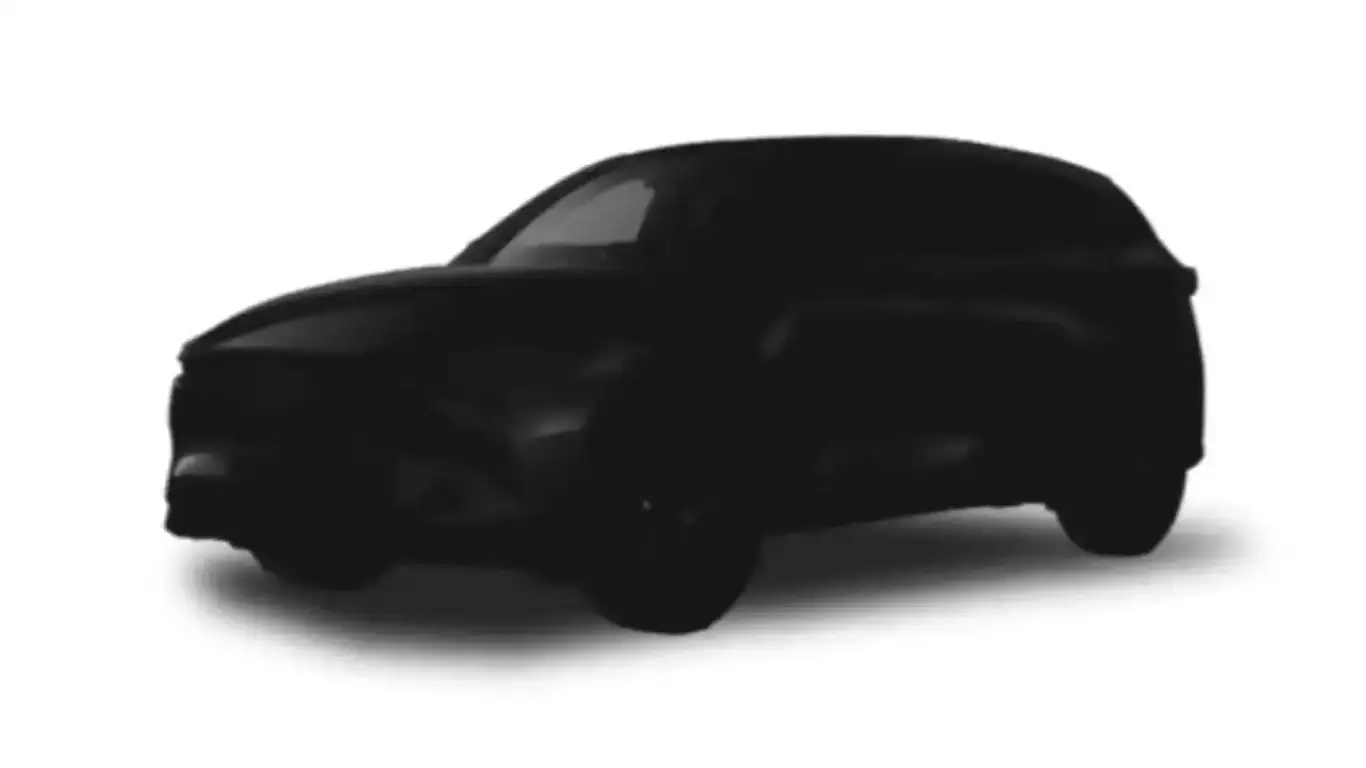

In May, Mazda made a promise: the CX-3 would return. In August, it finally showed us a shape. A camouflaged crossover surfaced in Mazda's financial presentation, labeled Next-generation CX-3. It's the first official look at the successor to a model that has soldiered on for more than a decade. There's still no full-blown premiere. But the ice has broken.
What matters here isn't the styling — it's the fact that the photo exists at all. Back in May, Mazda already confirmed the next-generation CX-3 would enter production in 2027 at the AutoAlliance Thailand plant, aimed primarily at Thailand, Japan, and the rest of Southeast Asia. This new image confirms the project has moved beyond a single line in an investor deck. The production-spec details, though, Mazda is still keeping to itself.
Under the camouflage, you can make out a more upright silhouette and a noticeably bulkier front end. It's too early to draw conclusions about dimensions, platform, or the final headlight design — but the crossover already looks nothing like today's CX-3. There's no standalone product premiere on Mazda's official site for August 7. This image leaked through financial materials, not a press release.
The contrast with the current car is already clear. In Australia, the first-generation CX-3 still sells with a 2.0-liter gasoline engine making 110 kW — about 150 horsepower — and 195 Nm of torque. The front-wheel-drive automatic claims 6.3 L/100 km. None of those numbers carry over to the successor: Mazda hasn't named an engine, a transmission, or an electrification strategy for the new generation.
There's a geographic catch, too. The old CX-3 left the US and Europe years ago, and the new project is currently tied above all to Asian production and Asian markets. A prototype surfacing is no guarantee the nameplate returns to American or European showrooms. If anything, it points the other way.
The next real shift won't be another photo — it'll be the technical reveal. Before production starts in 2027, Mazda still has to name the powertrains, the dimensions, and the sales markets. Only then will it be clear how far the second-generation CX-3 has actually drifted from today's car.