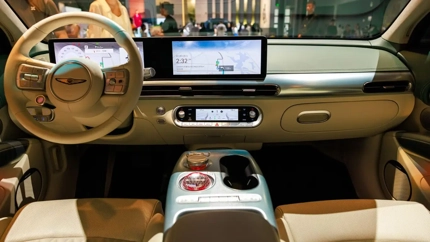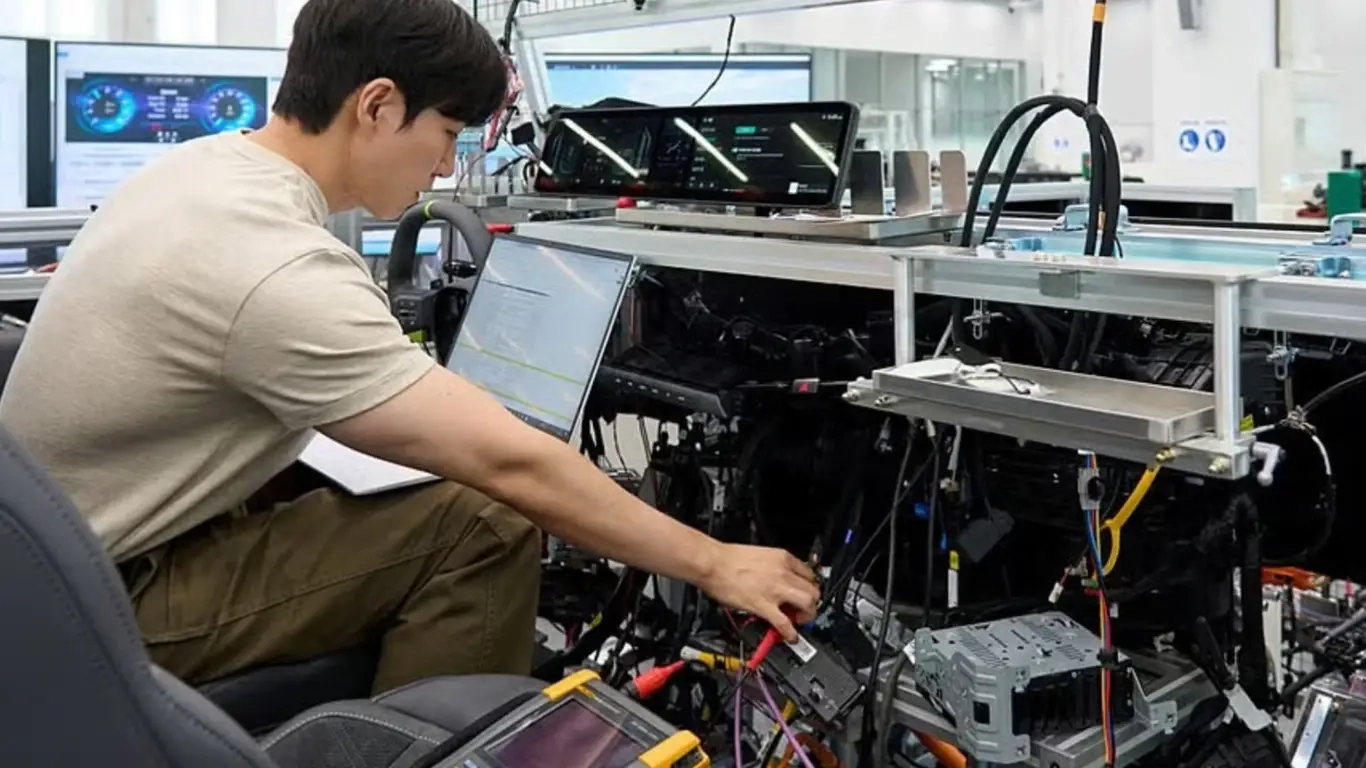

This car doesn’t have a body yet. It doesn’t have doors, or an interior. But Hyundai and Kia engineers have already found 150–200 problems in it. The secret is at the NOVA Lab in Namyang, where engineers build what’s known as a wire-car — the real electronic architecture of a future model, made from control units, wiring and components. A huge chunk of debugging now happens before the first physical prototype even exists — and that changes the entire logic of development.
For a large model, a bench like this includes 300–500 electronic control units and components, linked through roughly 500 connectors. Even an experienced team needs about a week — just to build it. Then comes the real work: engineers check communication between systems, diagnostics and function performance, hunting for broken links, software logic conflicts, electrical circuit issues and parasitic power draw. On average, this stage turns up 150–200 items that need fixing. For models packed with more new tech, that number can more than double.
Hyundai Motor Group has used this approach since 2019. But NOVA Lab has scaled it up dramatically: instead of the previous seven test benches, the center now has 14, and floor space has grown from 900 to 2,700 square meters. Throughput for parallel electronic prototypes has effectively doubled.
Static checks alone aren’t enough anymore. A mobile dynamometer simulates driving at speeds up to roughly 80 km/h, while a separate simulator reproduces signals for ADAS cameras and radars. The lab also tests OTA updates, high-speed Ethernet and the shift of automotive electronic systems to a 48-volt architecture. For future robotaxis, engineers here test braking and steering redundancy and the safety systems tied to them.
This is where the “200 problems” figure is easy to misread. It’s not a statistic about defects in Hyundai and Kia cars owned by customers, and it’s not the number of flaws that would have made it to the assembly line. It’s about development issues the system is designed to catch before a car ever ships. The earlier a conflict between two individually healthy units is found, the less rework is needed once a physical prototype is built.
The next step is automating this whole process. Hyundai Motor Group is preparing to bring in AI and machine learning: the accumulated data is meant to power automatic anomaly detection during testing of new vehicles. If that mechanism works as advertised, NOVA Lab will move from early bug detection to partially automated bug hunting.