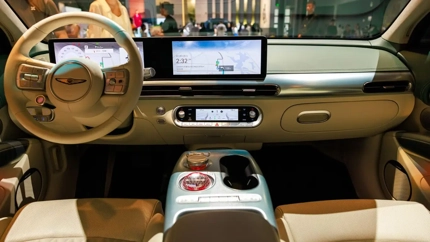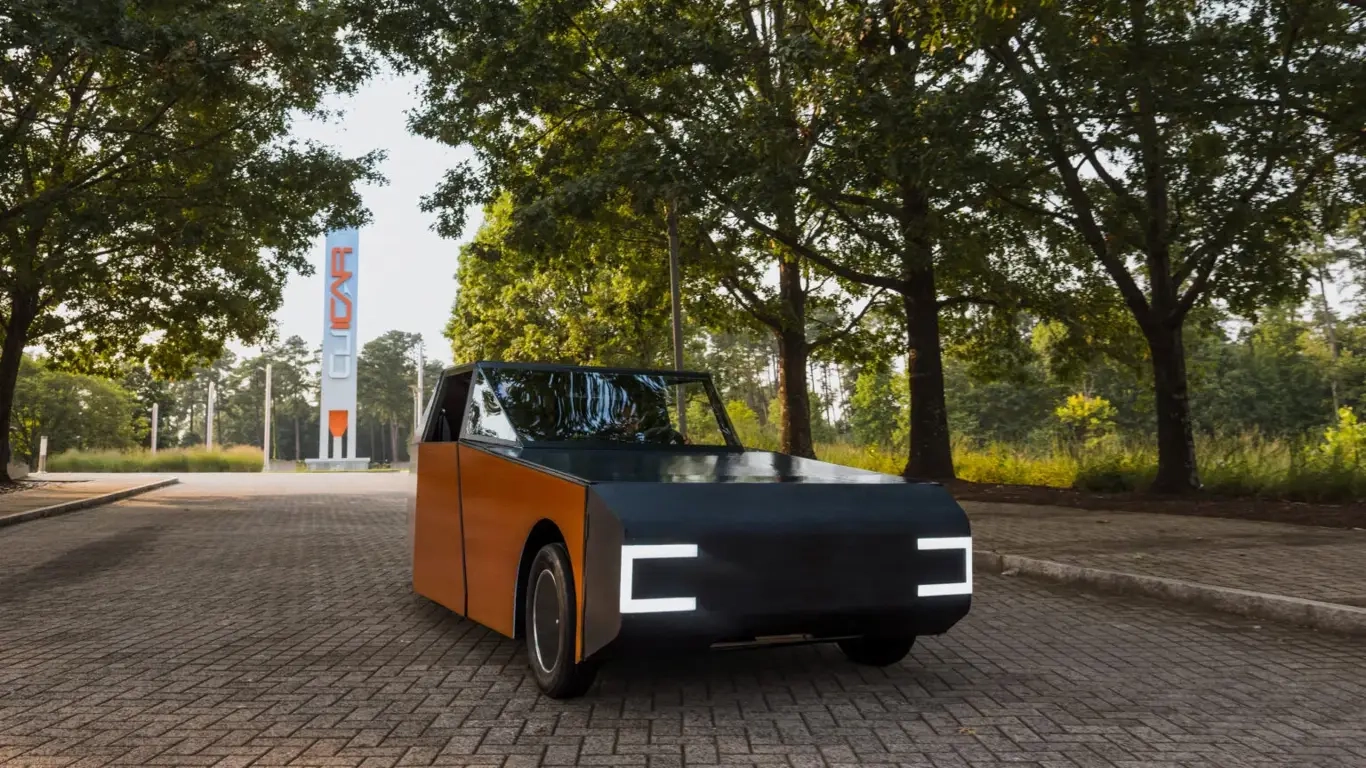

Drive about 20 km and end the day with more energy left over than you spent getting there. That's the scenario Deep Orange 17 was built for. The student-built electric car from Clemson University, developed with support from BMW, is wrapped in more than 1,700 photovoltaic cells. Modeling across several cities showed that after a short urban commute, the solar system can leave a surplus equivalent to roughly 50 km of extra range.
But this isn't an EV you can permanently unplug from the wall. Researchers modeled the sun and weather conditions of Greenville, Frankfurt, Madrid and Mumbai for a daily route of around 20 km. The panels work both parked and in motion, so most of the daily generation doesn't even have to happen while the car is being driven.
Another fundamental factor is weight. Luminetta tips the scales at just around 550 kg. That's roughly a third the mass of a typical production EV. The build uses steel, aluminum, carbon fiber and 3D-printed metal parts. Power draw is cut further by regenerative braking, torque-vectoring control and an optimized drivetrain. Which is exactly why the claimed 50 km solar surplus can't simply be transplanted onto a regular 1.5–2-ton production EV — it just doesn't work that way.
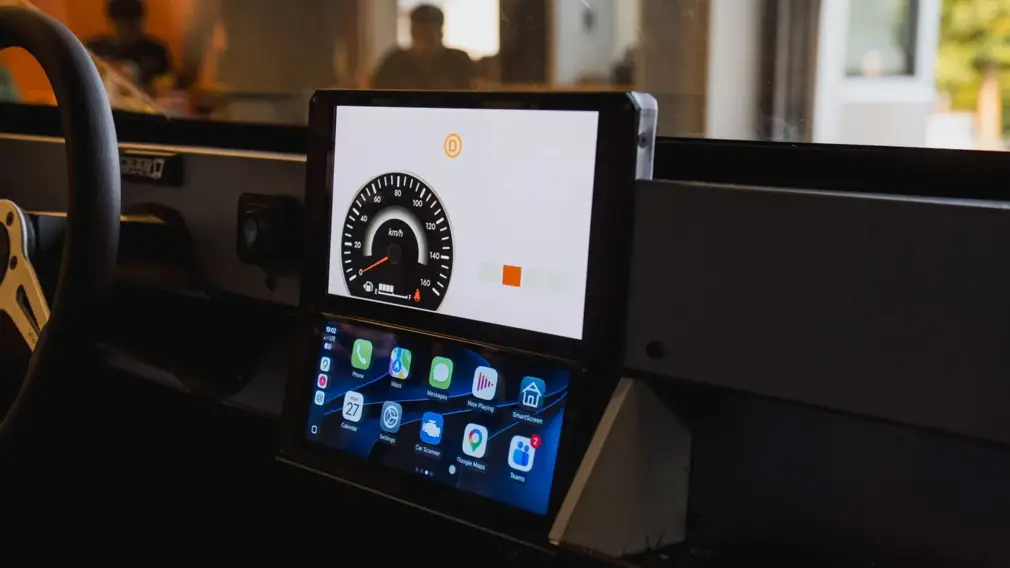
Tellingly, Clemson itself frames the goal far more cautiously than any headline would. Deep Orange 17 is described as a solar energy-positive concept that, “if successful,” should produce more energy over a standard 24-hour cycle than it consumes. There's no independent road-test confirmation of a locked-in 50 km surplus.
So the real shift here isn't a promise of “driving on sunlight for free.” It's the approach itself. Solar cells have gone from a backup source to part of the car's entire energy balance, and the whole vehicle was designed around minimizing consumption from the ground up.
The next test won't be a computer model — it'll be the prototype itself. Published data still doesn't reveal battery capacity, peak solar array output or an actual measured daily energy balance. Deep Orange 17 is set to appear at CES 2027 — where the project will need to back up its claims with real generation and consumption numbers.