
£22,495 — that’s the starting price Autocar has attached to the new Hyundai Ioniq 3 for the UK. It’s no longer the old “under £25k” promise: this compact EV now sits right inside Renault 5 territory, but it brings a bigger body and up to 496 km of WLTP range to the fight. Hyundai’s official figures confirm two batteries — 42.2 and 61 kWh.
The engineering split is unusual. The Standard Range makes 147 hp and covers up to 344 km, while the Long Range, with its 61 kWh pack, is capped at 135 hp but stretches range out to 496 km. Both versions are front-wheel drive, with a top speed of 170 km/h. A 10–80% charge takes roughly 29 and 30 minutes respectively. The architecture is 400V, not the 800V setup used on the bigger Ioniq models. Hyundai quotes these figures for the production European car.
Long Range pricing, according to Autocar, starts at £25,745. For comparison, the official Renault 5 with the 40 kWh battery currently starts at £21,495 in the UK — but that figure already includes the £1,500 government grant. Strip that out and the base Renault comes in at £22,995: which means the Autocar-quoted Ioniq 3 is actually £500 cheaper before any Hyundai incentive is even factored in.
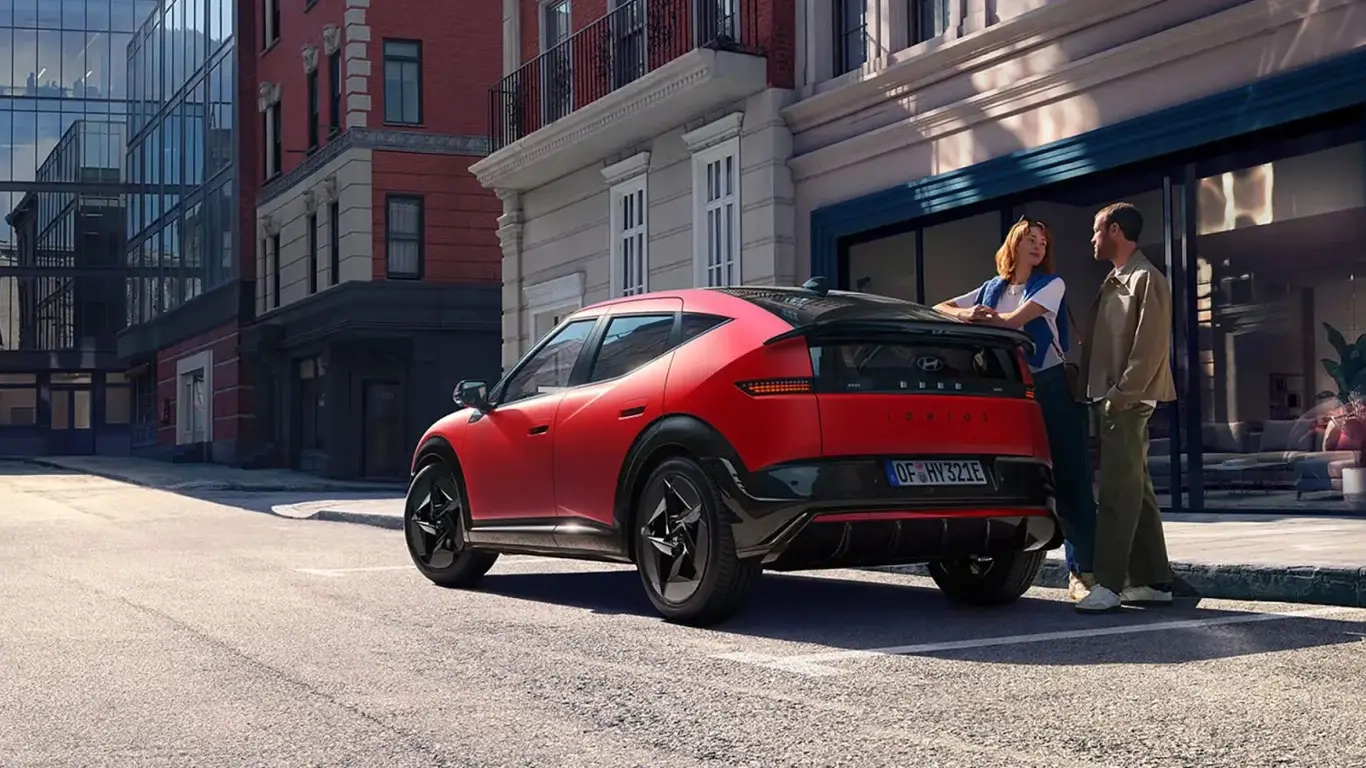
The 4,155mm body posts a drag coefficient of 0.263. To get that sloped shape, Hyundai sacrificed a front trunk — but carved out a 119-litre niche beneath the main load bay instead: combined with the regular 322 litres, that’s 441 litres total. It’s a notable shift for a car that, as recently as spring, was known mainly as a compact EV with roughly 496 km of range.
Lead exterior designer Manfred Schöttle told Autocar the team first chased the most aerodynamic shape possible, but it was “important to make sure the car didn’t end up looking like a bar of soap.” Inside, the team similarly resisted the temptation to strip out every physical control.
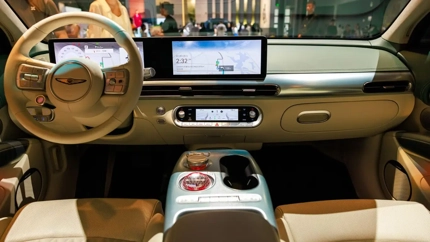
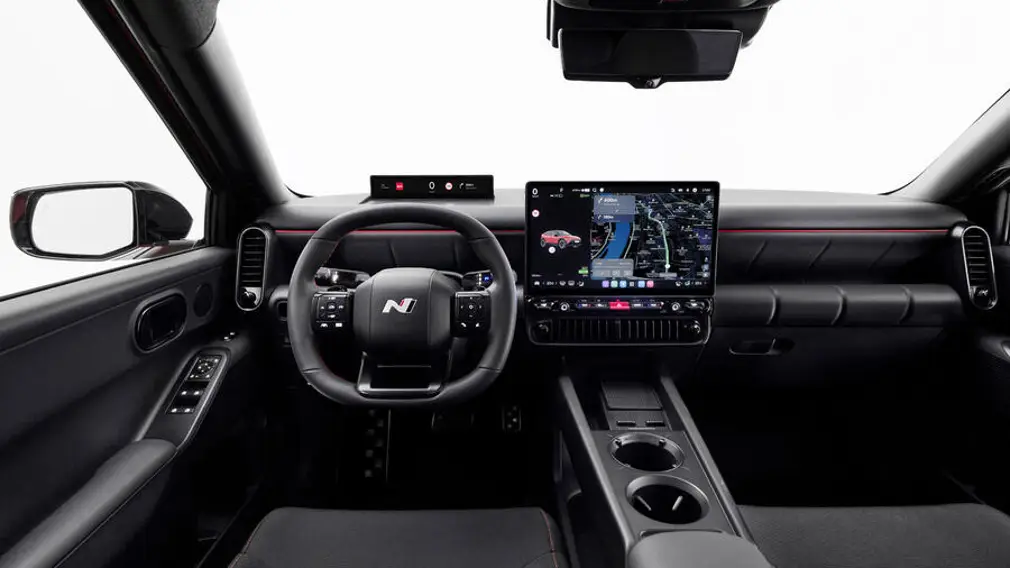
Victor Andrean, who led interior design, summed up the approach as “hands on the wheel, eyes on the road.” On the raised instrument panel, he explained: “We placed it above the steering wheel, rather than inside the wheel like in a conventional car. That’s an important step toward lifting your eyes and your head up; when you look at the panel, you’re looking a couple of degrees higher. That brings your gaze much closer to the road.”
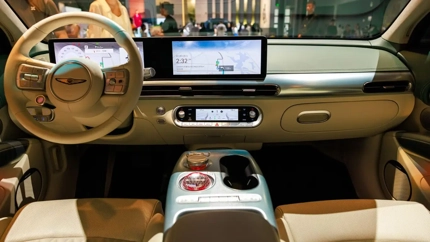
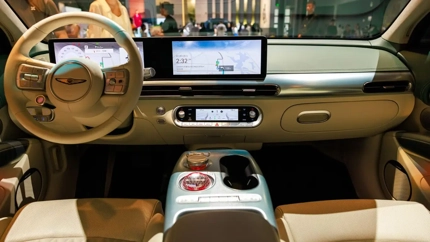
The central Pleos Connect infotainment system runs on Android Automotive OS and comes with either a 12.9- or 14.6-inch display, though climate controls and the main media functions kept physical buttons. Andrean was direct about it: “The tactile feel of buttons is very important, and I think the [European] market genuinely needs that.”
Even the cupholders were designed around European habits. “This is something we thought about from the very start: where do you put your enormous flask? Everyone carries bottles bigger than 1.5 litres these days — I’m one of them,” Andrean said.
The Ioniq 3 was developed in Europe and will be built at Hyundai’s plant in İzmit, Turkey. Cars should start reaching UK dealer showrooms from October, according to Hyundai UK’s latest official statement. That also settles the Ioniq 3’s spot in Hyundai’s expanding line-up: it slots in between the city-sized Inster and the larger Kona Electric.
The next number worth watching isn’t range — it’s the final UK price list across every trim, and the Ioniq 3’s status under the Electric Car Grant scheme. That’s what will decide whether its price edge over the Renault 5 survives once government incentives are factored in.