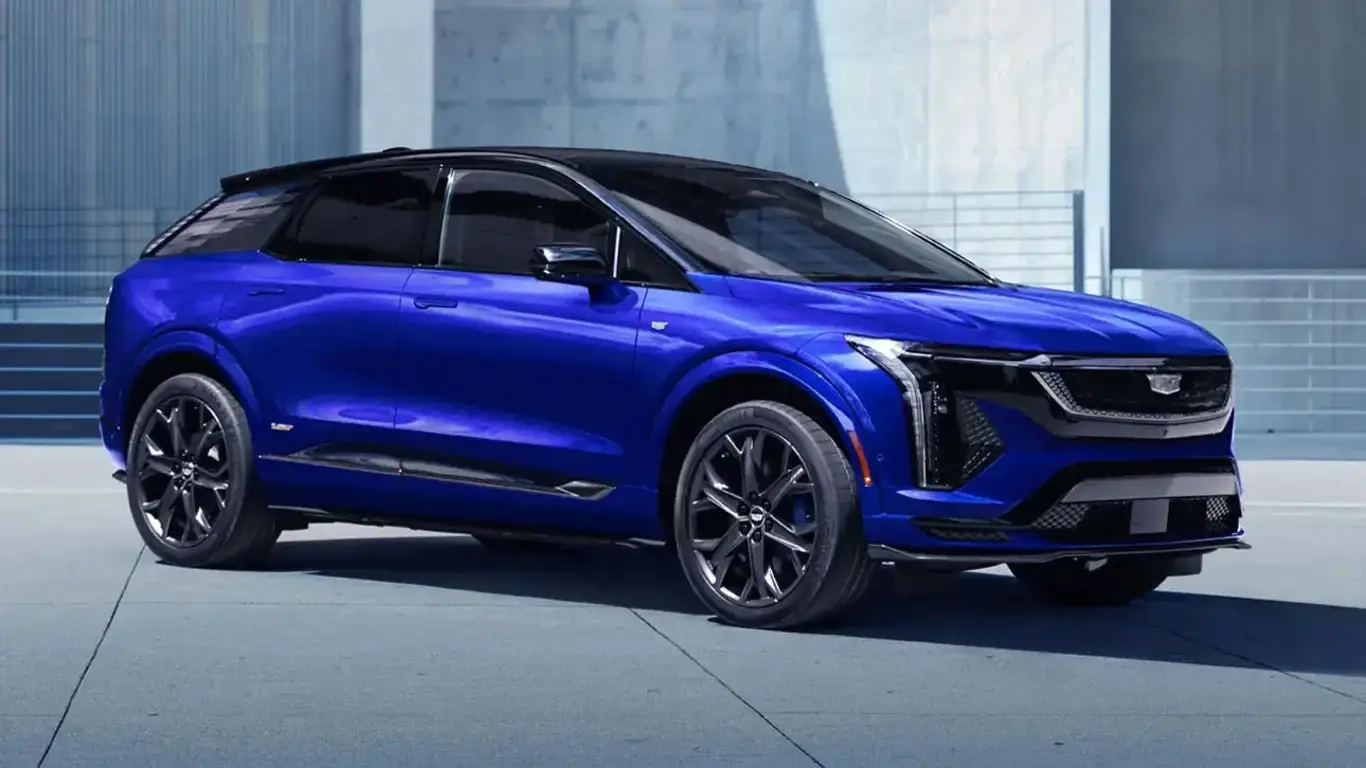

Cadillac Optiq owners have a new noise to worry about — and this time, General Motors is admitting it doesn’t know what’s causing it. The automaker has confirmed the complaints reached dealers through an official document, but the one thing owners actually want to know — what to fix — still has no answer.
The issue is spelled out in preliminary bulletin PIC6656, which landed in NHTSA’s public database on July 31, 2026, under reference number MC-11035355-0001. The symptom is simple and annoying: the rear brake pads on the 2025–2027 Optiq squeak when the car moves in reverse, especially in cold or wet weather. GM has confirmed the problem is real. What it hasn’t confirmed is how to fix it — the cause is still under investigation, and there’s no repair procedure yet.
Before anyone rushes to a dealer, Optiq owners should know one thing: this is now the third separate service story around this car in just a few months, and they shouldn’t get mixed up. Earlier this year, GM dealt with a completely different issue — moisture that could damage the audio system’s amplifier. Then in May, a separate brake story surfaced: some 2026 model-year Optiqs received a software update for the brake system control module, after low-speed ABS braking lost some effectiveness when transitioning from smooth pavement to rough surfaces. That issue already has a fix, and it has nothing to do with the current squeak.
PIC6656 is a fundamentally different case. GM hasn’t named a faulty part or a replacement procedure. The official explanation is still just a theory: moisture combined with light surface corrosion on the brake rotors. On an electric vehicle, that’s technically plausible — regenerative braking slows the car using the electric motors, so the conventional friction brakes engage less often than on a gas-powered vehicle. Cadillac confirms the regenerative braking principle itself, but hasn’t drawn a direct line to the Optiq complaints just yet.
For owners, the line between “wait it out” and “get it checked” is actually simple. A brief squeak after the car has sat overnight in the rain, one that fades after the first few feet of driving, is exactly what the bulletin describes. But a constant metallic grinding, vibration, pulling to one side, or a noticeable change in braking performance is a reason for immediate diagnosis — not waiting for GM’s next document. And swapping the pads “just in case” isn’t a good idea either: without a confirmed cause, it might not fix the noise at all.
What comes next? Either an updated Preliminary Information document or a full Technical Service Bulletin — and that’s the one that will finally reveal what the Optiq actually needs: new pads, new rotors, new hardware, or something else entirely. Until then, owners are left with what has quietly become this model’s signature trait over the past year: patience.