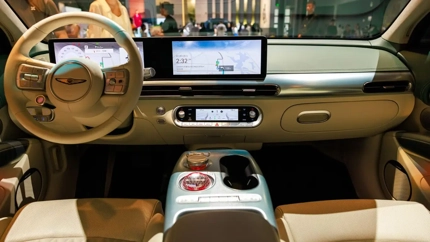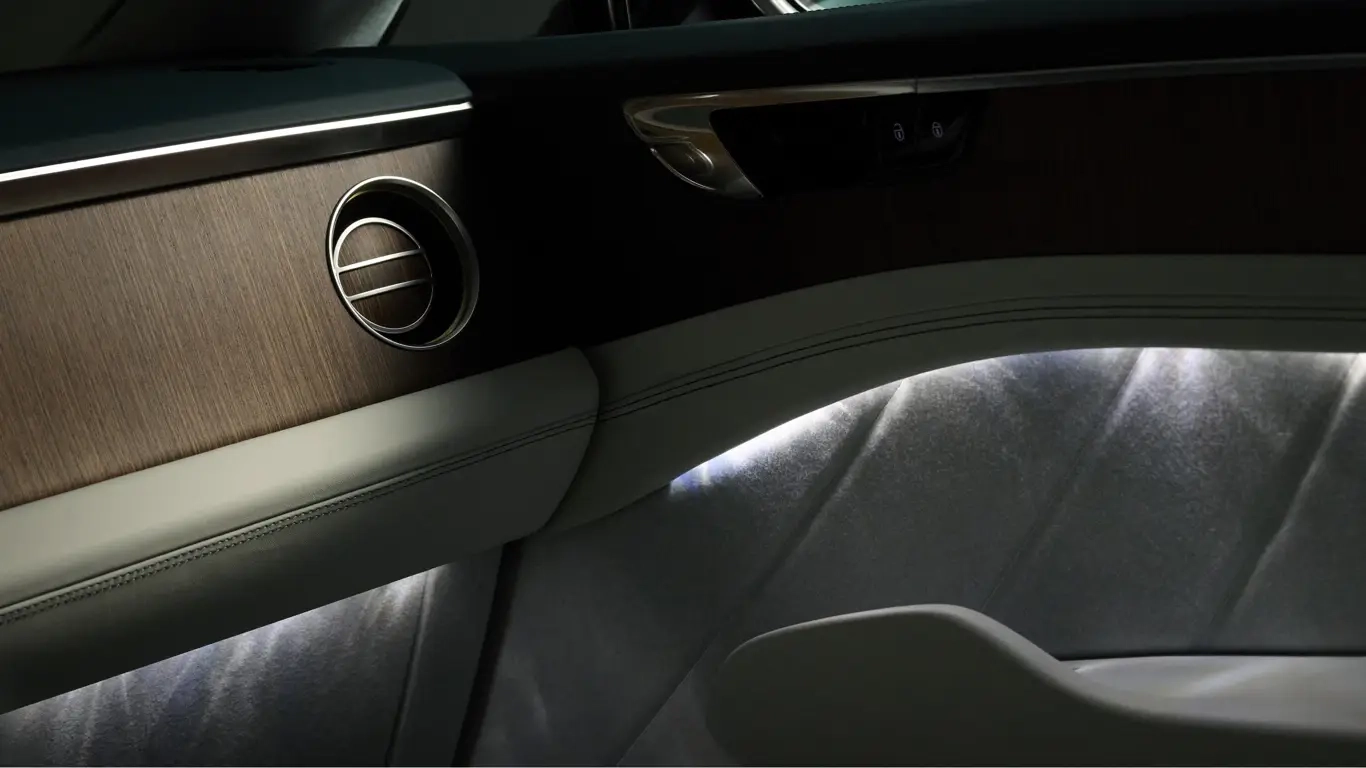

Nearly 1,000 layers of walnut and recycled paper — that’s the material Bentley has chosen for the cabin of its first series-production electric car, the Torcal. But the wood isn’t even the strangest part. The real surprise is the textile: Bentley says it’s the first automotive-grade material made from 100% Merino wool ever offered in a car. The world premiere is just over a month away, and Bentley clearly isn’t waiting until the last minute — the brand keeps drip-feeding details of what should set the Torcal apart beyond its electric powertrain.
For the wool trim, the British marque turned to Fox Brothers for help. Pure Merino’s biggest problem has always been durability in automotive conditions, so the fabric had to be rebuilt almost from scratch to meet Bentley’s standards. Buyers will get six colorways to choose from. Leather isn’t going anywhere, though: wool becomes an addition to the cabin, not a replacement for traditional trim.
The second new material is called Ombre Veneer. Walnut is combined with recycled paper, with roughly a thousand layers pressed into a single decorative material. And this is more interesting than a simple “eco-friendly” checkbox: Bentley is chasing the visual depth of veneer without giving up real wood. The third finish, Sunburst Aluminum, reinterprets the engine-turned aluminum panels of the brand’s earlier models. That metalworking technique is genuinely part of Bentley’s historical toolkit, and it’s still used today in Mulliner’s most expensive bespoke projects.
Torcal will become Bentley’s fourth permanent model line, joining the Continental GT, Flying Spur, and Bentayga. Bentley has already revealed the “floating” diamond-shaped grille and an unusual digital light feature built around genuine hand-cut British crystal.
Even the synthetic sound of the electric powertrain isn’t a run-of-the-mill electronic engine simulation here. Bentley recorded a real V8 and a live drummer, and the resulting composition is built from drums, viola, and bass guitar, shifting in real time with driver inputs. It adds up to a remarkably consistent strategy: physical materials, real musical instruments, and handcrafted details, all working to strip away the digital sterility that’s especially dangerous for an ultra-luxury EV.
When it comes to hard numbers, though, Bentley is being far more cautious than with the trim. On the official Torcal page, EU energy-consumption and electric-range figures are still listed as pending type approval — so the roughly 300 miles (483 km) circulating in press coverage shouldn’t be treated as a final, certified range just yet.
During June’s prototype testing, Bentley was still hiding most of the production details. Now the focus has shifted from camouflage and platform talk to what buyers in the ultra-luxury segment actually pay extra for: tactility, material provenance, and a cabin that doesn’t feel like its mass-market EV cousin.
The Torcal will be fully unveiled on September 23. Judging by the pace of the current campaign, Bentley may still reveal individual cabin and engineering details before then — official European battery and range specs remain an open question.