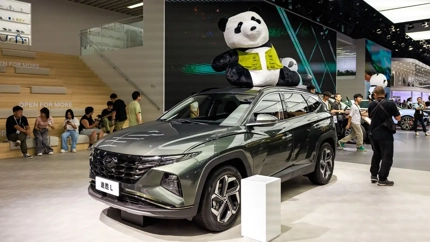

GAC didn't bring a single car to the Chengdu Motor Show — it brought a philosophy, and called it Yue 7. On the stand, “Tarantas News” journalists found three versions of the same five-meter hybrid: a plain city model, a touring version with a rooftop tent, and a full-blown expedition build with skid plates, off-road tires and an unmistakable “I'll go where you won't” attitude.
The Chengdu appearance isn't a world premiere — the Yue 7 first surfaced back in spring at the Beijing Auto Show, and on August 7 GAC officially unveiled the production car and revealed the interior. But Chengdu is where the brand first showed what the same vehicle becomes in the hands of different owners. Pre-sales in China begin in early September.
Three Yue 7s — From Office Commute to Expedition
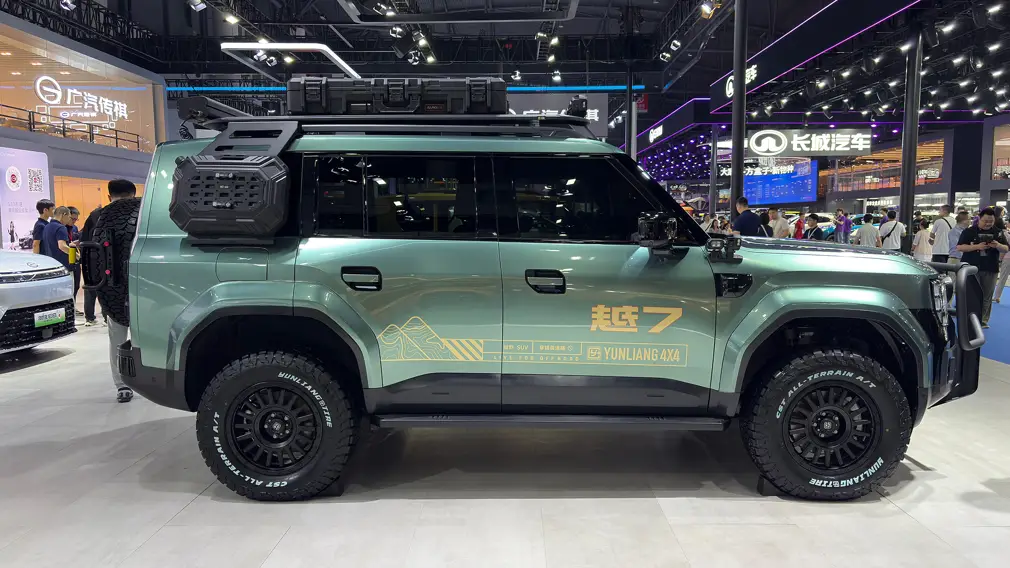
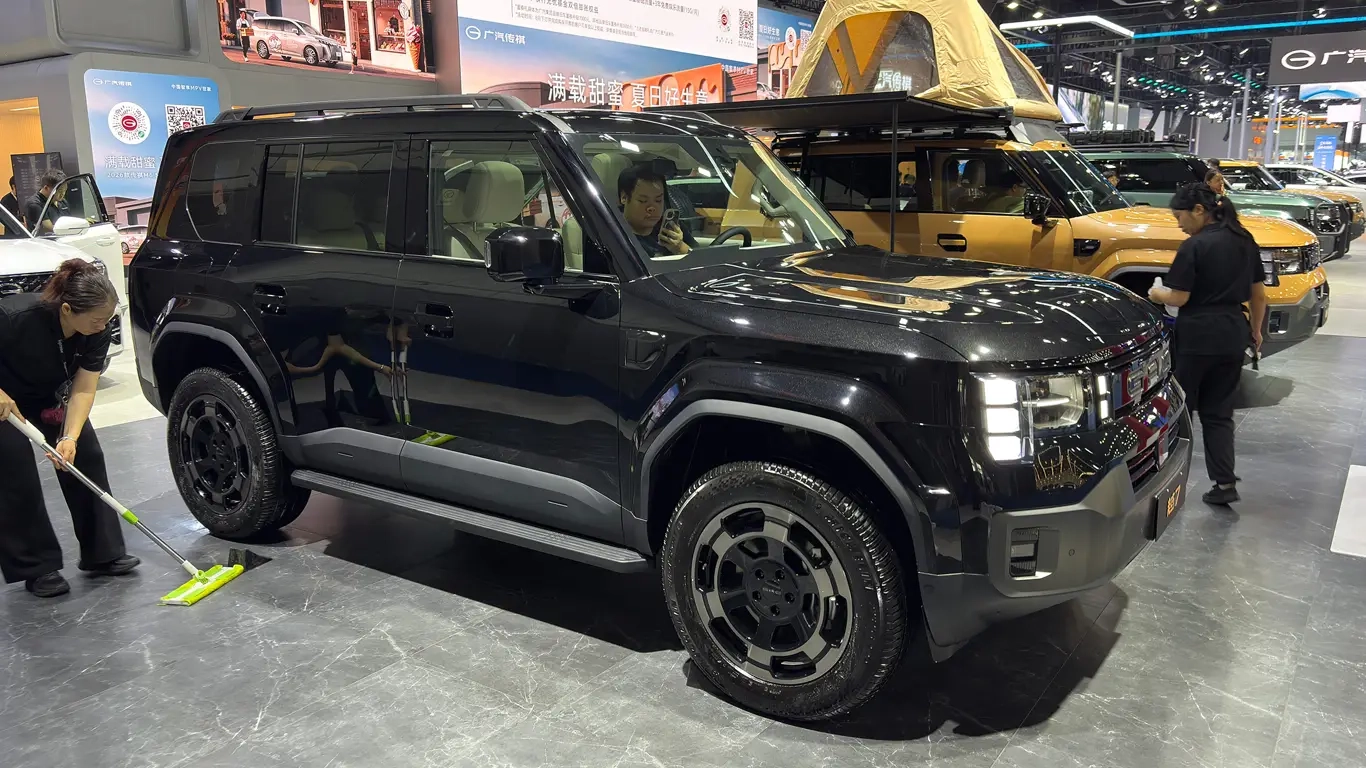
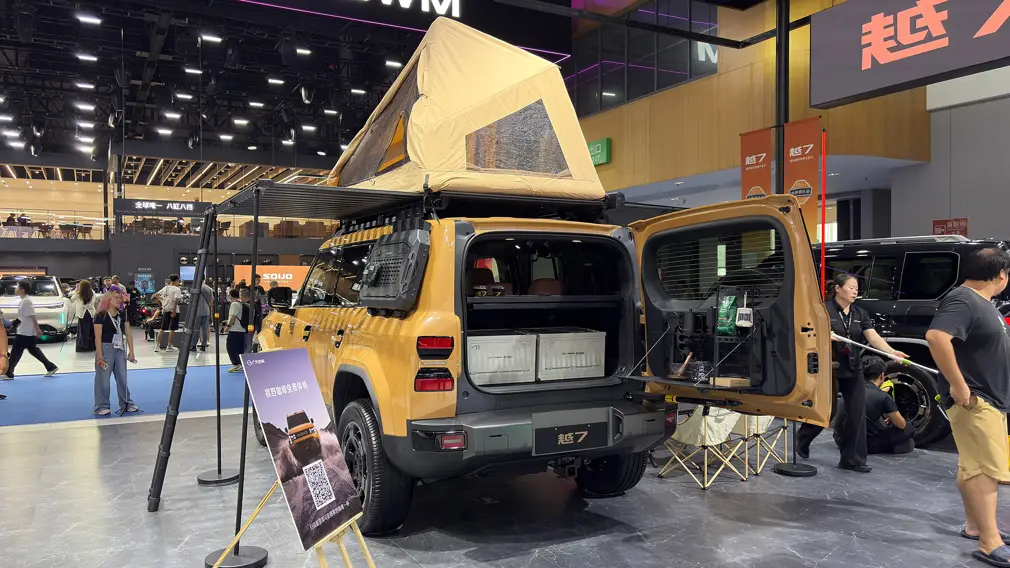
GAC's bet on modularity is obvious at first glance. The black Yue 7 is nearly free of off-road decoration — this is how a regular buyer will see it day to day. The orange one got a fold-out rooftop tent and a large side awning: an instant campsite on wheels. And the green one is an entirely different story.
The most serious build was put together with Chinese off-road specialist Yunliang 4x4: a bull bar up front, chunky all-terrain tires, extra lighting, an expedition rack, a side cargo module and roof boxes. And this isn't some aftermarket add-on job — GAC built 37 factory-designed mounting points into the Yue 7 for extra gear, including power and electrical connections, roof wiring for lighting, and interior mounts.
In other words, GAC designed this car for modification from day one, instead of leaving owners to drill into the body and run their own wiring for lights, tents or extra electronics. That's exactly what explains the unusual display in Chengdu — three cars, three ways of living, one vehicle.
Nearly the Size of a Land Cruiser
With the accessory package fitted, the Yue 7 stretches to 5,045 mm long, 2,030 mm wide and 1,933 mm tall, on a 2,900 mm wheelbase. The cabin seats five; exact figures shift slightly by trim.
Calling it a classic body-on-frame off-roader would be inaccurate — the Yue 7 uses a unibody with its own reinforced longitudinal structure. Torsional rigidity is rated at 38,000 N·m/degree. The idea was to combine the manners of an ordinary crossover on tarmac with the toughness needed off it.
Maximum claimed ground clearance reaches 310 mm, with approach and departure angles of roughly 30 and 33 degrees (versions with adjustable suspension can do better still), and a claimed wading depth of 780 mm. For a vehicle marketed as a “family crossover,” those are frankly immodest numbers.
Three Locking Diffs and 544 “Horses”
The heart of the Yue 7 is GAC's GMC 3.0 Thunder hybrid system. A turbocharged 1.5-liter gasoline engine puts out 125 kW (about 170 hp) and works alongside the electric half of the all-wheel-drive setup. Combined, the system delivers 400 kW, or 544 hp — not exactly a modest number for a family SUV.
The drivetrain is where things get even more interesting. GAC claims front and rear mechanical locking differentials plus an electronic central “energy lock” — three locking points, by the automaker's own count. The system is designed to keep moving even when traction is effectively down to a single wheel, and at crawling speeds available torque can multiply fivefold.
Rounding it all out are air suspension, adaptive dampers and a full 9+X drive modes for different surfaces — well beyond the usual “sand, snow, mud” menu found on city crossovers.
Up to 188 km Without Burning a Drop of Gas
Battery packs come in three sizes — 28.3, 38.883 and 45.975 kWh — good for roughly 116, 180 and 188 km of electric-only range respectively, with CATL supplying the top-tier pack. Combined range on the longest-legged version tops 1,200 km.
For a large five-seat SUV, the math makes sense: in the city, the Yue 7 can run as an EV for weeks without waking the engine, while on a long trip owners never have to hunt for a charger.
Real Buttons Survived the Cabin Redesign
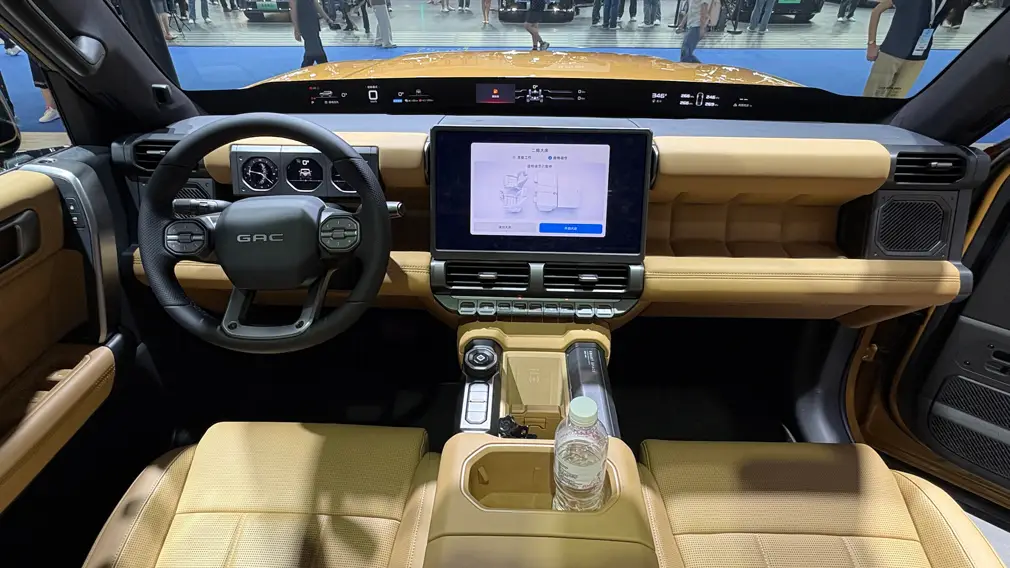
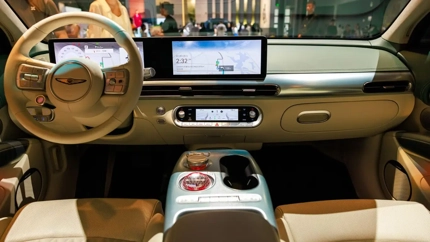
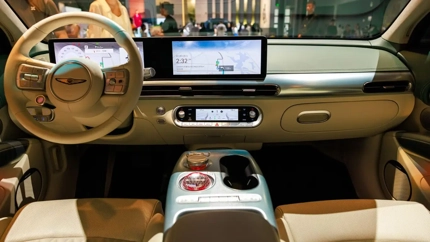
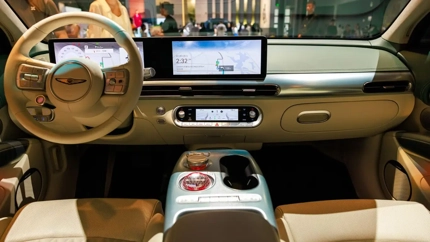
“Tarantas News” journalists shot the Yue 7's cabin separately, and it surprises just as much as the exterior lineup. Behind the wheel sits an unusual multi-section instrument cluster, a 1.1-meter panoramic display strip runs along the dashboard, and the central screen measures 15.6 inches at 2.5K resolution.
But GAC didn't chase bare touchscreen minimalism. A full row of metal buttons survives under the central vents, while the center console carries a large rotary drive-mode controller, extra buttons and a wireless charging pad. In photos, this cabin looks noticeably more “mechanical” than most modern Chinese EVs — and that seems like a deliberate choice, not a cost-cutting one.
Infotainment runs on a new Qualcomm QCM8838 built on a 3nm process, with GAC claiming over 300K DMIPS and 64 TOPS of NPU power. The equipment list also includes a 20-speaker audio system, front-seat massage and a fridge.
The second row slides 170 mm along rails, backrests recline up to 127 degrees, and folding the seats creates a roughly 1.9-meter-long platform. In other words, the rooftop tent shown in Chengdu isn't strictly necessary for sleeping — there's a bed inside the car itself.
The Big Question — Price — Still Has No Answer
There's no price list for the Yue 7 yet. The official site is only taking refundable reservations: for 199 yuan, a buyer locks in a future benefits package worth up to 20,000 yuan. That's not a car deposit and not the vehicle's price.
Actual prices will be revealed alongside the start of pre-sales in September. The Yue 7's main rivals in China are considered to be the Tank 400 Hi4-T and the Denza B5 — and the final pricing will show just how hard it can push into their turf.
The model hasn't been officially announced for other markets yet. But GAC already runs a genuine dealer network wherever it operates today, which means any future export push looks technically far simpler than for many newer Chinese brands. It's too early to guess at export pricing anywhere: China's own pricing hasn't been published yet, and 544 hp will make the economics of bringing it abroad especially sensitive to local import duties.
The biggest takeaway from Chengdu is that GAC isn't just selling another “boxy” hybrid. The Yue 7 was designed from the ground up as a kit of parts: today it's a comfortable family SUV, tomorrow it's a rooftop-tent camper, and after fitting the factory modules and Yunliang's hardware, a full expedition vehicle. Those 37 factory-built mounting points look like just as important a feature as the 544-horsepower hybrid system underneath.