
One and the same 2.0-liter BMW B48 has somehow lived three completely different lives: under the long hood of the rear-wheel-drive Toyota GR Supra, inside the roughly 1,000-kilogram Morgan Plus Four, and mounted transversely in the quick little MINIs. The roundup was put together by BMWBLOG, with one important caveat: MINI isn't really an outside manufacturer — it's simply a separate brand within the BMW Group.
The American-spec GR Supra 2.0 got a B48 rated at 255 hp and 400 Nm, paired with an eight-speed automatic and rear-wheel drive. It sprinted to 97 km/h in just 5 seconds and weighed roughly 91 kg (200 lb) less than the 3.0 version. But that's history now: for 2025, Toyota's official U.S. Supra lineup was trimmed down to just the 3.0 and 3.0 Premium, and by the final 2026 model year, there was no room left for the four-cylinder at all — only the six-cylinder versions survived.
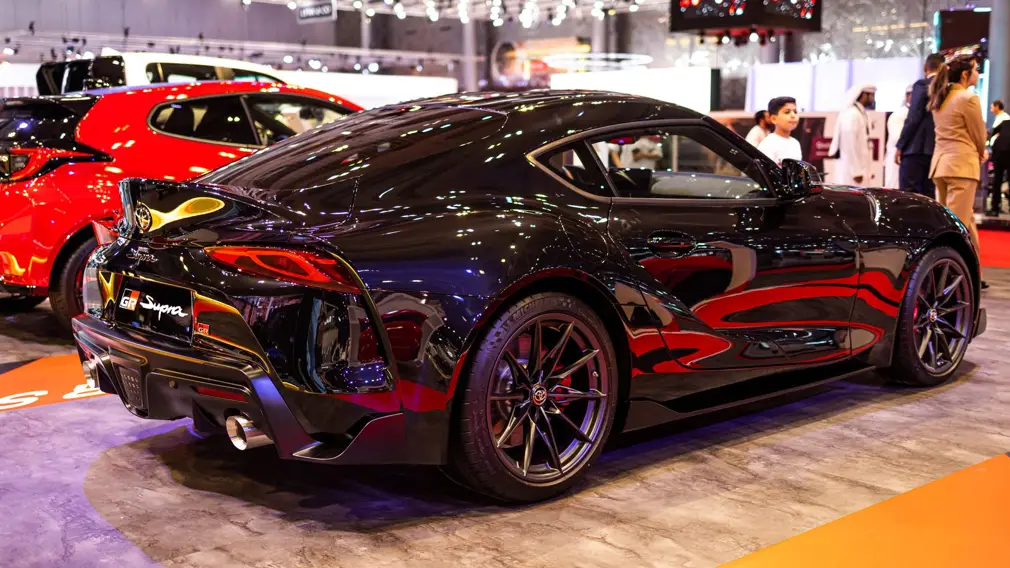
Morgan's story is a different one — it isn't giving up its B48. The current Plus Four mounts the engine longitudinally and sends everything to the rear wheels: 258 hp, with the manual gearbox delivering 350 Nm and a 0-100 km/h time of 5.2 seconds, while the eight-speed automatic bumps that up to 400 Nm and 4.8 seconds. Dry weight for the automatic version is just 1,009 kg — almost indecently light for a car with this much character. In the UK, the roadster starts at £69,995.
The hardest factory tune of them all, though, went to the MINI John Cooper Works GP: the European-spec version put out 306 hp and 450 Nm, hitting 100 km/h in 5.2 seconds. Only 3,000 were ever built. A similar powertrain found its way into the all-wheel-drive JCW Clubman. The B48 itself, of course, has long since become a familiar face across BMW's own lineup, while today's three-door MINI John Cooper Works makes do with a far more modest 231 hp and 380 Nm.
It's exactly this spread of configurations that best sums up the B48: one base engine adapted to front-, rear- and all-wheel drive, to manual and automatic gearboxes, to cars weighing around a ton and to more practical everyday models. Calling it "unquestionably reliable" purely on reputation, though, would be a stretch — BMWBLOG's roundup doesn't cite any dedicated durability study or failure-rate data, so the praise might be worth holding off on for now.