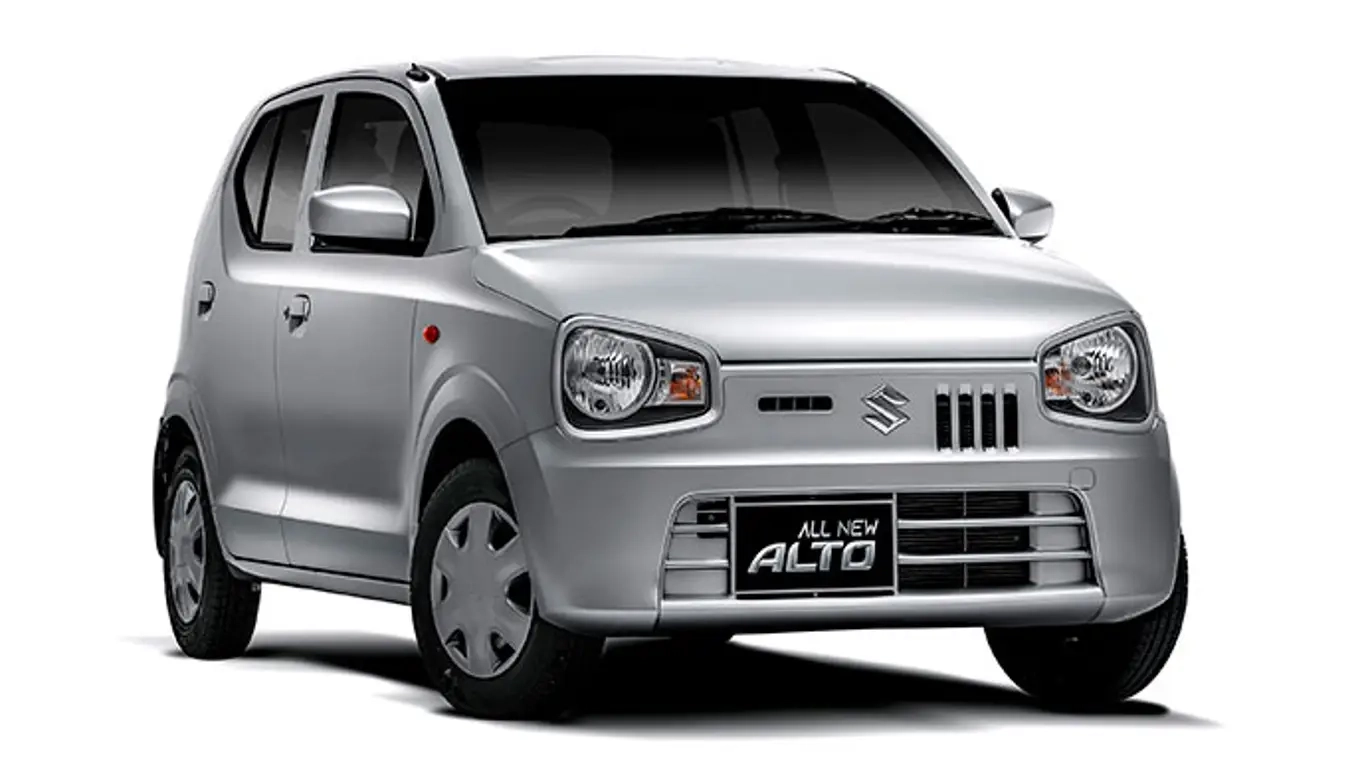

Suzuki has just turned a foreign-built kei car into an export product for the first time — and it rewrites the usual logic of the whole Japanese mini-vehicle niche. Sales of Pakistan-assembled Alto and Every have kicked off in Brunei: both models carry the same body dimensions and the same engine displacement as genuine Japanese kei cars — 660cc. Until now, cars like these from Suzuki's overseas plants never left their country of production.
The Alto has been built in Pakistan since 2019. It measures 3,395 x 1,475 x 1,490 mm, runs the 660cc R06A engine, and comes with a 5-speed manual or the robotized AGS gearbox. In 2024, the Every joined it — a van measuring 3,395 mm long, 1,475 mm wide and 1,895 mm tall, with the same 660cc R06A and the same manual transmission.
Now both cars are shipping out of Pakistan and into Brunei. Suzuki officially calls this the first time in its history that a foreign-built model matching the size and displacement of Japanese kei cars has been exported from its country of production.
The choice of Brunei is no accident. Dealer Boustead has worked with Suzuki since 1976 and sold around 1,200 Suzuki vehicles last fiscal year, taking a 9.5% share of the local market. Its current lineup includes the Jimny, Ertiga and Fronx, and the compact Alto and Every are meant to cover the more utilitarian end of demand.
The kei format itself remains one of the most unusual ways to squeeze maximum space out of minimal dimensions. On the Japanese market, the modern Honda N-BOX best embodies that philosophy — the reigning leader of the local kei segment.
And here's a curious detail: Suzuki Brunei's own website hadn't caught up with its own news at the time of checking — it still shows the older Alto with a 796cc engine. Suzuki also didn't disclose pricing for the Pakistani-built Alto and Every in Brunei in its release.
So the story ends up being bigger than Brunei itself. Back in 2019, Suzuki built its first overseas car that fully matched the current Japanese kei class in size and engine displacement. Seven years later, that same formula has turned into an export between two foreign markets for the first time — and it probably won't stop there.