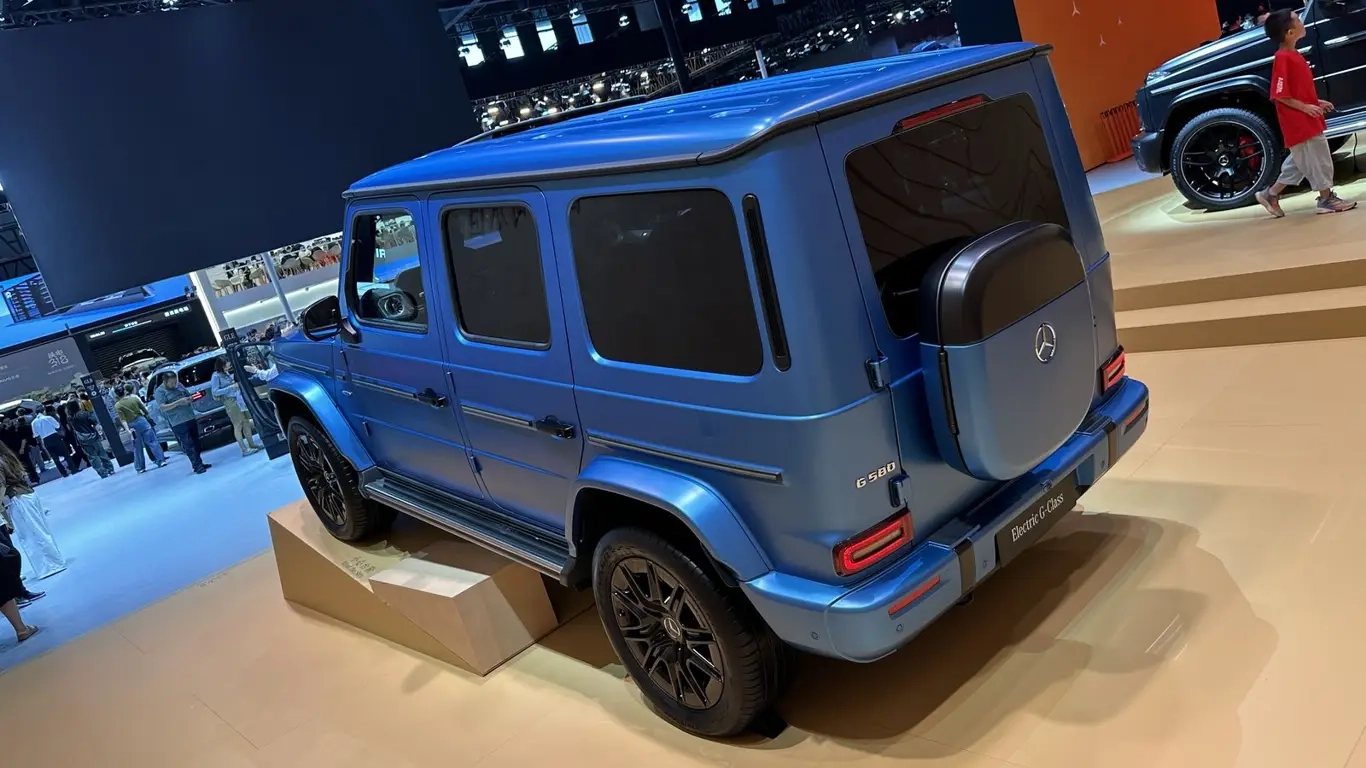

For the Mercedes-Benz G 580 with EQ Technology, 850 mm of water may no longer look like the limit. The production electric G-Class can already ford deep water, but a new Mercedes patent goes much further: instead of crawling along the bottom, the vehicle would be able to stay on the surface. In other words, the SUV could become almost a boat.
The main trick is a set of removable inflatable or foam elements in the wheel arches that would provide the necessary buoyancy. The electronics could vary their volume independently, compensating for uneven vehicle loading or the force of a current. And that is not all. The wheels would still be able to turn and change position, so steerable wheels lowered into the water would effectively work as rudders.
For an EV, the patent describes an even more intriguing scenario. The system could vary torque at each wheel separately and even make individual wheels rotate in opposite directions. Why? To hold a course, turn the vehicle on the water and help it climb back onto the shore. The filing also considers storing the buoyancy elements in the spare-wheel recess and inflating them with the compressor from the standard tire-repair kit.
This is where the patent becomes especially interesting. The production G 580 with EQ Technology already uses four individually controlled electric motors and can distribute torque with remarkable precision. That architecture is what enables its dramatic G-TURN and G-STEERING functions. Coincidence? Perhaps. The patent itself does not say that the system is being prepared specifically for the G-Class.
But the idea of a floating Mercedes did not appear today. In December 2025, Mercedes-Benz Group published another patent, DE102024002781B3. It explicitly describes a floating vehicle with a buoyancy device and separate marine lighting for travel on water.
The picture is getting interesting. First Mercedes works on a vehicle that can truly operate on water. Then comes a concept for controlling its buoyancy, direction of travel and even the process of getting back onto land. This no longer looks like one isolated patent, but like a distinct engineering direction.
A production Mercedes amphibian is still a long way off, however. A patent protects a technical idea; it does not promise that the idea will reach showrooms. The real intrigue begins if Mercedes shows a working prototype or even officially starts talking about such a system. So far, the company has done neither.