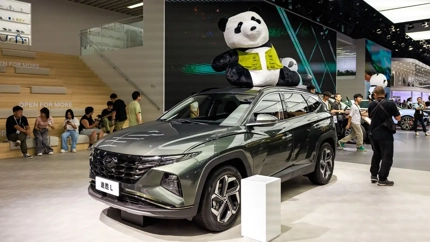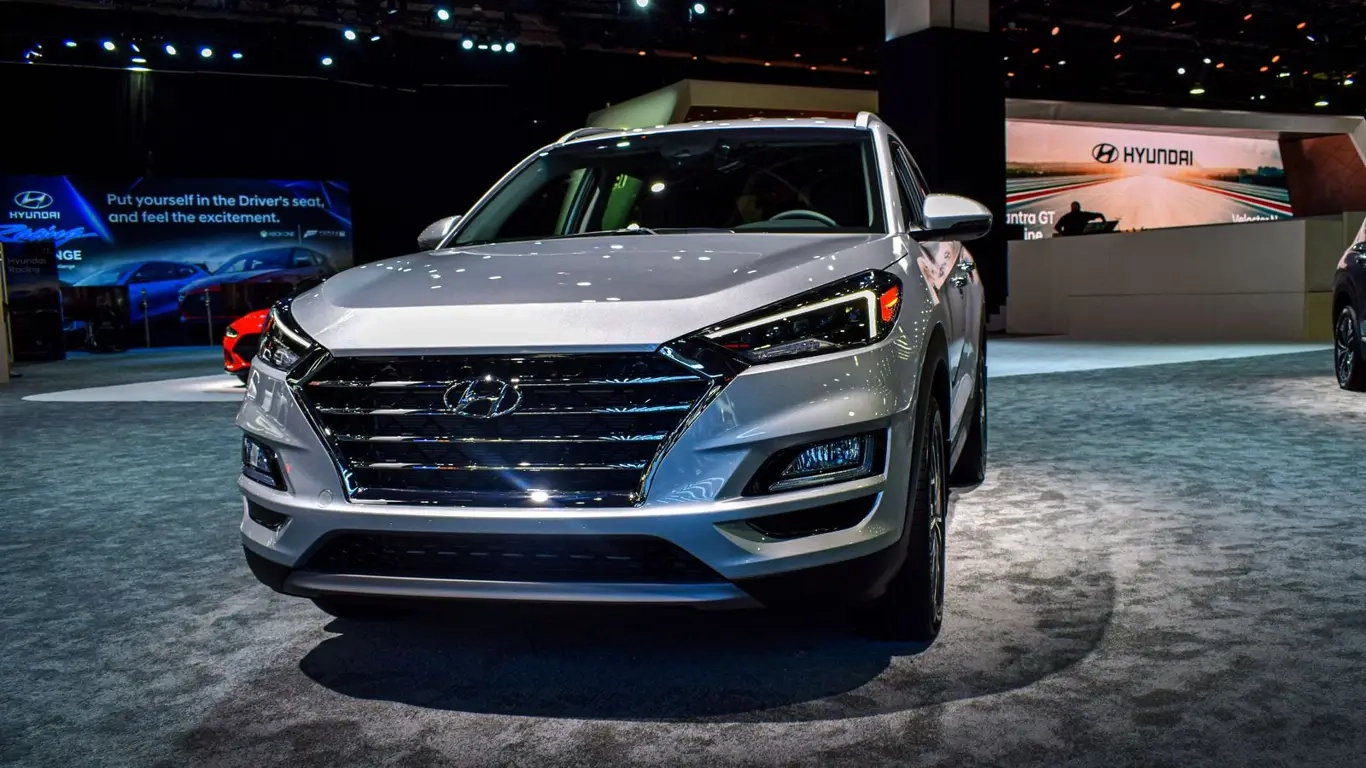

The family-friendly Hyundai Tucson may be about to put on a full N suit — and the familiar crossover could emerge almost unrecognisable. According to Auto Express, Hyundai is considering a true performance version for the next generation with a hybrid system producing roughly 300–350 bhp, all-wheel drive and a substantially reworked chassis. It sounds dramatic. There is one crucial catch, though: Hyundai has not officially quoted that output, and the range remains the British publication's estimate.
If the upper figure becomes reality, the gap to the regular new Tucson Hybrid will be substantial. That model is already listed at 180 kW, or roughly 245 metric horsepower. Converting the British bhp figures correctly into metric PS puts the potential Tucson N about 24–45% ahead. For a family crossover, that would mean a very different personality.
And here is the interesting part — Hyundai really does have the technical foundation for such a move. Its new hybrid architecture uses two integrated electric motors: P1 handles engine starting, power generation and torque assistance, while P2 drives the vehicle directly and manages regenerative braking. Hyundai officially says the system can span from just over 100 to the mid-300 PS range. In other words, something close to 350 horsepower no longer sounds impossible. But the top end cannot yet be assigned to a future Tucson N as fact.
Joon Park, Vice President and Head of N Management Group, has also made clear that N does not intend to choose only between pure EVs and conventional combustion engines. Hybrids can enter the picture too, with tuning focused less on economy and more on delivering power more aggressively. Tucson was not directly confirmed in that statement. For perspective, the current European Tucson Plug-in Hybrid already produces 288 PS.
This is where things get interesting. The lower 300 bhp estimate would mean a gain of only about 6% over today's PHEV — evolution rather than revolution. But 350 bhp converts to roughly 355 PS, more than 20% above the current figure. At that point, a Tucson N could finally pull clear of the regular range instead of being just another crossover with an aggressive body kit.
For now, Hyundai's official roadmap confirms something else: the next Tucson and Tucson Hybrid are due to reach their first markets in the fourth quarter of 2026. At the same time, the company plans to expand the N family and lift annual N sales to 100,000 vehicles by 2030. Hyundai has not revealed which models will receive the coveted N badge.
Hyundai has the right hybrid architecture, ambitions to grow the N range and room in the line-up for a genuinely fast crossover. But for now, the Tucson N's output, all-wheel drive and chassis setup remain information and estimates reported by Auto Express. The intrigue is real. Confirmation is not.