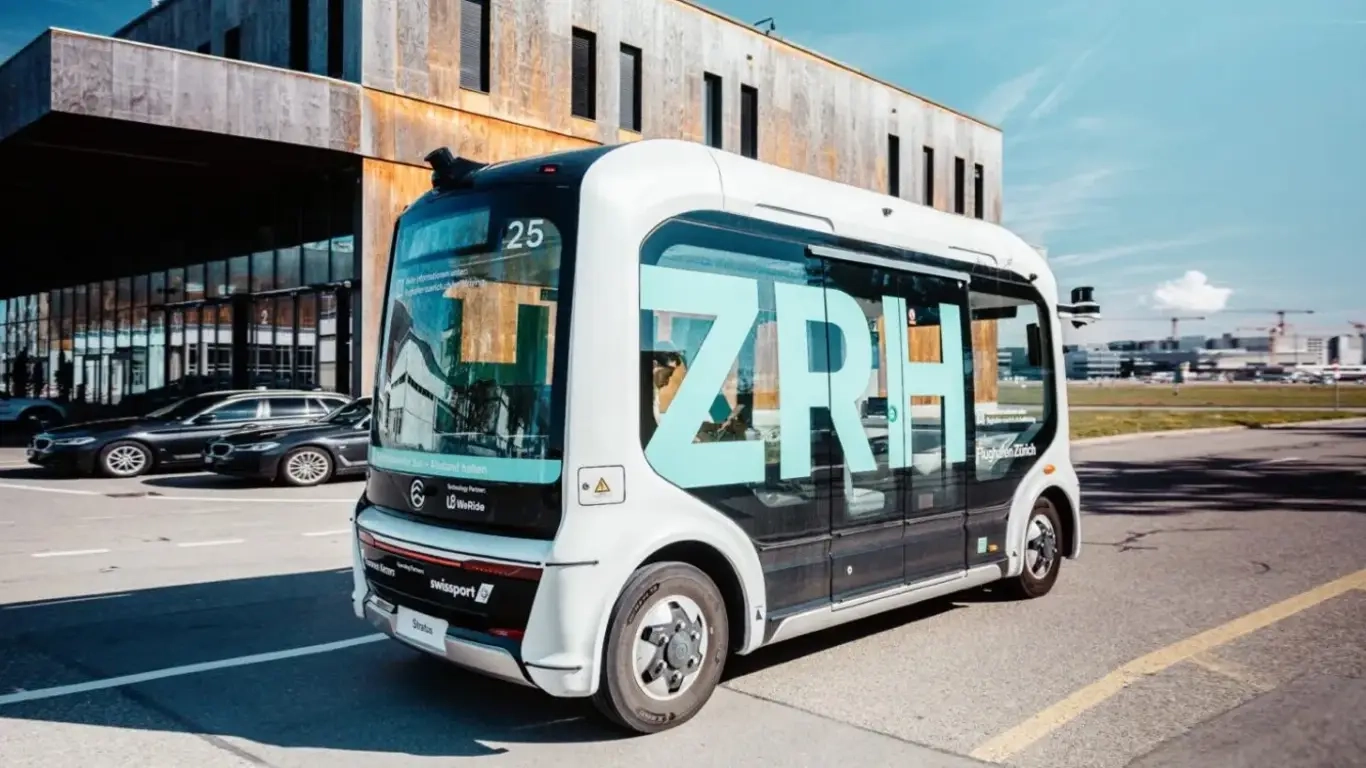

The driver is out of the cabin — but the human has not disappeared from the system. Two electric WeRide shuttles at Zurich Airport have moved to Level 4 after more than 15,000 km of testing: there is now neither a driver nor a safety employee on board. The control room simply moved elsewhere — operators monitor the vehicles through the Remote Cockpit and can intervene if necessary.
And that is the crucial detail. Calling this a system operating completely “without human control” would still be premature. The practical payoff of automation is already clear, though: in the future, one operator could supervise several buses at the same time. What disappears is not the human, but the need to place a separate driver in every shuttle.
For now, the autonomous vehicles work in tightly controlled conditions. The two RoboBus vehicles follow a fixed service route at the airport that does not cross aircraft taxiways. The first runs of this phase are taking place with no passengers at all. After roughly four weeks of testing, employees are expected to ride again — this time without a safety person on board. The pilot itself is scheduled to run through the end of 2026.
But Level 4 does not mean a bus can simply drive anywhere on its own. The system can operate without a driver only under predefined conditions and within a limited area. That is the key difference from Level 5, where autonomy would not depend on such an operational domain.
Zurich is not the only European project removing the human from the cabin. On September 10, Pony.ai and Verne began fully driverless test rides with invited passengers in Zagreb on a 22-km route, with no operator or other staff inside the vehicle. It is still a test phase, however, not fully driverless commercial service. Zurich Airport’s next clear milestone should come in about a month, when RoboBus is expected to carry employees again with no safety person on board.