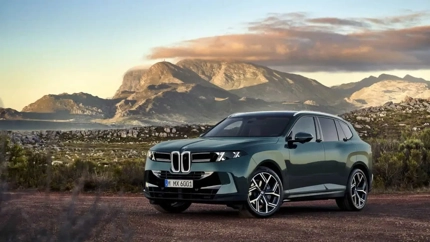

BMW is erasing the line between ordinary navigation and the car’s electronic “vision.” From October 2026, BMW Maps will begin combining the route, the car’s position on the road and driver-assistance data in a single 3D view on the central display of vehicles running BMW Operating System X. Instead of a familiar map, the driver will be able to see how the car interprets what is happening around it.
It looks almost like a video-game interface. But behind the flashy graphics is a very practical goal. The system shows the car with its exact lane and road level, while the upgraded Assisted View visualizes detected traffic, other objects and the actions of active electronic assistants. At complex interchanges and in dense traffic, that should make the automation’s behavior much easier to understand.
There is serious computing hardware behind those graphics. The new central Superbrain of Automated Driving computer brings together active-safety, automated-driving and parking functions, with computing power roughly 20 times higher than the previous-generation system.
The idea becomes especially clear with Highway Assistant. On suitable motorways, the system allows hands-off driving at speeds of up to 130 km/h, although the driver must still monitor the road. The electronics handle longitudinal and lateral control, and with active navigation BMW Maps can guide the car from the motorway entrance to the required exit. To confirm a proposed lane change, the driver only needs to glance at the corresponding exterior mirror.
And it will not stop at motorways. From 2027, BMW plans to begin rolling out navigation-guided, partially automated urban driving on cars with BMW Operating System X, starting in Germany. The concept is tied to City Assistant and the Address-2-Address scenario, in which electronic assistants support the driver for virtually the entire journey from one point in the city to another.
That creates an intriguing shift: the map in a BMW is no longer there just to say where to go. It is meant to show the road, surrounding traffic and what the car “sees” and is about to do at the same time. Almost a game — except this is the real road.