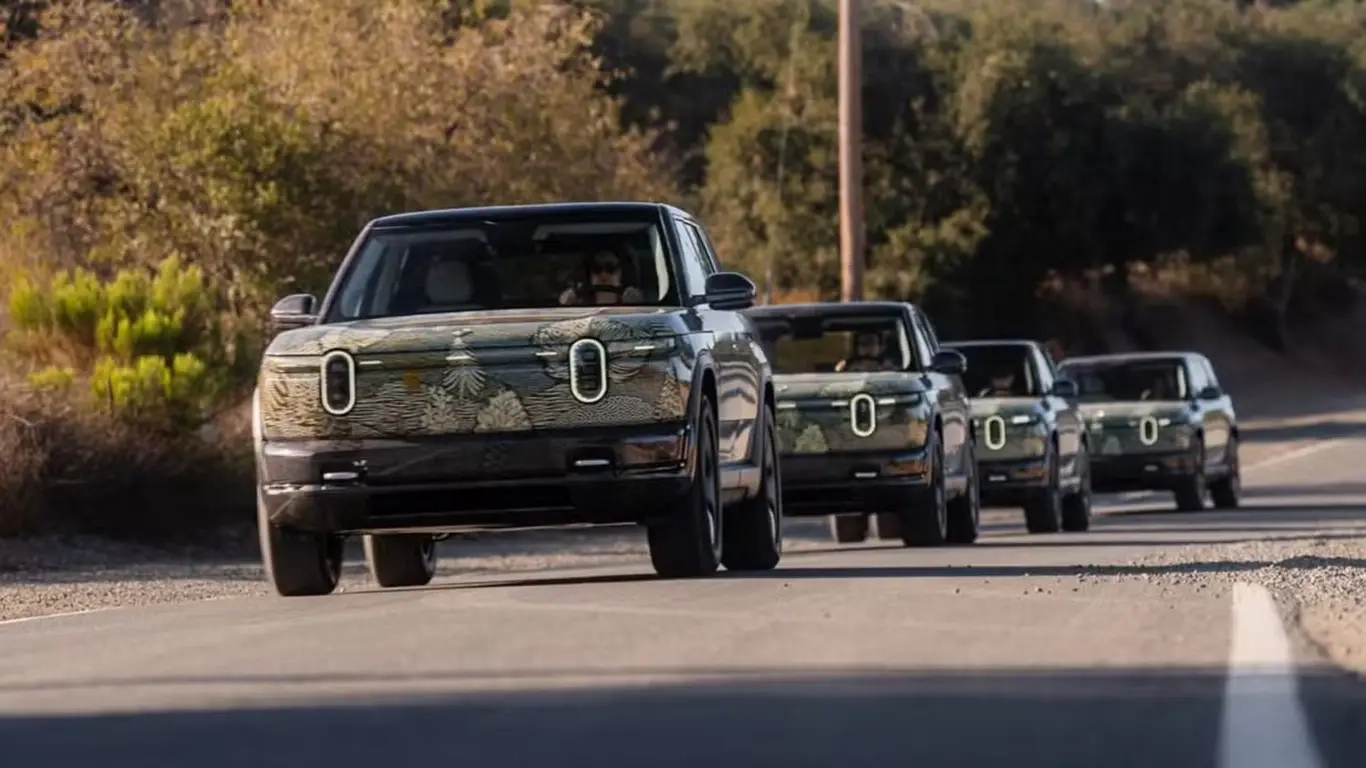

Rivian keeps expanding its autonomous-driving ambitions while drawing a clear boundary: the most prized developments stay in-house. Following a $5.8 billion technology agreement with Volkswagen Group, it became clear that the driverless functionality shown on Rivian R2 prototypes is not part of the joint effort. The deal spans a zonal control architecture, a real-time operating system, and infotainment, but leaves out interface solutions and the AI that powers them. That signals a deliberate move to protect the most differentiating layers.
The main intrigue is Rivian’s parallel push on its Large Driving Model (LDM), essentially a large end-to-end model built for vehicle control and aligned in spirit with big language models. The company characterizes it as a system that will learn over time and steadily expand autonomous capability specifically on Rivian vehicles. Rather than chasing robotaxis, Rivian promotes a vision of personal autonomy—for example, your pickup or SUV coming to meet you at the airport and taking you home. That focus reads as a pragmatic bet on features owners can actually use day to day.
The hardware foundation is getting attention, too. Alongside the R2 prototype, the company previewed a new generation of LiDAR and says it plans to roll it into the production R2 by the end of 2026 as a next-generation standard feature, with no retrofit for existing vehicles. In parallel, the existing hands-off system is slated to grow to cover 3.5 million miles of roads in the United States and Canada—extending beyond major highways to a vast stretch of ordinary asphalt. If Rivian delivers on that scope, it would meaningfully broaden where hands-off driving is actually usable.