
When talk turns to trimming a car’s weight, minds usually jump to aluminum, composite body panels, or lighter wheels. Yet one of the quietest culprits sits right in the cabin: the seats. Take one out just once, and the reason becomes obvious. Inside there isn’t merely metal and upholstery, but a whole assembly of frames, wiring, adjustment mechanisms, heating and ventilation—and in some cases, passive safety elements.
According to suppliers of automotive materials, the steel frame of an average front seat alone can weigh around 12.5 kilograms, and a full set of seats can edge toward 50 kilograms. Even switching to specialized lightweight steels often yields only about a 15% reduction. Beyond that, it’s a fight for every kilogram: foams, headrests, lumbar supports, rails, recline and height mechanisms—each component piles on mass faster than it seems.
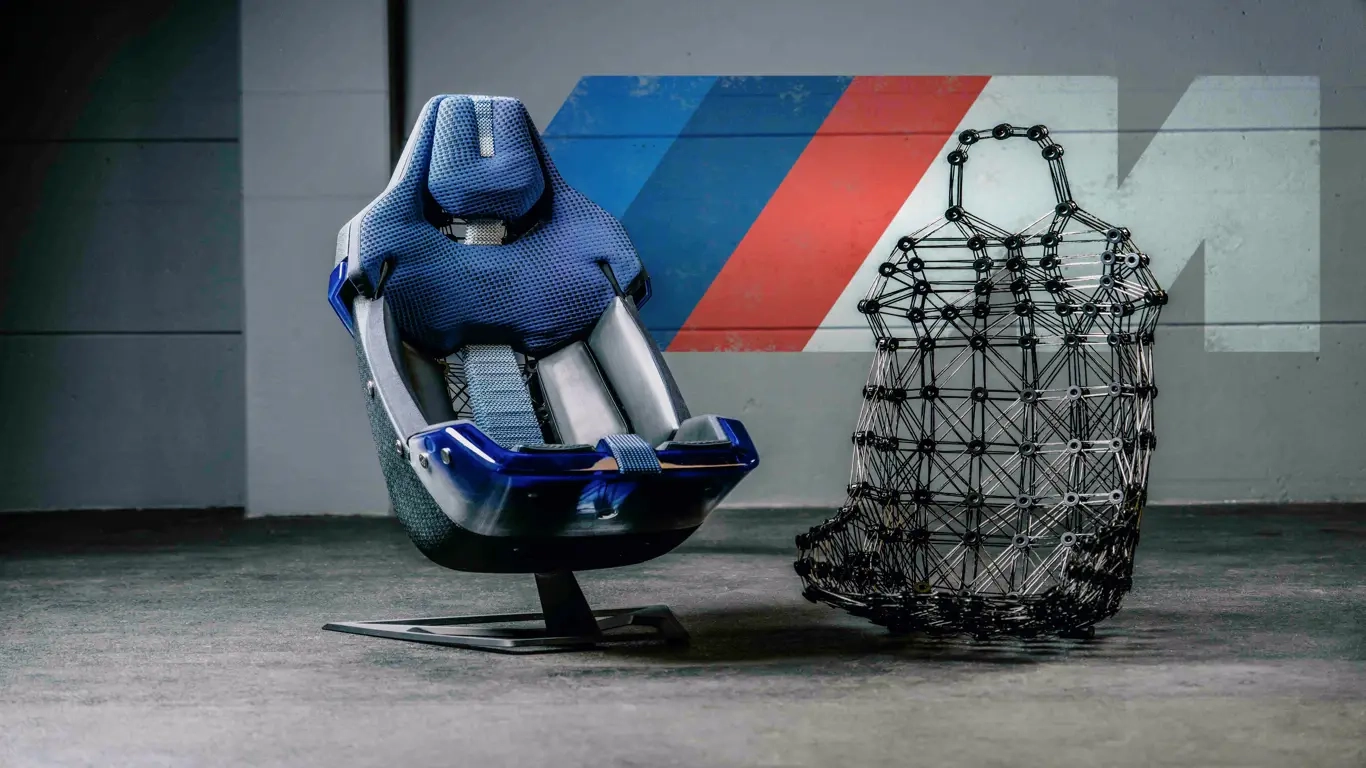
BMW has thrown a spotlight on the issue with the striking M Visionary Materials seat concept. The idea is not only about sustainability—using recycled and plant-based materials—but also about rethinking the very architecture of the structure. Instead of a conventional frame, the design relies on robotic fiber winding: a machine lays resin-impregnated fibers around load-bearing points, creating a structural network without traditional metal frames or unnecessary parts. The developers say this approach matches the strength of classic solutions while being roughly 60% lighter, with the added benefit of fewer components.
Seen in this light, the industry’s logic tracks: as new cars for 2025–2026 grow heavier with comfort features, safety systems, and electrification, the “extra kilos” have to be shaved from every subsystem. Seats make a prime target—voluminous, complex, and for years largely outside the public’s attention.