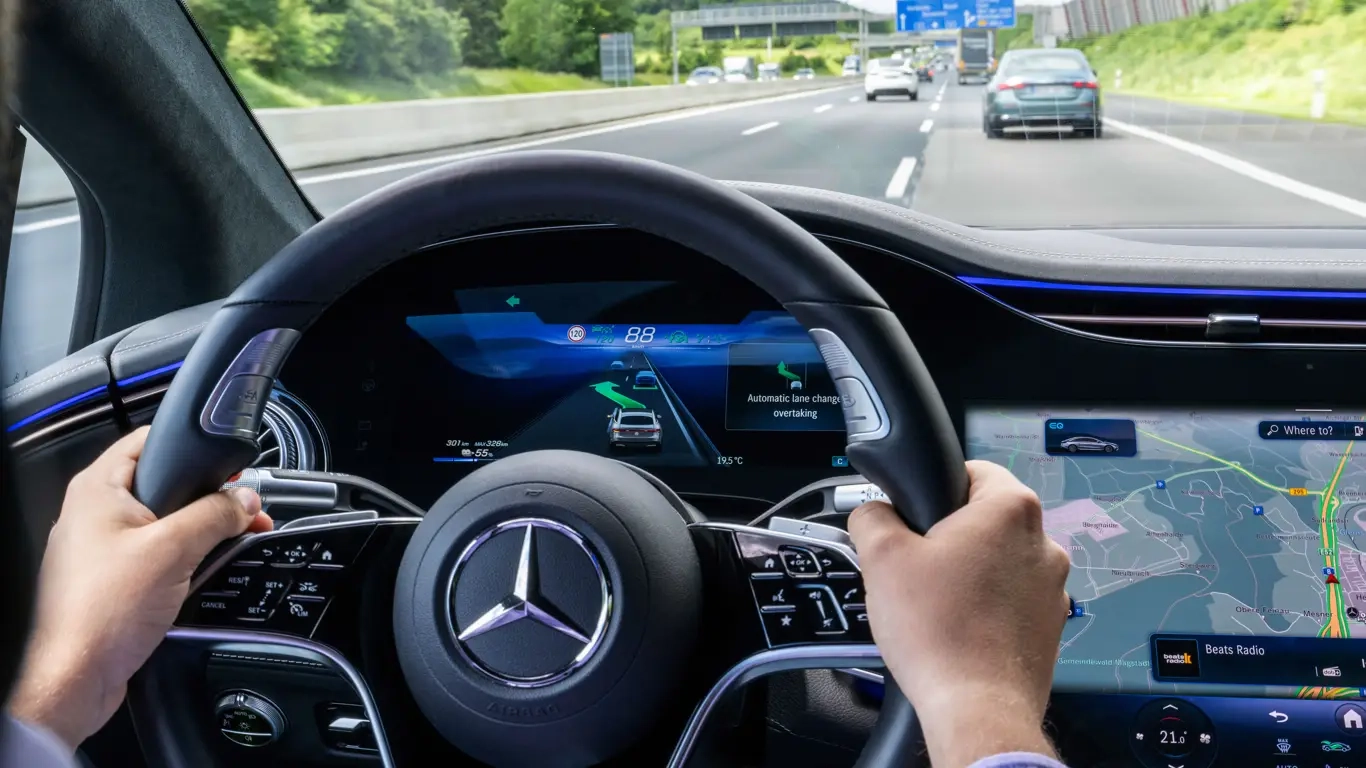

Automakers are increasingly turning to electric power steering (EPS), gradually phasing out hydraulic systems. The move is driven by fuel-economy targets, the rise of electronic driver aids, and the push to simplify vehicle design.
Unlike a hydraulic setup that constantly draws power from the engine via a belt-driven pump, EPS consumes energy only when the steering wheel is turned. That cuts parasitic losses and boosts fuel efficiency. BMW reports that switching to EPS can reduce fuel consumption by about 3%—a meaningful margin when meeting corporate efficiency standards. Solutions like this help brands build some of the most economical model ranges.
An electric assist is also lighter and more compact. With no fluid, hoses, or pump, packaging gets easier and overall mass drops. Just as important, EPS can be tuned for different vehicles through software calibration of steering effort and feedback.
There’s also the advantage of deep integration with other on-board systems. EPS communicates with ABS, stability control, lane-keeping, automated parking, and semi-autonomous functions, making it a cornerstone for today’s assistance tech and for future steering systems without a mechanical link to the column.