
Nissan has refreshed the Ariya electric crossover, with an important caveat: in the United States the update is largely moot, as the model will not return to the American market for the 2026 model year. Elsewhere the Ariya keeps going, and the changes clearly align with the brand’s latest design language—most visibly the new Leaf, which now sets the tone for Nissan’s EV lineup.
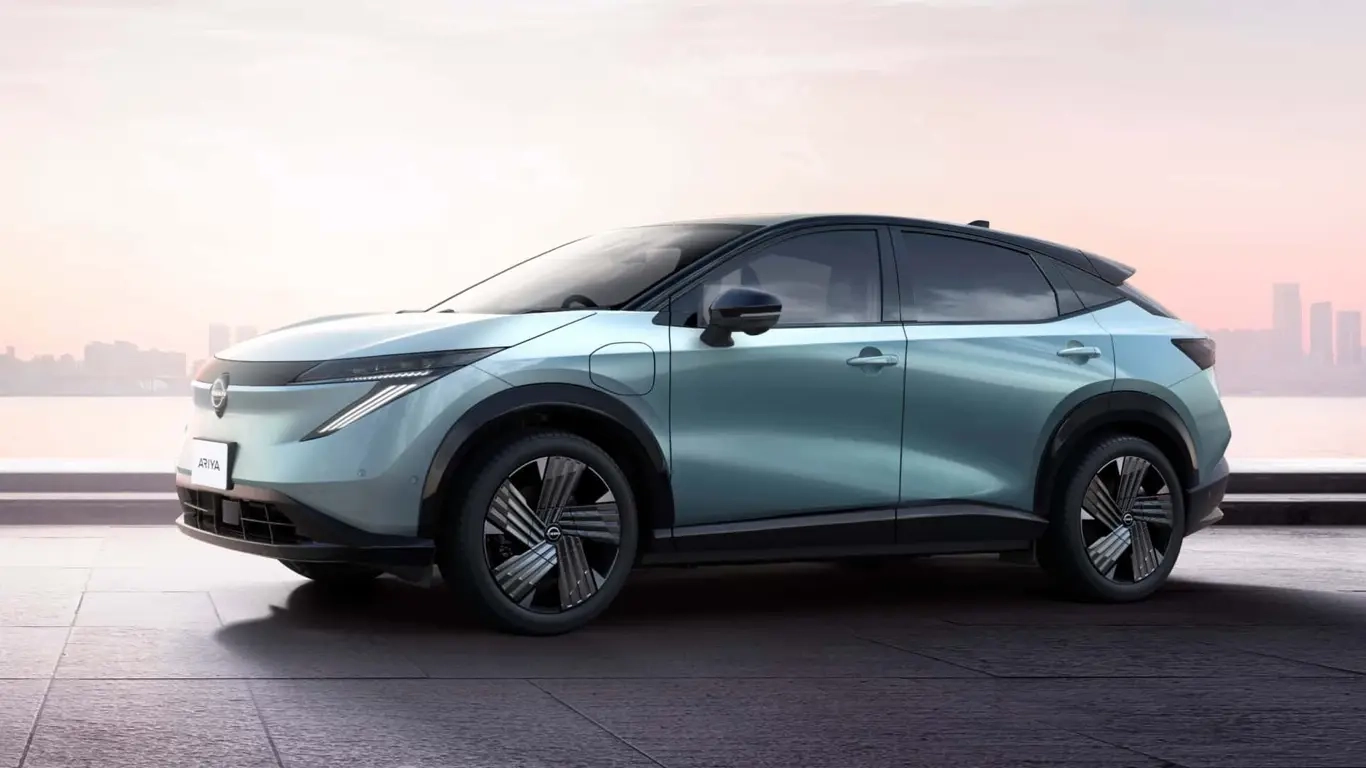
The headline change is the front end. The Ariya drops the faux radiator grille that made the EV look like a combustion car from a distance. In its place are a body-color panel, revised lighting, and a calmer bumper. Taken together, the crossover looks closer to the Leaf—only larger and more substantial. The cleaner face finally lets the Ariya read as an electric model first, not a disguised ICE.
There’s little happening at the rear, so the Leaf’s fashionable retro-style taillights don’t carry over. Instead, there are newly announced 20-inch wheels and a fresh Plasma Green paint, especially striking with a contrasting black roof. Nissan also promises suspension refinements aimed at comfort. For a car positioned as an easygoing daily, that’s the right priority.

On the technical side, the key news is the addition of V2L (vehicle-to-load). The Ariya can now supply up to 1.5 kW through the charging port via an adapter, and the car can be locked while power keeps flowing. It’s positioned both for outings and as a backup power source. Inside, there’s a new Google-based infotainment system. The 1.5 kW output is modest, but useful for light gear and everyday contingencies.
Range and output haven’t grown: in Japan, the 66 and 91 kWh batteries remain, with front-wheel drive and a single motor as standard, and e-4ORCE all-wheel drive as an option. Notably, the hot Ariya Nismo (429 hp) keeps its pre-facelift exterior, yet gains V2L and the updated infotainment—likely to avoid reworking a low-volume body kit. A pragmatic choice that keeps resources focused where they matter more.