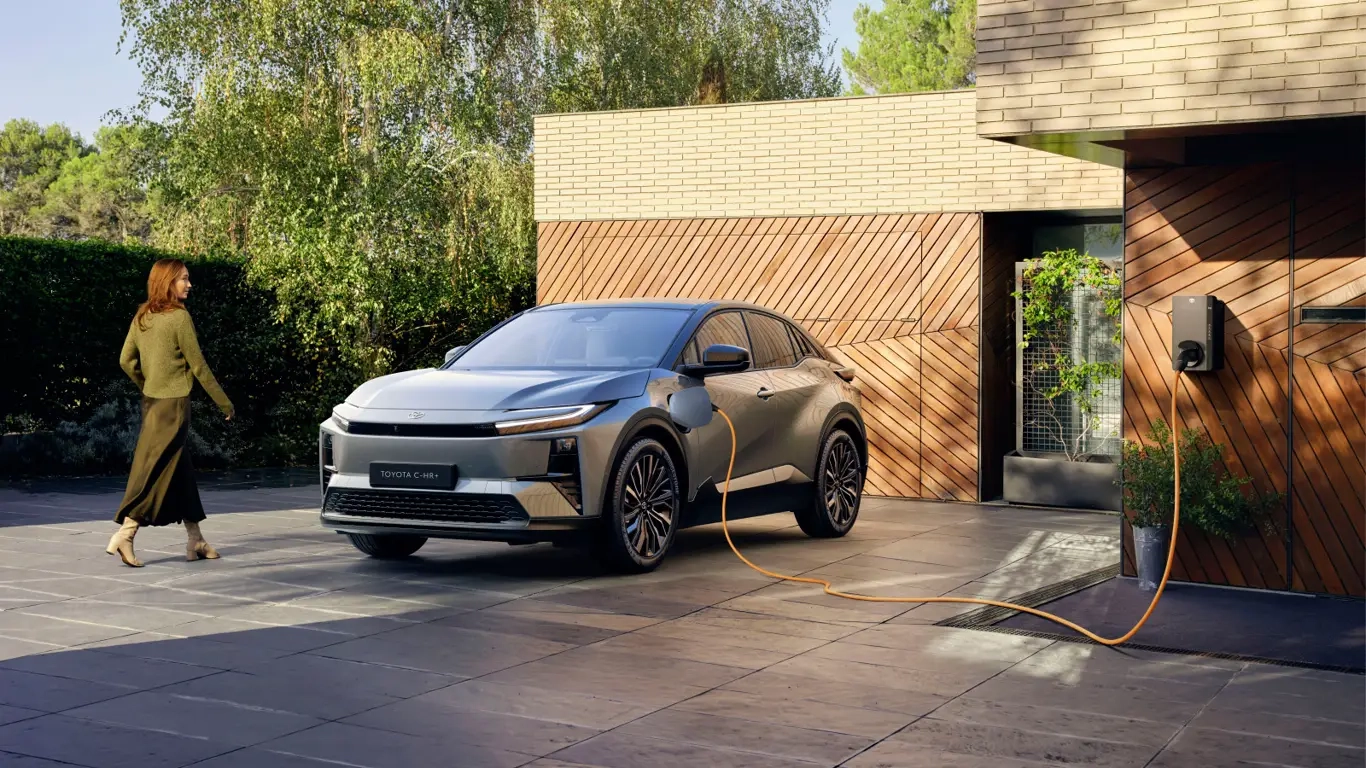

Toyota has launched a pilot program that uses electric vehicles as a power source for the grid. The initiative, run in the United States with energy company Oncor and charging-station maker Fermata Energy, is being tested at Toyota’s U.S. headquarters in Plano, Texas. It is a pragmatic way to explore real-world vehicle-to-grid behavior in a controlled setting.
The test fleet consists of Toyota bZ4X crossovers in Japanese specification. The bidirectional chargers analyze grid conditions and electricity prices, automatically picking the right moment to charge the car or send power back to the network. That automation matters, because few drivers will babysit price signals day to day.
Toyota notes that V2G and V2H remain relatively uncommon, but advances in battery longevity are turning EVs into credible energy storage assets. By the company’s estimate, if every EV in the United States supported bidirectional charging, they could collectively feed up to 40,000 megawatts into the grid—roughly the output of 40 nuclear reactors. The figure is striking; the real proving ground will be standards, interoperability, and how manufacturers handle battery warranties.
Toyota is already running similar efforts in San Diego and in the state of Maryland. The company expects such solutions to ease pressure on the power system, cut emissions, and give owners a potential new income stream. For city-centric EVs, which often sit parked for long stretches, this model looks particularly promising—idle time can finally do some useful work.