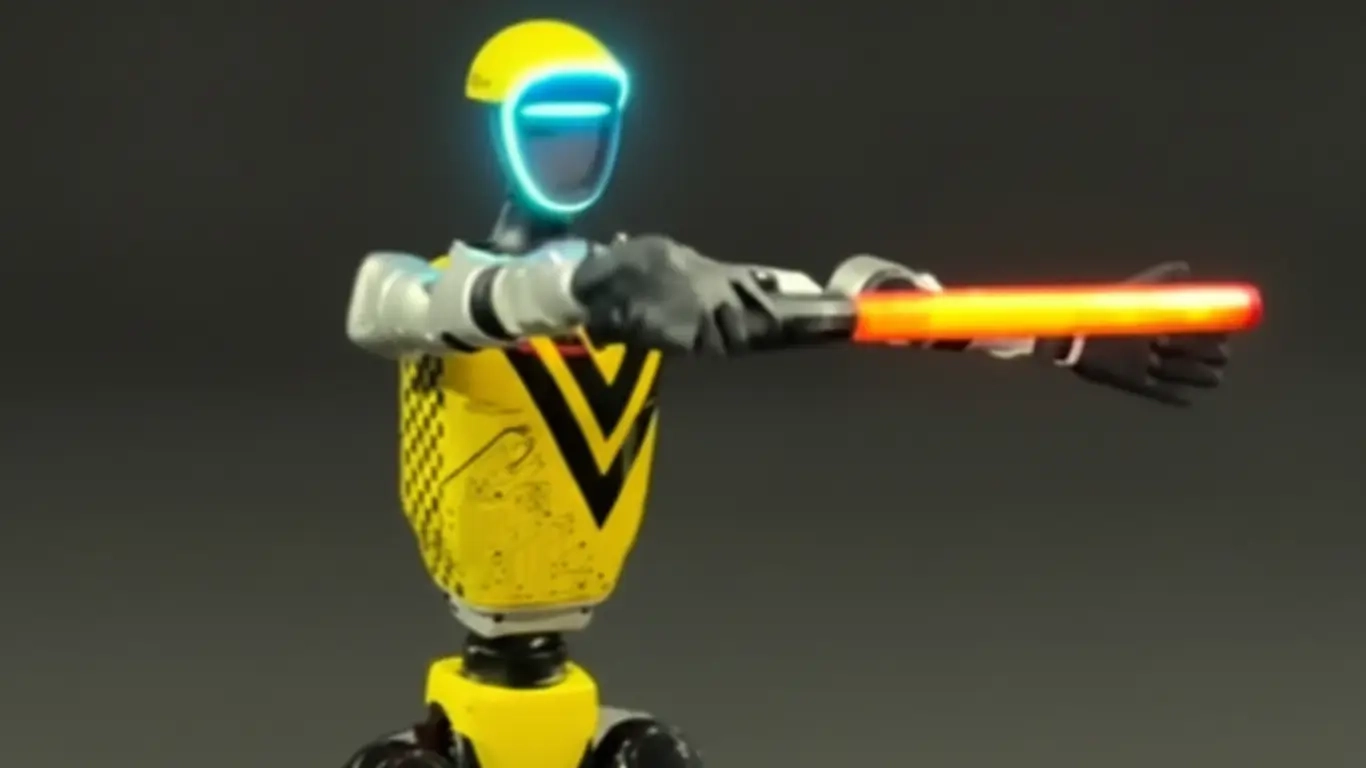

Japanese firm VOLLMONT Holdings has taken another step toward automated road safety, unveiling the Comune+ model-S 2.0 Advance—an AI traffic control system built for single-lane, alternating flow at work zones. The concept is straightforward yet ambitious: distill the judgment of a seasoned traffic controller into algorithms and deliver the signals through a humanoid, the Comune+ Walker, whose gestures and voice emulate familiar roadside cues.
VOLLMONT says the new version builds on earlier Comune+ solutions and was refined through field trials and a traffic simulator. A notable addition is automatic startup: initially, the system can run in a fixed go/stop mode, cutting the time to full-fledged autonomous control. From there, it synchronizes with the Walker, which performs hand signals and simultaneously calls out forward and stop, making the prompts easier for drivers to read in the moment. That pragmatic rollout—usable immediately, then more capable as it takes over—feels tailored to real-world crews and timelines.
The Comune+ Walker itself is designed for autonomous movement and a recognizably human style of signaling. The stated specs include a height of about 127 cm, a weight of roughly 35 kg, and 43 joints. A compact support vehicle, the Comune+ mini, is part of the setup, and the robot and hardware share a unified visual identity so they stand out in traffic. That consistent look should help drivers pick up the message sooner amid the visual clutter of roadworks.
The company also presented a pedestrian safety package: a work-zone monitoring system with 360-degree cameras that detects people nearing vehicle paths and controls a variable-length inflatable barrier, complemented by light and voice alerts. Remote oversight over LTE is supported, and simplified modular assembly is intended to speed relocation between sites—useful when work zones shift block by block.