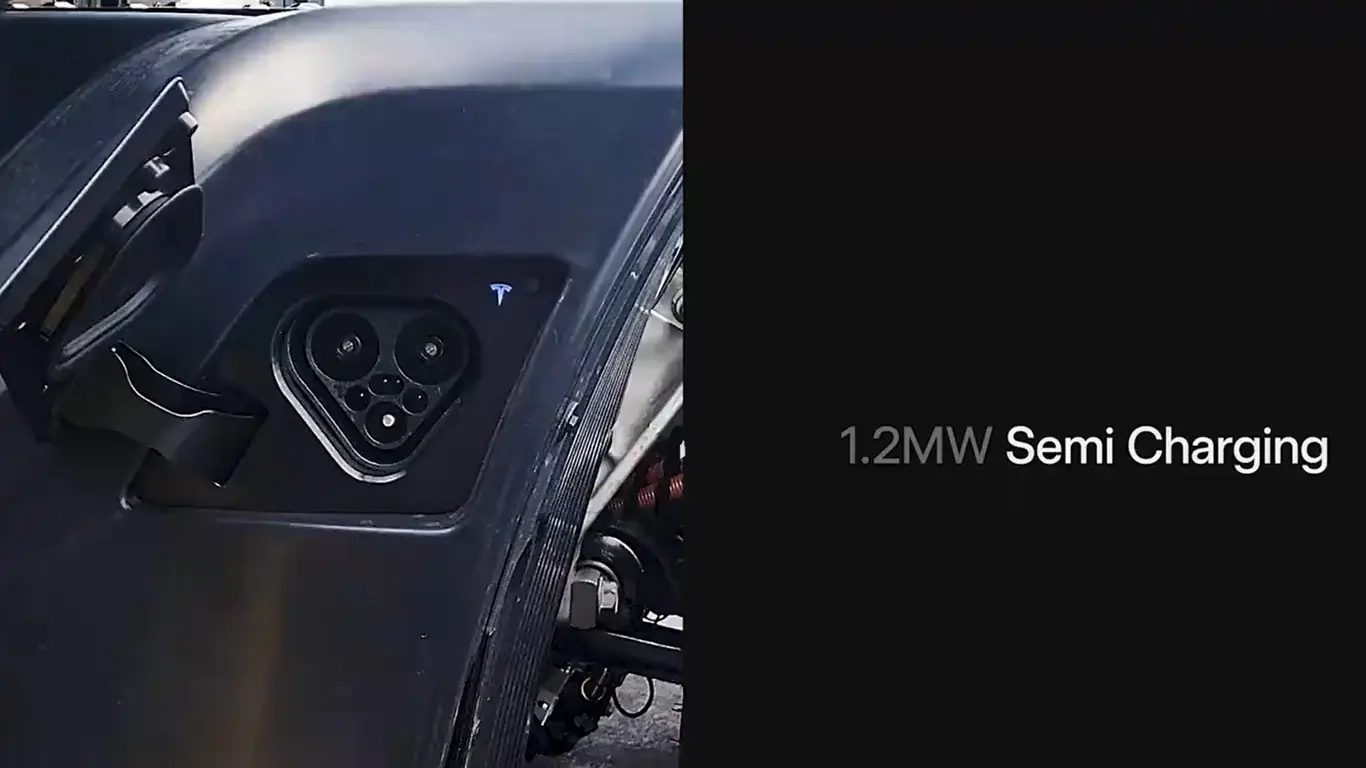

At the start of 2026, Tesla sent a rare yet telling signal about the Semi project. The official Semi social account posted a clip of real-world charging on a Megacharger, where the electric hauler held a steady 1.2 MW. For the heavy-duty market, that figure is pivotal: the higher the sustained output, the closer long-haul routes get to shedding hours-long charging downtime.
At the same time, Semi program lead Dan Priestley confirmed that the updated version now comes standard with an MCS megawatt interface, fully replacing previous solutions. In essence, it is a move toward infrastructure unity, so charging for heavy transport evolves by clear rules rather than everyone going their own way. A pragmatic step that pushes the segment in the right direction.
In parallel, footage of the refreshed Semi near a Nevada factory surfaced: the look is tighter, with different lighting and smaller side windows. A revised front fairing is also mentioned, linked to preparations for additional cameras — a logical move if Tesla is strengthening sensors and preparing the truck for full-duty operation. Internal updates such as a transition to 4680 cells are not discernible from video, of course, but the overall level of finish already feels less like a prototype.