
Five years into the UK market, and it's still not clear whether Genesis has actually pulled it off. The cars look sharp, the equipment is generous, the numbers are competitive on paper. Yet sales still refuse to find a rhythm. Autocar puts it bluntly: the brand isn’t growing so much as reliving the same first year, five times in a row.
It started with a bold pitch: dedicated studios, online sales, a personal assistant instead of a salesperson. Sounds exclusive on paper. In practice, it meant a tiny footprint and buyers with nowhere nearby to actually see the car. Now Genesis is doing a full 180 and turning to traditional dealers — the plan is to grow the European network from 15 to 30 outlets, with service points climbing from 39 to 102 by 2027. At the same time, the brand is pushing beyond the UK, Germany and Switzerland into Italy, France, the Netherlands and Spain.
And that matters more than any new model launch. In the premium segment, buyers care about more than cabin materials and horsepower. A test drive close to home, sane financing, service that doesn’t take a month, fast repairs and decent resale value — that’s what actually decides it. The dealer pivot is meant to close those gaps. The cost is that Genesis ends up looking a lot more like BMW, Audi and Mercedes-Benz in how it deals with customers — losing some of the very distinctiveness the brand was built on.
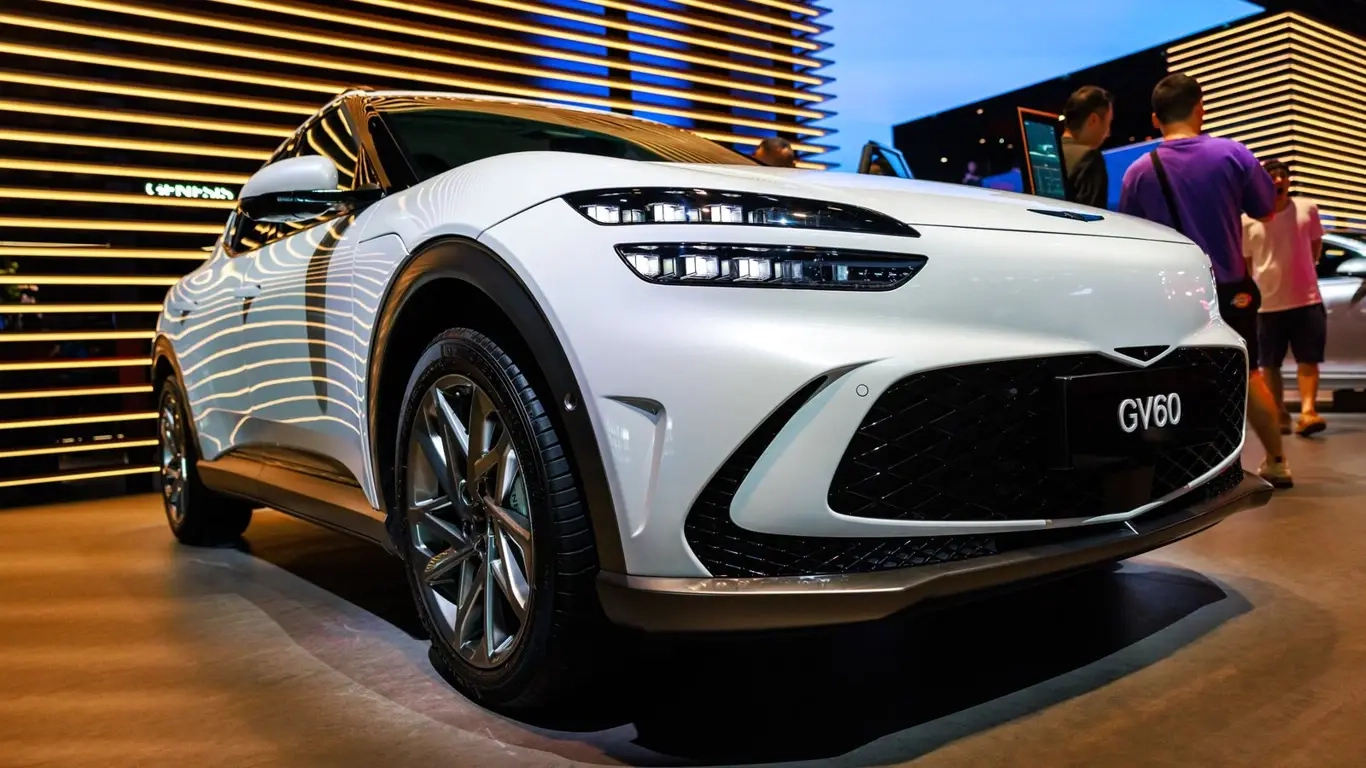
Pricing, at least, is already where it needs to be. The electric GV60 starts at £54,115 in the UK and claims up to 348 miles — roughly 560 km — on the WLTP cycle. There’s no “budget Hyundai” discount here: this is a direct rival in the expensive end of the electric crossover segment. The trouble is that a high price demands brand recognition and infrastructure to match — and Genesis is still building both.
Another card in play is the Magma programme and the move into endurance racing. The logic is straightforward: give the brand an emotional hook that comfortable sedans and crossovers simply can’t provide on their own. But flashy concepts and race outings don’t convert into sales by themselves. That needs rising numbers, resilient resale value and dealers willing to invest in dedicated showrooms — without that, the racing story stays just a pretty picture.
The real test comes in 2027. By then the dealer network has to double, and service points need to more than double as well. If the new markets and the GV60 Magma bet don’t deliver real growth, this five-year search for an identity will stop looking like a promising start. It’ll just be a start that dragged on too long. No quotation marks needed.