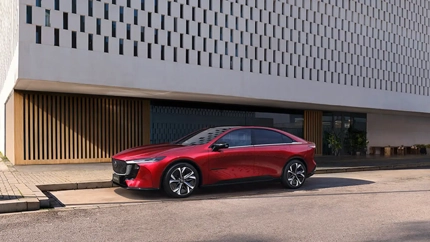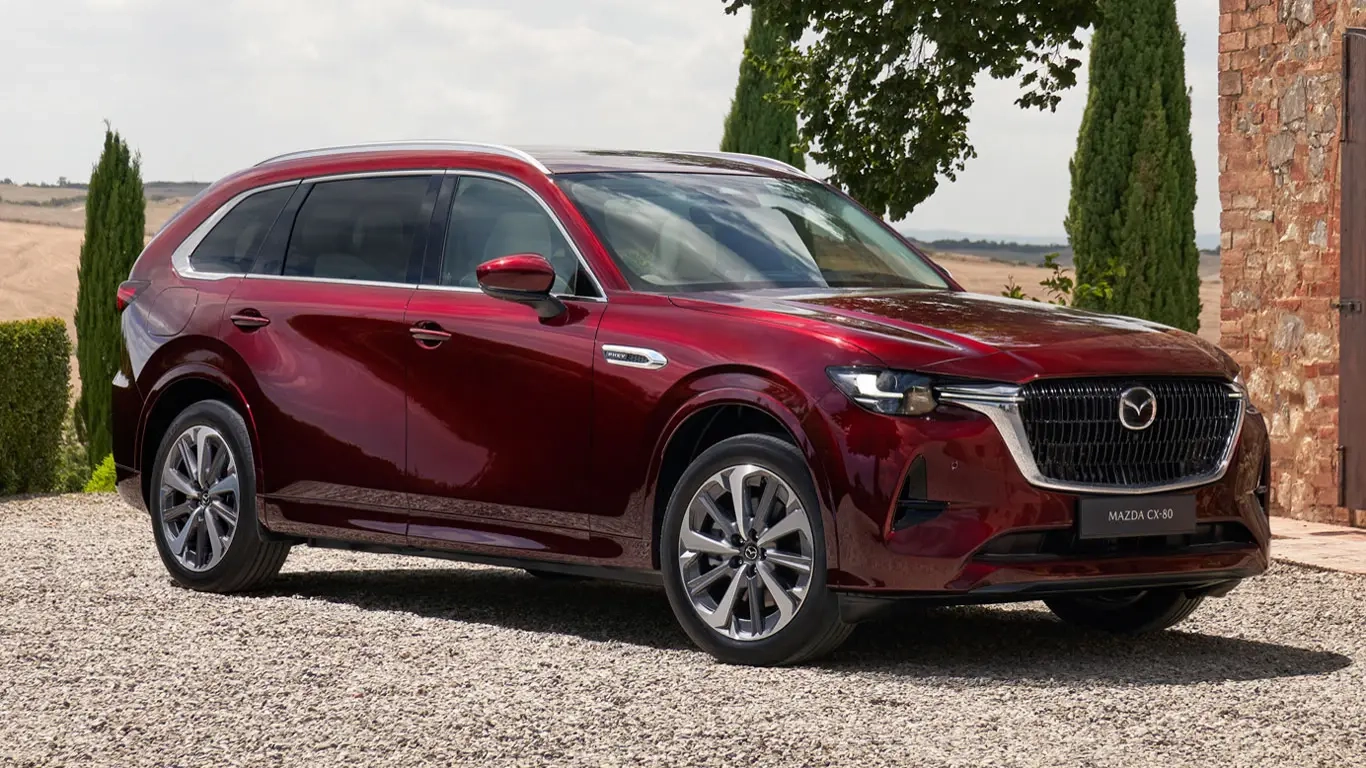

Bigger doesn't automatically mean more practical. That sounds like a contradiction, but it's exactly what buyers run into when choosing between the Mazda CX-60 and its bigger sibling, the CX-80. The larger crossover is 250mm longer — 4,995mm versus 4,745mm — and packs a full three rows of seats. But fill all seven seats, and the boot shrinks to a modest 258 litres. The five-seat CX-60, meanwhile, has a full 570 litres waiting behind its second row — nearly double.
So it's no surprise that Autoevolution's reviewer, after driving both, sided with the CX-60 for families who need that third row only once in a blue moon. There's a catch, though: fold the CX-80's rear seats down, and the gap nearly vanishes — Mazda officially quotes 566–687 litres depending on second-row position. The third row, it turns out, only eats into cargo space while it's actually up.
Technically, the two are close relatives, not identical twins. The European CX-60 offers all-wheel drive and a 327hp PHEV system, plus an inline 3.3-litre diesel with 200 or 254hp. The CX-80's lineup is tighter: either the 327hp PHEV or the 254hp diesel — both come standard with all-wheel drive. What the bigger car can do that the smaller one can't is carry six or seven people at once.
For long-distance driving, the diesel CX-80 wins out: 254hp, 550Nm of torque, and an official WLTP consumption of just 5.6–5.7 l/100km. The PHEV is punchier at 327hp and can cover 60–61km on electric power alone under WLTP testing. But once the battery runs dry, consumption jumps to 8.0–8.1 l/100km — reality catches up fast.
So the choice here is simpler than it looks. If seven seats are only needed occasionally — or not at all — the shorter CX-60 delivers nearly the same usable space and similar mechanicals, without the extra length. The CX-80 only earns its 250mm when that third row is actually in regular use, not folded flat for months on end.
Mazda has also been clearing out the 2025 CX-5 ahead of the next-generation model.