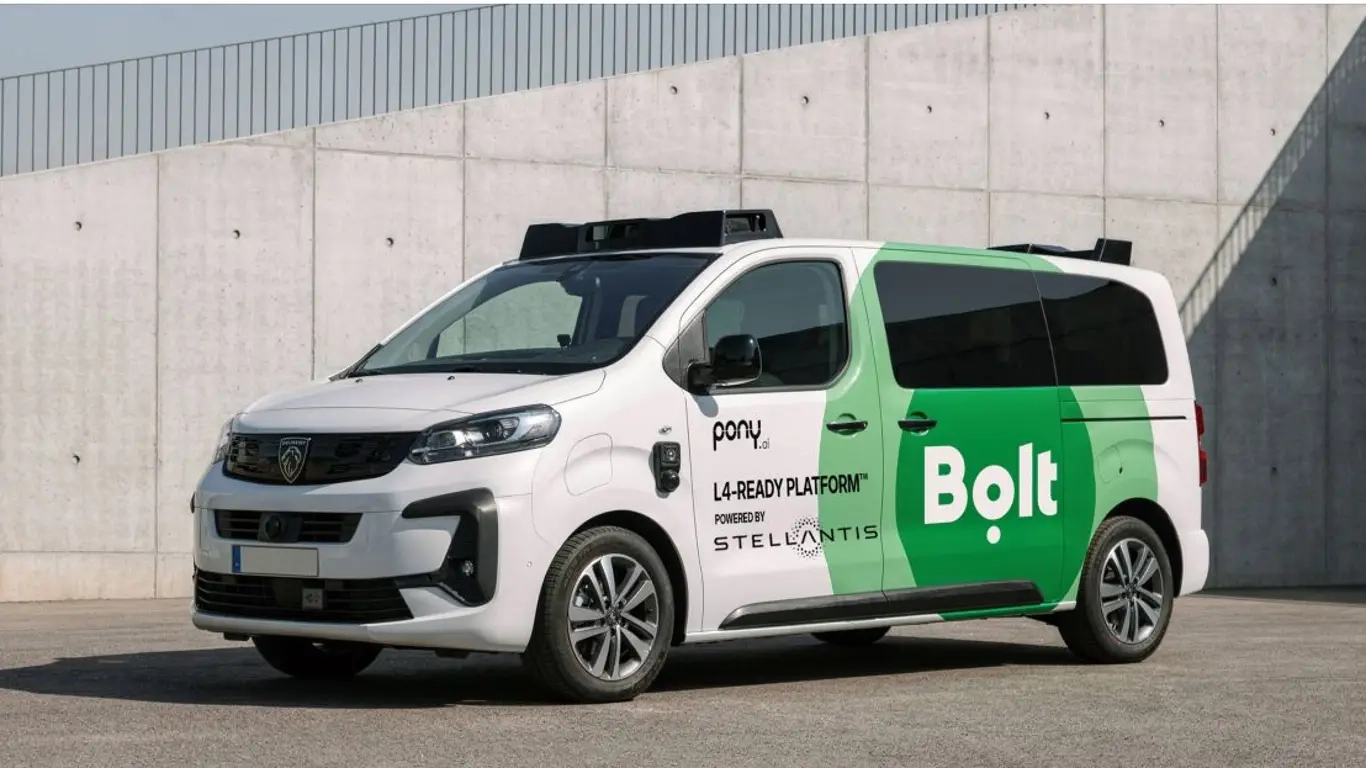

European taxi drivers might want to start worrying for real. Bolt is stepping into autonomous rides not as a curious onlooker but as a full-blown service operator. Together with Pony.ai and Stellantis, the company is rolling out a pilot in Luxembourg — self-driving vehicles will be hitting ordinary city streets.
The project uses a Stellantis midsize van built on the L4-Ready platform. Autonomy is handled by Pony.ai, with seventh-generation systems running in the test vehicles. By the end of the program, the partners aim to bring the car to a state of full driverless readiness.
And this is where it gets interesting. They’re not just stress-testing the technology — the entire stack goes on the bench: the vehicle itself, Bolt’s ride-hailing integration, fleet operations, safety, ride quality, the regulatory dialogue. Luxembourg wasn’t picked at random — it’s one of the most flexible European jurisdictions for trials like this.
Each partner gets something out of it. Stellantis road-tests the commercial use of its L4 platform. Pony.ai cements its foothold in Europe after Asian wins. And Bolt answers the question that actually matters — how do you fold a driverless car into a regular ride-hailing service rather than a one-off science fair for journalists.
“Autonomous mobility technology is already transforming transportation around the world, and as the only independent European-founded ride-hailing platform competing globally, we want to be at the forefront of scaling this revolutionary technology in Europe,” said Bolt founder and CEO Markus Villig.
This isn’t a robotaxi service for everyone — not yet. It’s reconnaissance for a robotaxi service for everyone. And Europe today is watching less for whether the car can drive itself — that question is nearly answered. What matters now is who’s on the hook for the service, the fleet, and the rules of the game.