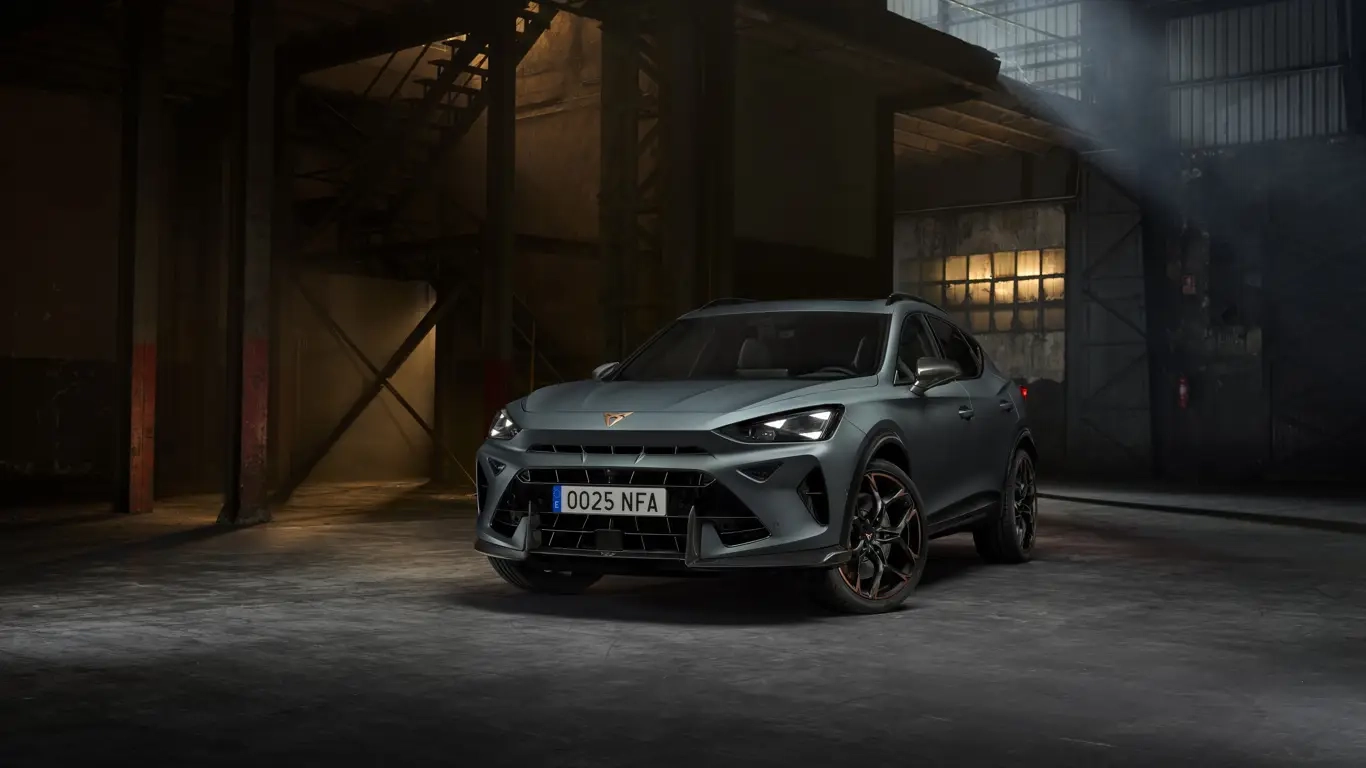

The five-cylinder engine is almost extinct — and Cupra has just slapped a premium-German price tag on one of the last survivors. UK pricing for the Formentor VZ5 has finally landed: from £64,495 OTR, roughly $86,400 at current rates. First deliveries are slated for the fourth quarter of 2026.
The VZ5’s main argument isn’t the price or the design. It’s a five-cylinder 2.5-litre turbo lifted straight out of Audi Sport’s arsenal — the same one that lives under the bonnet of the RS 3 and the previous RS Q3. Here it makes 390 metric hp and 480 Nm of torque, sending it all through a 7-speed DSG to all four wheels. Zero to 100 km/h takes 4.2 seconds, with top speed capped at 250 km/h. For reference, the current RS Q3 loses a full 0.3 seconds on the same sprint — that’s no longer a footnote, that’s a verdict.
The production run is just 4,000 cars worldwide. The British allocation, clearly, will be tiny. Outside Europe the numbers tell a different story: in Australia the VZ5 starts from 94,994 Australian dollars (around $61,700). But that’s a local recommended price, while the UK figure is OTR with on-road costs included.
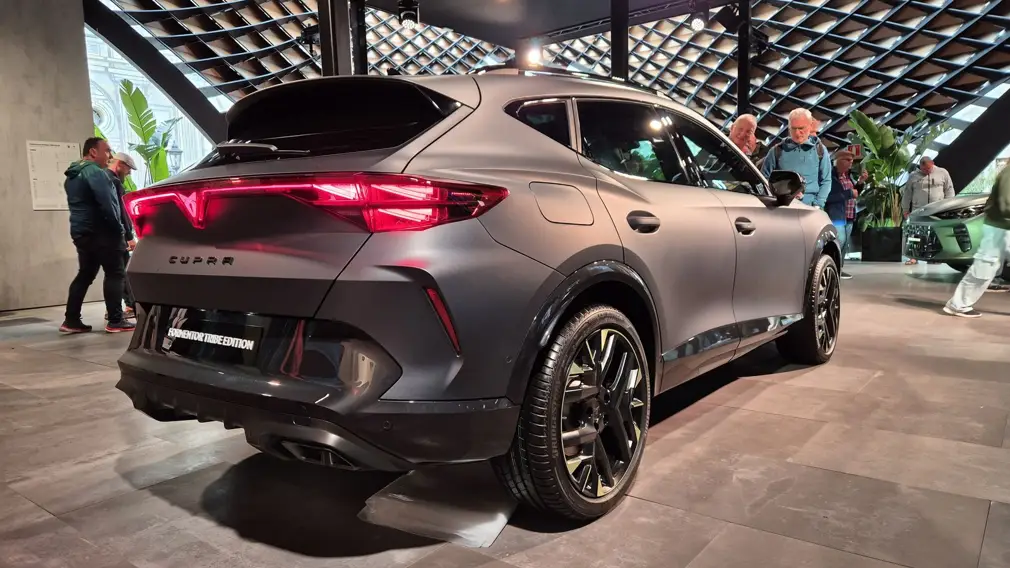
The VZ5 separates itself from regular Formentors with a lot more than the engine. A new front bumper, a sharp splitter etched with the VZ5 logo, wider arches, an aggressive rear with a diffuser, and Cupra’s signature copper accents. Inside, you get CUPBucket seats, branded trim, and ambient lighting. The palette plays the role of a pricey limited edition too: Century Bronze, Magnetic Tech, Enceladus Gray, and other matte and metallic shades.
For the buyer it’s a strange deal, but a coherent one. For the money of a premium crossover, you get a Cupra rather than an Audi with the four rings — but you also get that five-cylinder engine, which is becoming a rarity even inside the Volkswagen Group. The MQB Evo platform underneath is shared with a dozen other models, from the Golf and Tiguan to the Audi A3 and Skoda Octavia. But the VZ5 squeezes the most emotion out of it.
The Cupra Formentor VZ5 isn’t expensive because it’s more practical than its rivals. It’s expensive because engines like this barely exist any more.