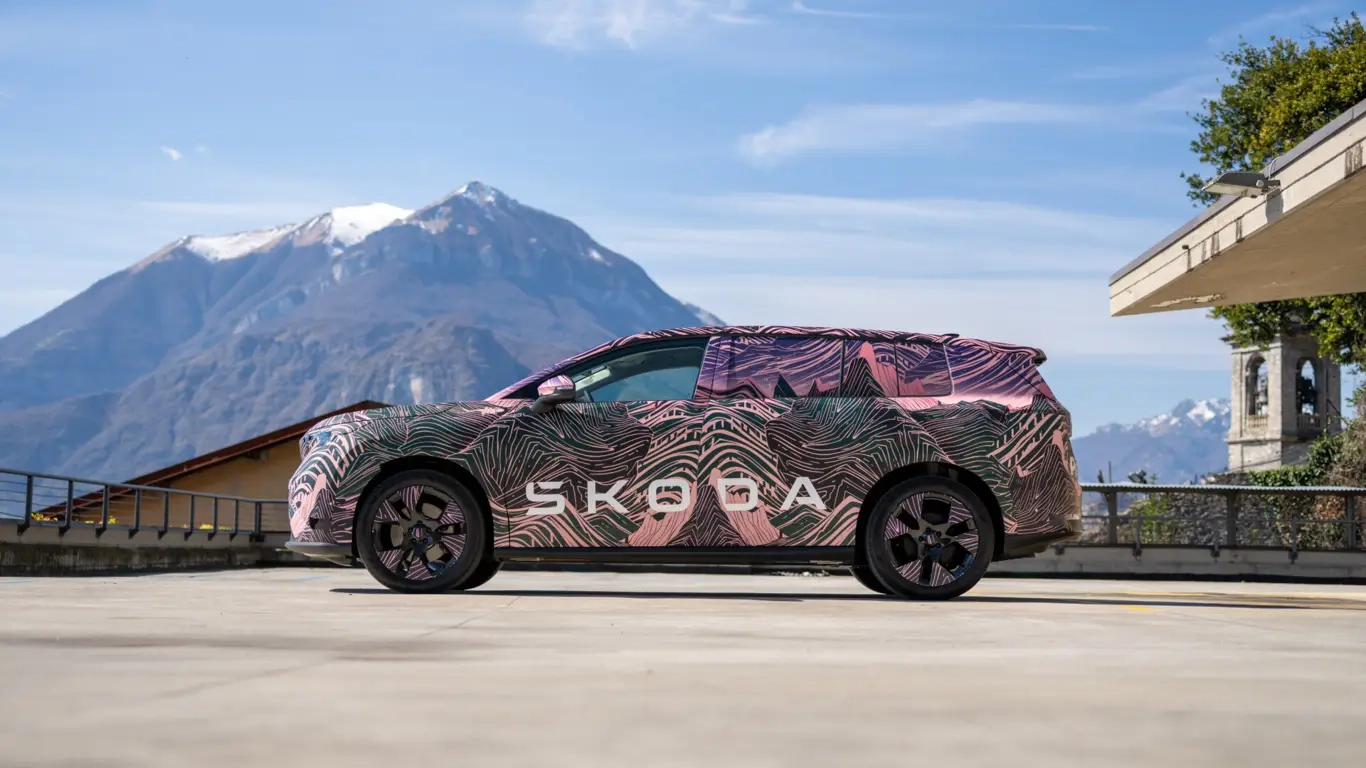

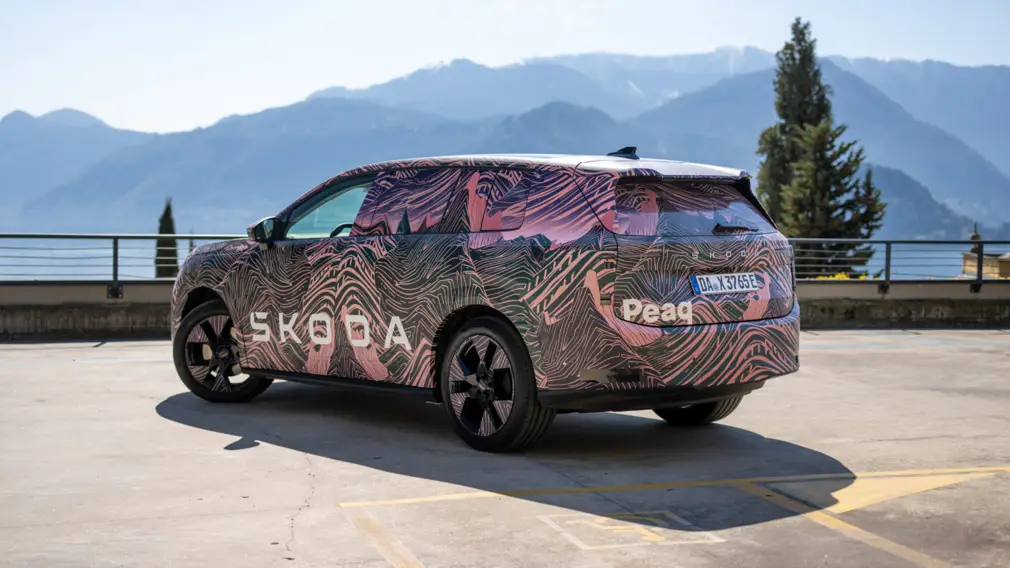
Skoda has pushed the Peaq into its final testing stretch before launch, and the number the brand is showing off matters more than any teaser. Before its June 23 debut, prototypes covered over 1.5 million km across three continents. This big electric SUV isn’t being prepped for a show — it’s being prepped for real life.
The Peaq will become Skoda’s new flagship, built on the Volkswagen Group MEB+ platform. Up to seven seats, more than 600 km of range, new efficient electric motors, adaptive DCC chassis. In short, it’s a direct answer not to city EVs but to the heavyweights of the family segment — Kia EV9, Hyundai Ioniq 9, Peugeot E-5008, and Volvo EX90.
The prototypes weren’t driven on smooth tarmac. In the Arizona desert, the cars stood under direct sun for months and drove in scorching heat — engineers watched how the paint and plastic held up, how the battery cooled, how the brakes and suspension behaved. On dust and gravel, they tested cabin sealing and body resistance to flying stones. Then — the opposite pole. Roughly 200 km north of the Arctic Circle, with temperatures dropping to −40 degrees Celsius. Pretty screens don’t matter there. What matters is whether the car starts, whether the windows defrost, and what the battery does to the range.
Skoda isn’t quiet about its virtual testing on high-performance computers, either. But that’s not what convinces a buyer. A large family electric crossover has to handle the highway, broken roads, frost, heat, full loads, and long-distance trips equally well. An EV’s weak spot isn’t acceleration. It’s winter behaviour: how fast the cabin warms up and how many real kilometres are left in the battery under load.
Inside, the Peaq promises low cabin noise, a new Sonos audio system, and signature Simply Clever solutions. One of them — wipers with built-in washers, appearing on a Skoda model for the first time. A small detail, but a logical one for a large family SUV: less dirt on the glass means less fatigue behind the wheel.
For markets without official Skoda support, the Peaq makes more sense as a benchmark for what a European family electric crossover looks like than as an obvious mass-market buy. Without dealer backing, a clear battery warranty, and developed fast-charging infrastructure, a car like this competes not only with the Kia EV9 or Volvo EX90 — but with far more practical hybrids and large Chinese SUVs.
Skoda hasn’t shown the Peaq’s design without its premiere wrapper yet. But 1.5 million km of testing already sets the bar: Skoda wants to sell not a flashy EV stunt, but a family car that has to work every single day.