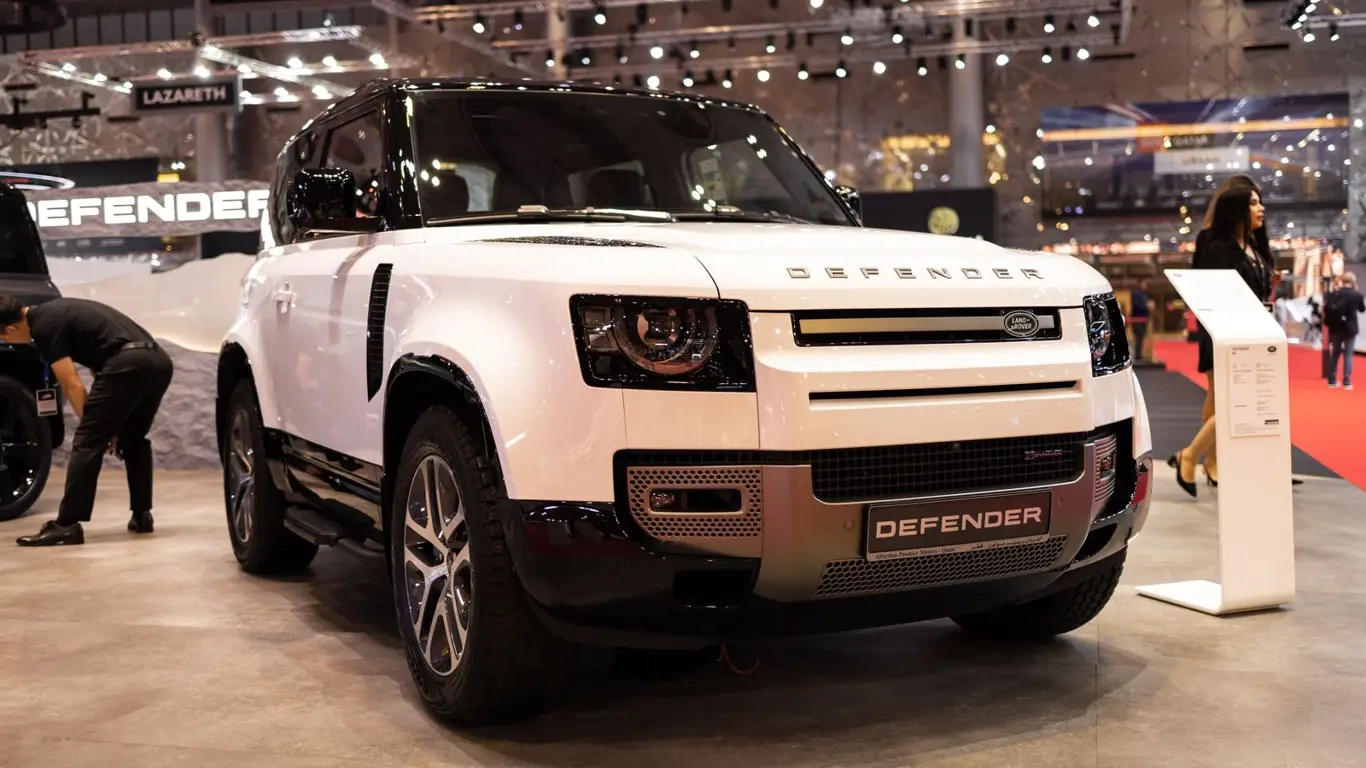

It looks like someone at JLR has been doing some serious rethinking. The baby Defender — the one the press keeps calling Defender Sport — was originally lined up as a pure EV. That plan has now shifted. Sharply. The EMA platform will support not just BEVs, but hybrids too. This isn’t a cosmetic tweak. It’s a U-turn.
And it’s easy to see why. Going fully electric is a much bigger ask for Defender than for some compact urban crossover. The brand has to keep the off-road character, the all-wheel drive, the durability, and the ability to reach places where charging stations are a fantasy. Hybrids give Defender something pure electric still can’t — room to breathe. Especially in markets like the US, where EV adoption is dragging its feet and Defender feels right at home. The name hasn’t been confirmed yet, but the project is already deep into development.
Mark Cameron, Managing Director of the Defender and Discovery brands, has said the work is well underway and the new car has to be “best in class at the things that make it a Defender.” Early figures suggest the Defender Sport will measure just over 4.5 metres. This isn’t a shrunken electric copy of today’s Defender 90. It’s a standalone model on a new architecture. From the ground up.
The EMA platform will also underpin the next-generation electric Range Rover Evoque and Velar. But a skateboard-style battery layout is a familiar headache for serious off-roaders. Cameron didn’t hide it — the architecture could trim suspension travel and articulation compared with the current Defender. JLR is promising the off-road credentials will still be serious. AWD is non-negotiable. For the EV version, that hints strongly at a dual-motor setup.
And then there’s another trap — aerodynamics. A real Defender is recognisable by its upright, almost slab-sided silhouette. But that exact shape destroys EV range and hybrid efficiency. JLR will have to find the balance between slipperiness and character. Lose the character and you get yet another smooth SUV. And the market already has plenty of those. At the same time, Gaydon refuses to rush development at any cost, even with Chinese rivals breathing down their necks. Defender will still get at least two cold-weather and two hot-weather test cycles. No exceptions.
JLR is convinced that for a luxury off-roader, quality, durability and reliability matter more than racing to market. The arrival of hybrids also fits a wider Defender philosophy — give buyers as many options as possible while the market isn’t ready for a full EV switch yet. Today a large slice of UK Defender sales still goes to diesel. And the brand’s biggest market is now America.
The Defender Sport may turn out to be the first real test of whether Defender can survive as a standalone brand rather than just one model in different bodies. The little Defender has to be more compact, more efficient and more tech-loaded. But without losing the rough-edged confidence that made people buy into the name in the first place.