
Germany has just taken a step Europe has been putting off for years. In Berlin, regulators trialed something more important than another driverless ride — the methodology by which autonomous cars will eventually be cleared to use real streets.
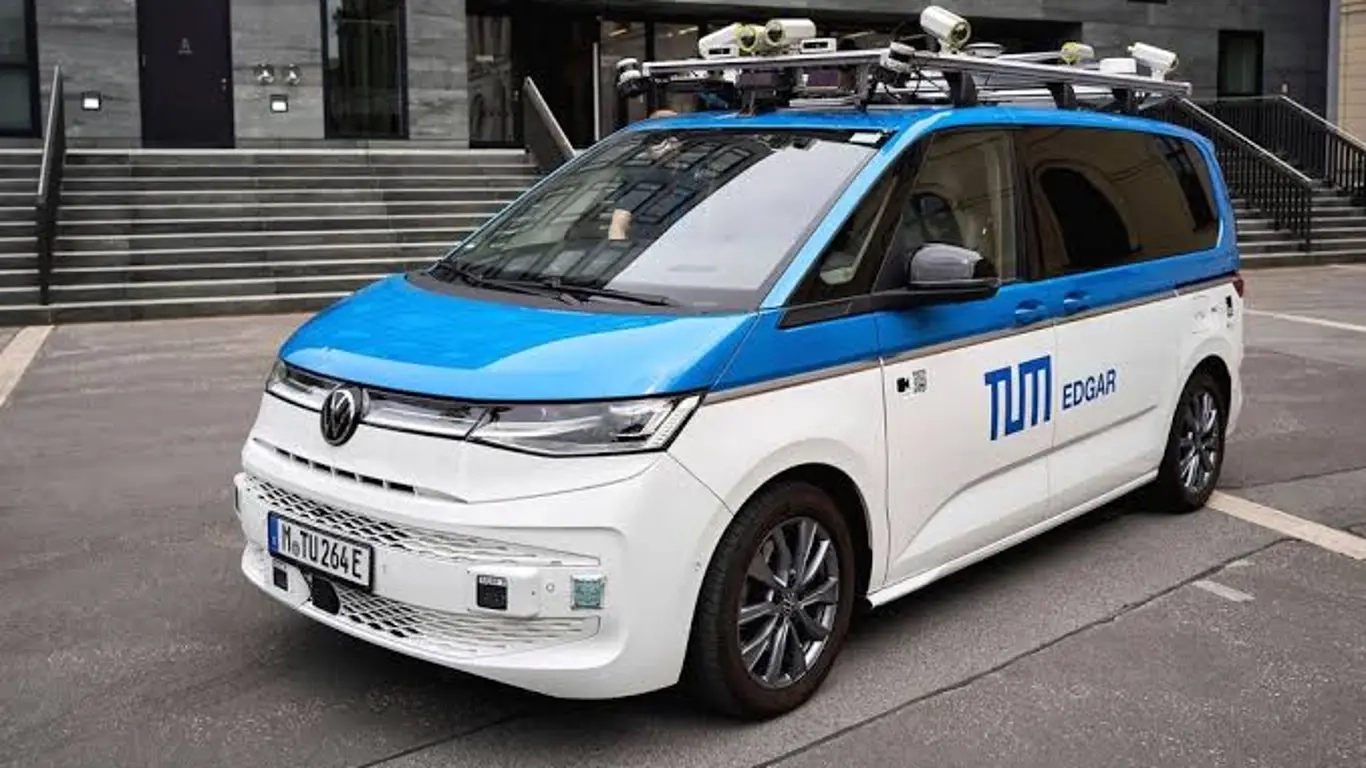
On June 11, 2026, a research vehicle named EDGAR — a Volkswagen T7 developed by the Technical University of Munich — drove autonomously from the Federal Ministry of Transport to Berlin’s Radialsystem venue. The route was run three times. Three independent TÜV-Verband inspector teams scored the car’s behavior using a freshly developed methodology. Results were presented at the TÜV MobiCon conference.
Here’s the part that matters. The news isn’t that a self-driving car made it from A to B through Berlin. Demos like that stopped being newsworthy a long time ago. The real news is different: Germany is finally testing a procedure that could let autonomous vehicles operate not on a closed track, but on specific streets in a specific district — with their actual traffic lights, lane markings, cyclists, construction zones and local driving habits.
Germany’s Level 4 approval scheme has two stages. First, the car passes a technical inspection and type approval. Then a separate authorization defines the operational design domain — the so-called Betriebsbereich where the vehicle can drive without anyone at the wheel. The real-world drive exists for one reason: so independent experts can see for themselves how the system perceives its surroundings, interprets situations and makes decisions.
“The Berlin real-world drive shows that autonomous driving is technically possible even in complex urban traffic,” said TÜV-Verband President Dirk Stenkamp. “But the safety of autonomous mobility is not decided by vehicle technology alone. It’s decided by how reliably a vehicle detects its surroundings, interprets traffic situations and reacts to different road conditions.”
EDGAR handled the route safely and reliably. Preliminary findings from the inspector teams — the methodology works. But that doesn’t mean the car is ready to move passengers without a driver. For full Level 4 clearance it’s still missing the main piece — a technical supervision system that can monitor the vehicle remotely and intervene when something goes wrong.
Then there’s the data question. TÜV-Verband insists that inspectors and regulators need non-discriminatory access to everything — software versions, updates, safety-relevant events, system operating parameters. Without that, an autonomous car becomes a black box. And its safety has to be taken on the manufacturer’s word. That’s not how any vehicle inspection works anywhere in the world.
For the robotaxi market this episode matters more than it looks. The US and China are playing the volume game — Waymo keeps expanding fleets, Chinese operators open new zones one after another. Europe has decided to play a different game: rules first, independent assessment, transparent data. Scale comes later.
To the average driver this news feels distant. But this is exactly where the future MOT for self-driving cars will come from. And the key point isn’t technical. Autonomous cars will have to prove not only that they can drive. They’ll have to prove they can be inspected.