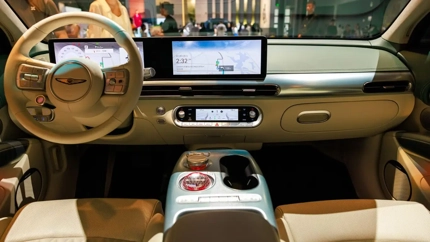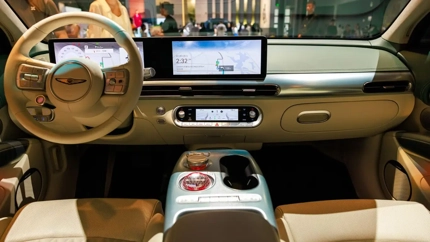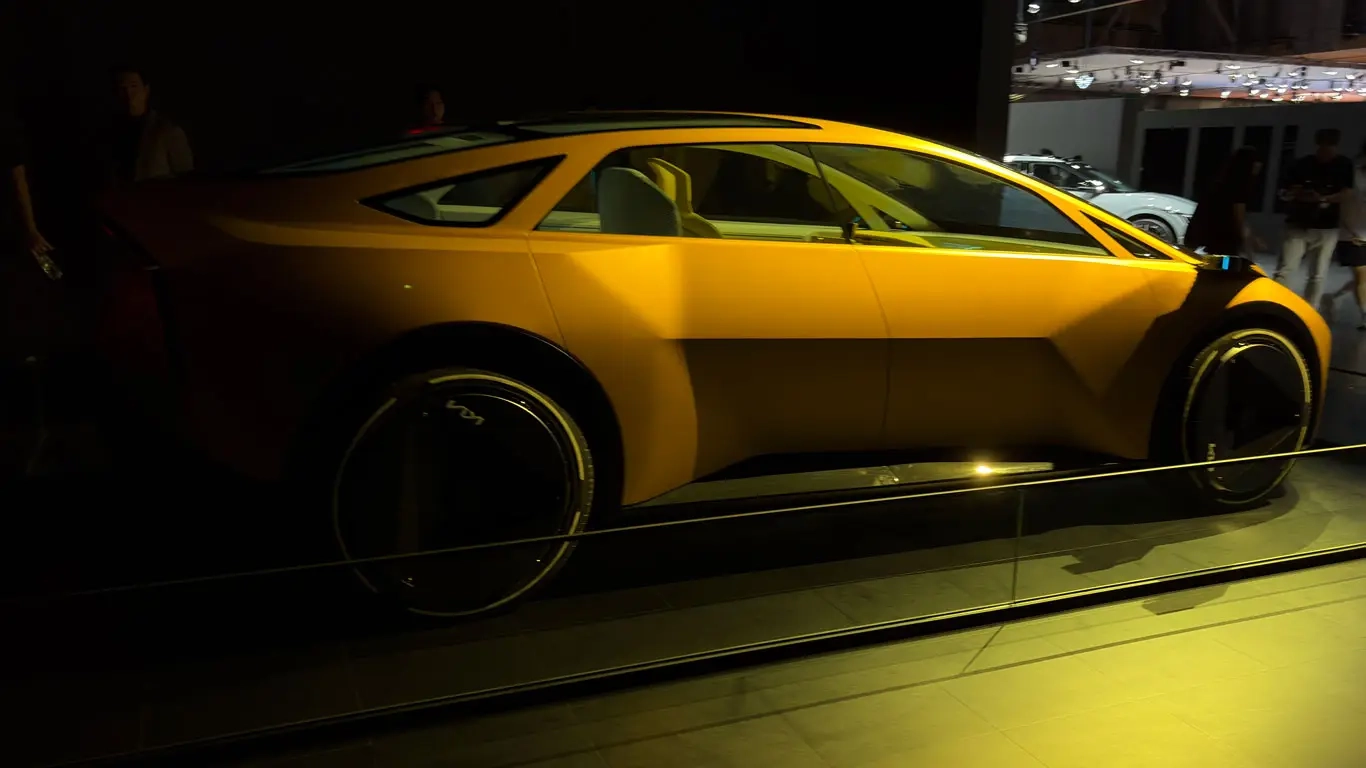

At the BIMOS 2026 show in Busan, Kia revealed the Vision Meta Turismo — a golden four-door concept that doesn’t look like a future showroom model. It looks like a car that fell out of a racing simulator. The concept had already surfaced in Korea at Kia’s 80th anniversary and later at Milan Design Week, but it’s in Busan that it became the headline magnet of the brand’s stand.
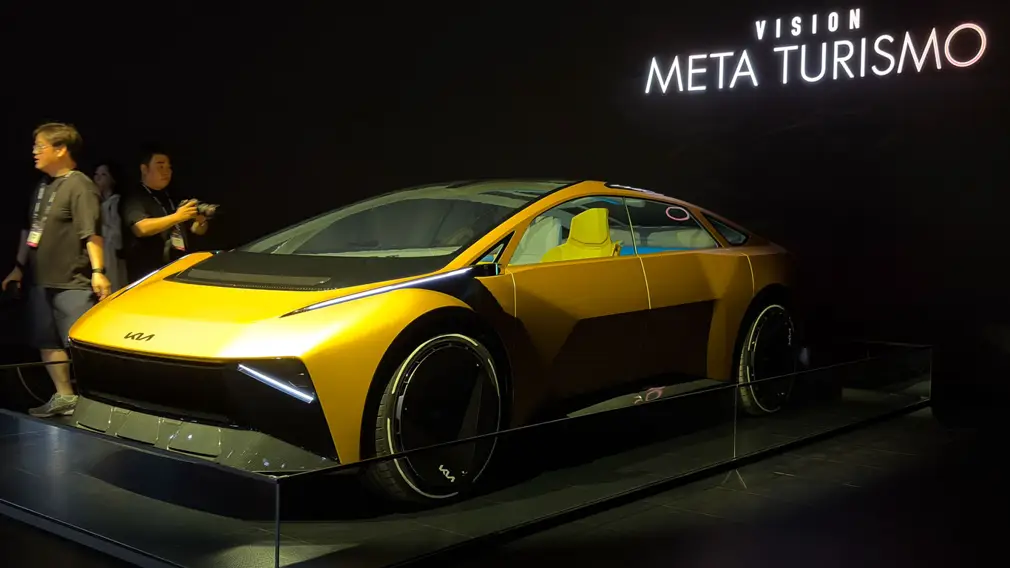
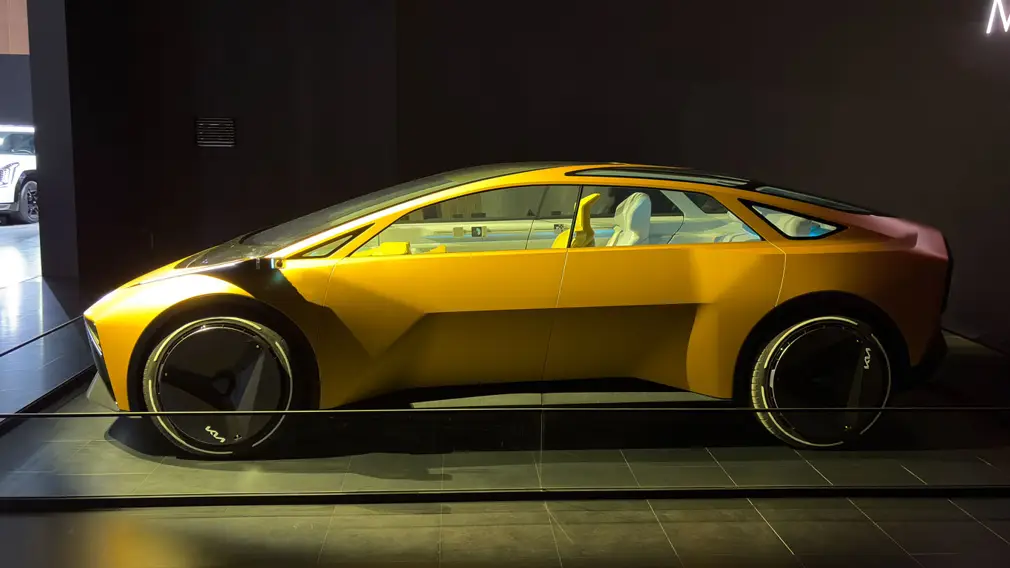
And here’s the most interesting part — there are no numbers. Not a single one. Kia is deliberately silent on power, battery capacity, range and acceleration. Instead of a spec sheet, it’s a new language for electric GTs: a forward-shifted cabin, enormous glazing, an almost wedge-shaped body, cameras instead of mirrors and oversized wheels with illuminated graphics. In the metal, the Vision Meta Turismo feels like a sharp break with the proportions of the EV6 and EV9. As if it came from a different brand entirely.
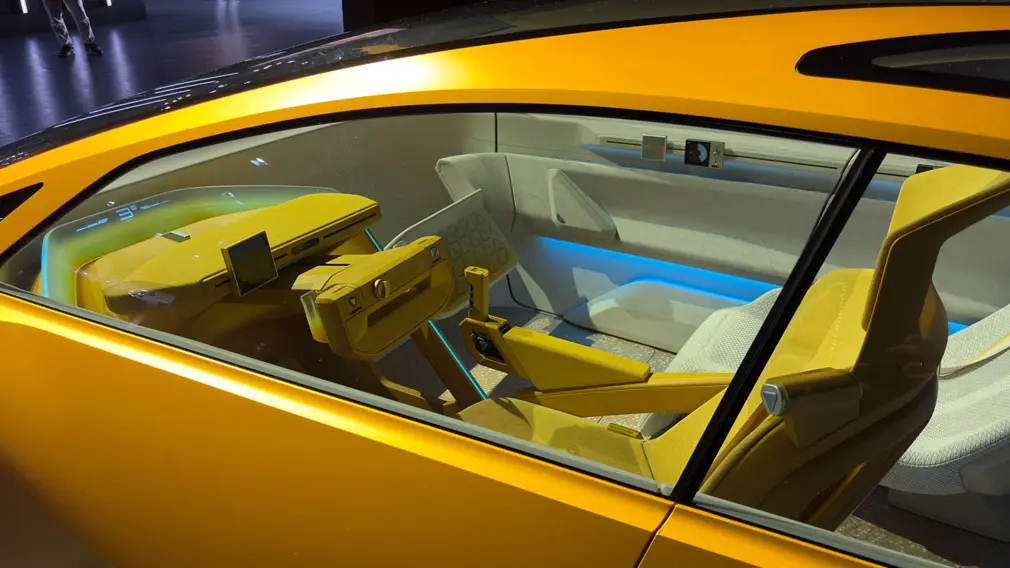
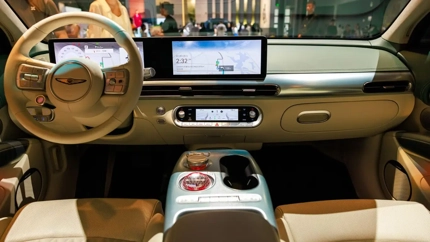
The cabin is even stranger. The driver gets a steering wheel that looks borrowed from a gaming console, a virtual gear selector shaped like a joystick and three separate modes: Speedster, Dreamer and Gamer. The first simulates emotional driving with launch control and GT Boost, the second leans on augmented reality for the city, and the third turns a parked car into a gaming hub — complete with sim racing on the windshield. The front passenger seat is built like a lounge capsule and can swivel when the car is stationary.
But the Vision Meta Turismo isn’t important as a finished car for the dealer floor. It’s a test of ideas. Kia is trying to give EVs back something they’ve lost — the sense of theatre. Not just getting from A to B quickly, but feeling an emotion, hearing a sound, playing a game, living a digital scenario. For a generation that grew up on virtual cars in Gran Turismo, that might matter more than any horsepower figure on paper. And it just might be how electric cars get sold from now on.