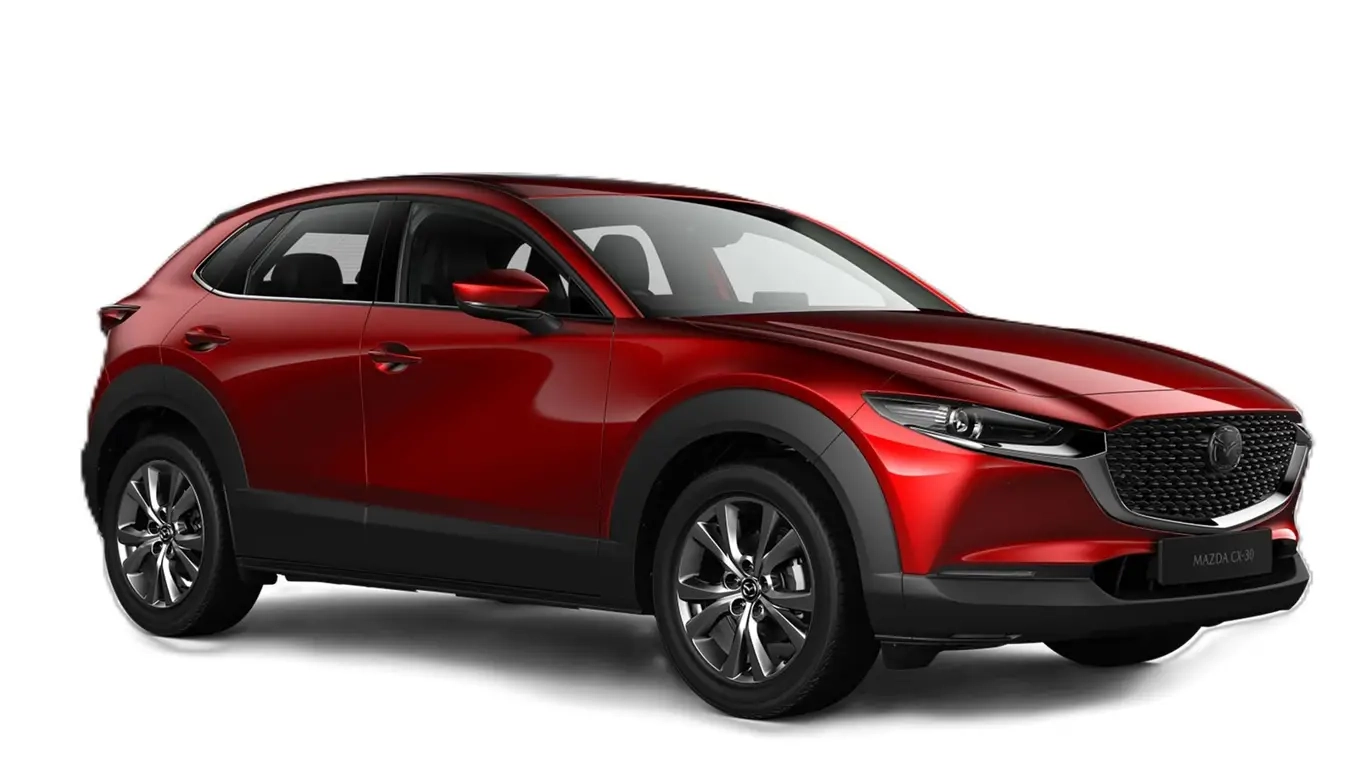

Indonesia has waited longer for this than it seems — and now it's happening. From July 29, 2026, the CX-30 stops being an import in the country. Mazda's first Indonesian assembly plant in Citeureup, West Java province, starts production with an initial capacity of 475 cars a month. Not much? Maybe. But for Mazda, this is a fundamentally different story.
The line's annual ceiling is 5,700 cars, at a pace of up to three vehicles an hour. The plant is called Mazda Indonesia Plant, and here's the interesting part: Mazda didn't build it. Spanning 6.2 hectares and costing 400 billion rupiah — around 22.1 million dollars — it's run by PT Eurokars Motor Indonesia and its production arm, PT Eurokars Produksi Pratama. The Japanese side supplied equipment, trained staff, sent technical documentation, and ships parts — but the partner put up the capital. It's a lean-asset approach: localization without Mazda building its own capital-heavy factory.
Until now, every Mazda sold in Indonesia arrived fully built from Japan, Thailand, and Malaysia. The official price of the imported CX-30 in Jakarta starts at 585.5 million rupiah — roughly 32,400 dollars. And here's the real intrigue: Mazda hasn't said what the locally built car will cost. So celebrating a price cut is premature — localization doesn't always mean a cheaper sticker price.
Mazda Senior Executive Officer Toru Nakajima laid out the stakes clearly: Indonesia is the brand's fourth-largest market by sales in ASEAN, behind Vietnam, Malaysia, and Thailand. “Local production of the CX-30 is an important step that will support sustainable growth,” he said.
5,700 cars a year isn't a bid to build an export hub — it's a targeted move for one specific market. Mazda hasn't said anything yet about building other models, the share of local components, or shipments beyond Indonesia. There's only one real test left for this project: the price of the locally built CX-30, and which imported parts actually got swapped for Indonesian ones.