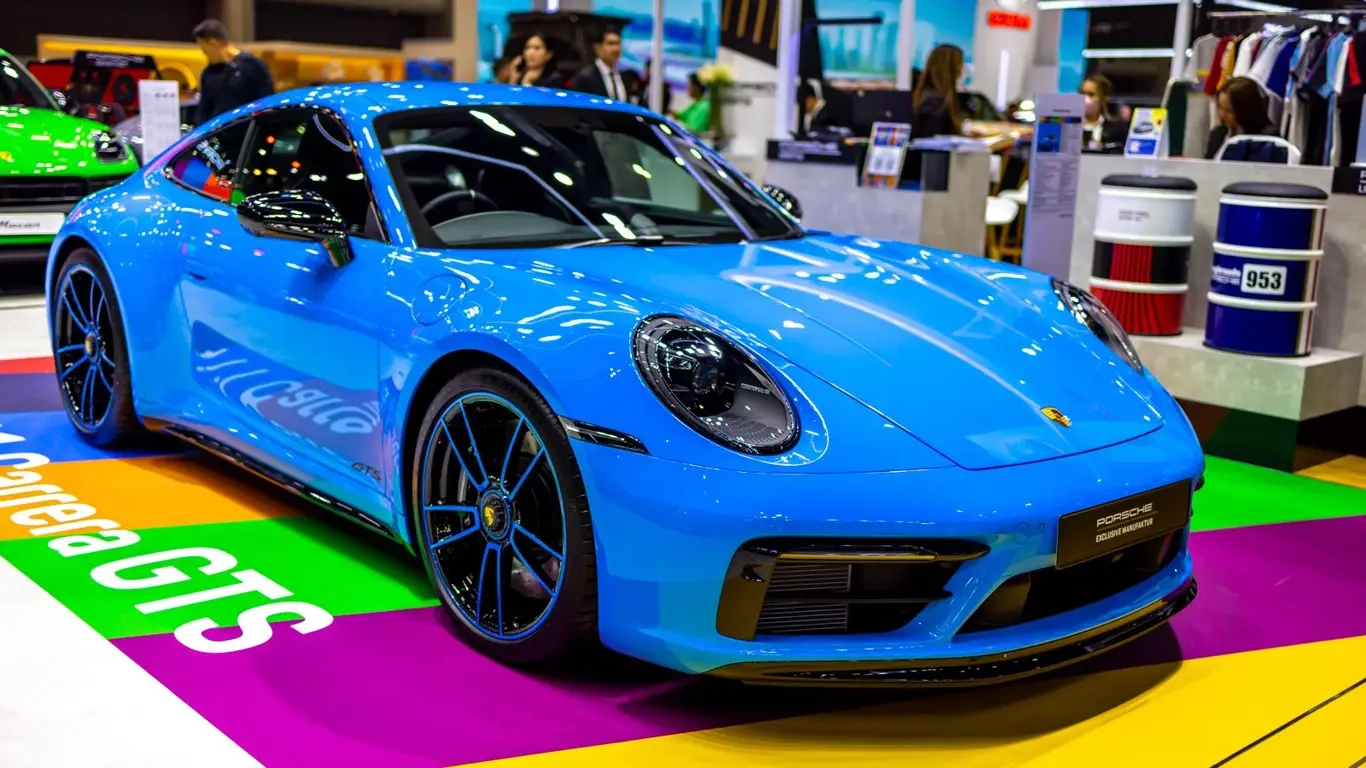

Porsche has no intention of rushing the 911 into an electric future. While the Macan and Cayenne already offer electric versions, and the upcoming 718 Boxster and Cayman will also switch to batteries, the brand's flagship sports car is taking a different route—one that sticks with internal combustion and hybrid assistance.
Porsche believes a full EV transition for the 911 is too risky at this point. The model's appeal isn't just about acceleration and numbers; it's rooted in the sound of the flat-six engine, throttle response, and the feeling of mechanical connection. Instead of a large battery, the company is developing T-Hybrid: a compact high-voltage battery and an electric motor that sharpen throttle response, reduce turbo lag, and add torque where needed, without turning the 911 into a silent EV.
Daniel Schmollinger, a representative of Porsche Cars Australia, confirmed to Carsales that a fully electric 911 won't arrive until at least the end of the decade. The first electric two-door Porsche will be the 718, while the 911 “remains what it is.” For buyers, this sends an important signal: the company won't force its entire lineup into one format while some customers aren't ready for EV infrastructure and habits.
Porsche already has EV experience, but the 911 is a special case. The Macan Electric targets crossover buyers who value technology and daily usability. The electric 718 will venture into the compact sports car segment. The 911, however, is handled more cautiously because its audience is more attached to tradition and residual value.
For those who want an electric 911 right now, there's an unofficial route. British company Everrati converts classic 911s to electric power, fitting a motor and a 53 kWh battery, promising around 241 km of range and fast charging. But the price starts at roughly £250,000—about $337,000 or 26.7 million rubles—and you need to provide a donor car separately.