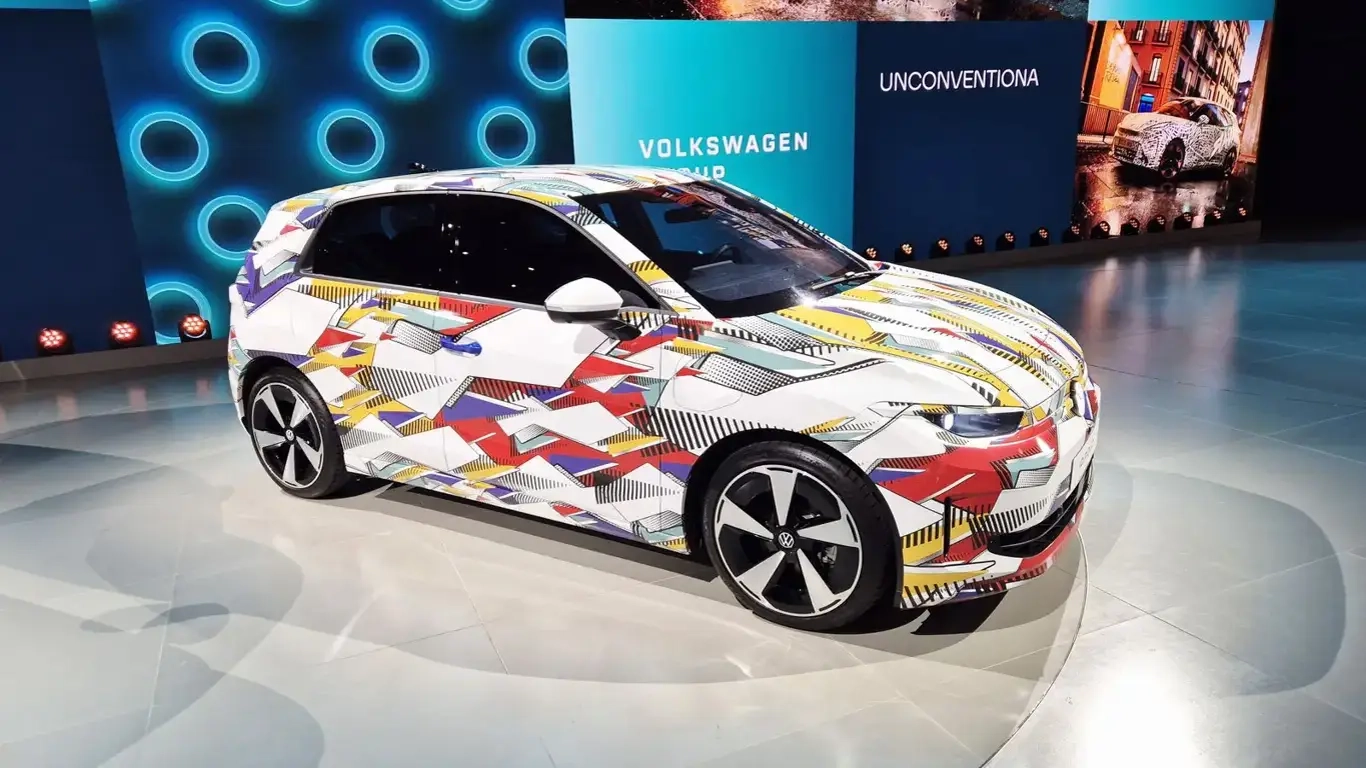

Germany couldn’t afford it. The most anticipated launch of the year inside the Volkswagen Group is being shipped off to Spain — and at this point it’s less logistics, more verdict. Today, in Martorell, at the Seat plant, the first compact EVs of an entirely new family are rolling off the line: the ID. Polo and the Cupra Raval. With them, VW is finally taking aim at the mass-market segment of affordable EVs.
And there’s more on the way. Pamplona will add two more siblings before the year is out — the VW ID. Cross and the Skoda Epiq. The base ID. Polo is promised at under €25,000 (roughly $29,100). The Cupra Raval will land a thousand euros above that. But there’s a catch, and it doesn’t favor the buyer: at launch, only the pricier versions will be available — the ones with the big battery and a sticker above €30,000 (around $35,000). The cheaper, small-battery trims won’t open for orders until July, and ID. Polo deliveries don’t start until September.

Volkswagen isn’t first to this party — and the room is already crowded. Renault is preparing the Twingo at around €20,000. The Dacia Spring, the Leapmotor T03 and the Citroen e-C3 are playing even lower. But analysts argue VW hasn’t missed its window: demand for EVs is climbing, expensive fuel and fresh subsidies keep nudging buyers toward electric.
VW and its suppliers have poured roughly €10 billion into the Spanish project. The Martorell retooling alone has cost €3 billion since 2023. The factory will be capable of building up to 300,000 EVs a year.
And the real point of the move to Spain is one word: price. Germany simply can’t build a car like this at the cost it needs anymore. So the new affordable Volkswagen is being born where energy is cheaper, labor is cheaper, and where the state still pays to keep electrification alive.


