
Did you know that some cars have name doppelgangers? Not relatives, not platform clones — just total namesakes born on different continents under entirely different philosophies. Autoevolution rounded up five such pairs from American and European classics: machines that wore identical badges without sharing a single nut and bolt.
The most striking case? Hornet. Britain’s Wolseley slapped the name on a light six-cylinder saloon back in 1930, then revived it in 1961 for an upmarket version of the Mini. In the U.S., though, Hornet thundered differently: in 1951 the badge went on a Hudson — and that car barged its way into early NASCAR. Low center of gravity, 5.0-liter inline-six, and victory after victory over far more powerful V8s.
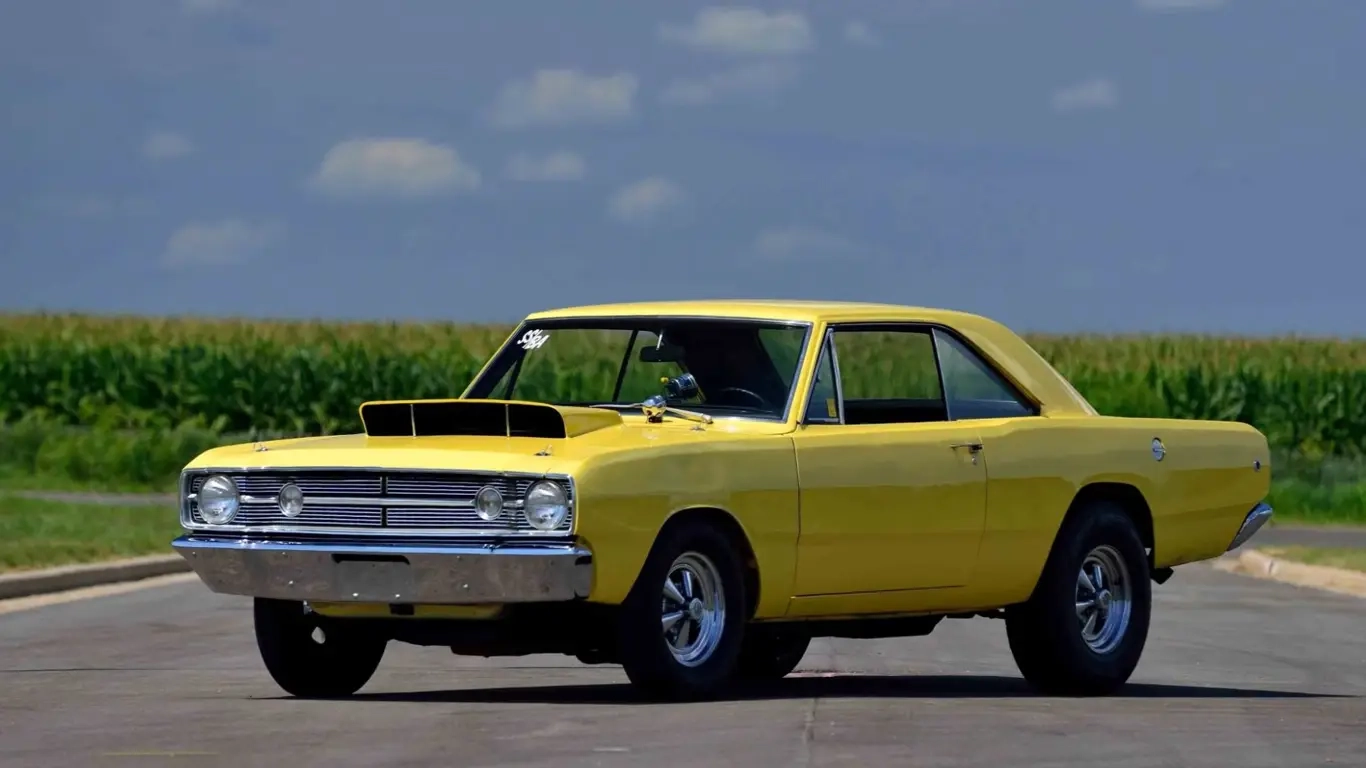
With Dart, things got tense fast. Chrysler had locked the name down for Dodge in advance, so when Daimler proudly unveiled its sports car — also called Dart — at the 1959 New York Motor Show, the ultimatum came down hard. The Brits had to rename the car SP250 on the spot. Did it help? Not really. The public still remembers it as the Daimler Dart. Meanwhile, Dodge’s own Dart took off from 1960 as a full lineup, including the legendary Max Wedge and HEMI Super Stock drag weapons.
Monte Carlo is another tale of two worlds that never crossed paths. From 1970, Chevrolet built its Monte Carlo into a muscular personal luxury coupe. Lancia answered with a mid-engined Montecarlo — deliberately spelled as one word to dodge a fight with the Americans. In the U.S., the Italian was rebadged as the Scorpion. And here’s the twist: that very same “little Lancia” later morphed into the rally-bred 037, the one that took Group B by the throat.
Diplomat? Another double life. At Opel, it was the flagship — American V8 under the hood, German prestige in the cabin. At Dodge, it was the pricier sibling of the Aspen, soldiering on all the way until 1989. And Fiesta played the inversion game: long before Ford’s European hatch, the name belonged to two Oldsmobile models — including a limited 1953 convertible built in a run of just 458 cars.
Today, these coincidences are nothing more than collector curiosities. But they reveal something about the old auto industry: names were picked by sound, by status, by gut feeling. Global legal risks barely registered. These days, a good badge gets scrutinized almost as thoroughly as a platform or an engine.
And sometimes the name outlives the car itself. Fiesta became Europe’s people’s hatchback. Dart remains an American Mopar icon. And Hornet still sounds sharper and faster than half the modern indexes made of four letters and a digit.