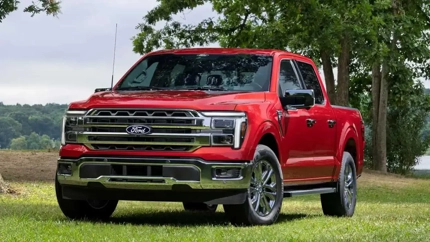

Ford has figured out how to learn what might break in your car before you even reach the shop. The automaker has filed a patent application for an AI-driven system that prepares a vehicle for repair before it arrives. The filing was registered on January 10, 2025, and published in the US on July 16, 2026. One important caveat up front: this is an application, not a granted patent, and certainly not a finished feature for production cars.
Here’s how it’s supposed to work. The moment an owner books a service appointment, the algorithm kicks in and pulls together everything it can: model, age, mileage, engine and transmission type, and diagnostic trouble codes from the past 30 days. Not enough? The system can go further and analyze customer comments, or even a transcript of the conversation with a service advisor.
Then comes the interesting part. The trained model cross-references all that data with the history of previous repairs and tries to figure out which part — or bundle of related components — is likely needed. If the part isn’t in stock at the service center, the system can place an order with a supplier on its own. Two to five days before the scheduled visit.
This isn’t about predicting a sudden breakdown. It’s about cutting downtime. Right now, a car often gets checked in, the fault only gets fully diagnosed on site, and the needed part simply isn’t on the shelf — so the repair drags on for days, sometimes weeks. Ford wants to have the likely parts kit delivered ahead of time to avoid exactly that.
But don’t mistake the algorithm for a fortune teller. The application itself explicitly calls the system’s alerts and recommendations “suggestions,” not a diagnosis: it forecasts a likely part number based on trouble codes and problem descriptions, nothing more. What happens if the pre-ordered part turns out to be the wrong one, or a different part is needed after inspection, isn’t spelled out in detail in the filing.
Ford also notes separately that patent applications protect ideas and don’t reflect binding product plans. So when the system might actually arrive, which models will support it, and what it might cost all remain unknown — apparently even to Ford itself.