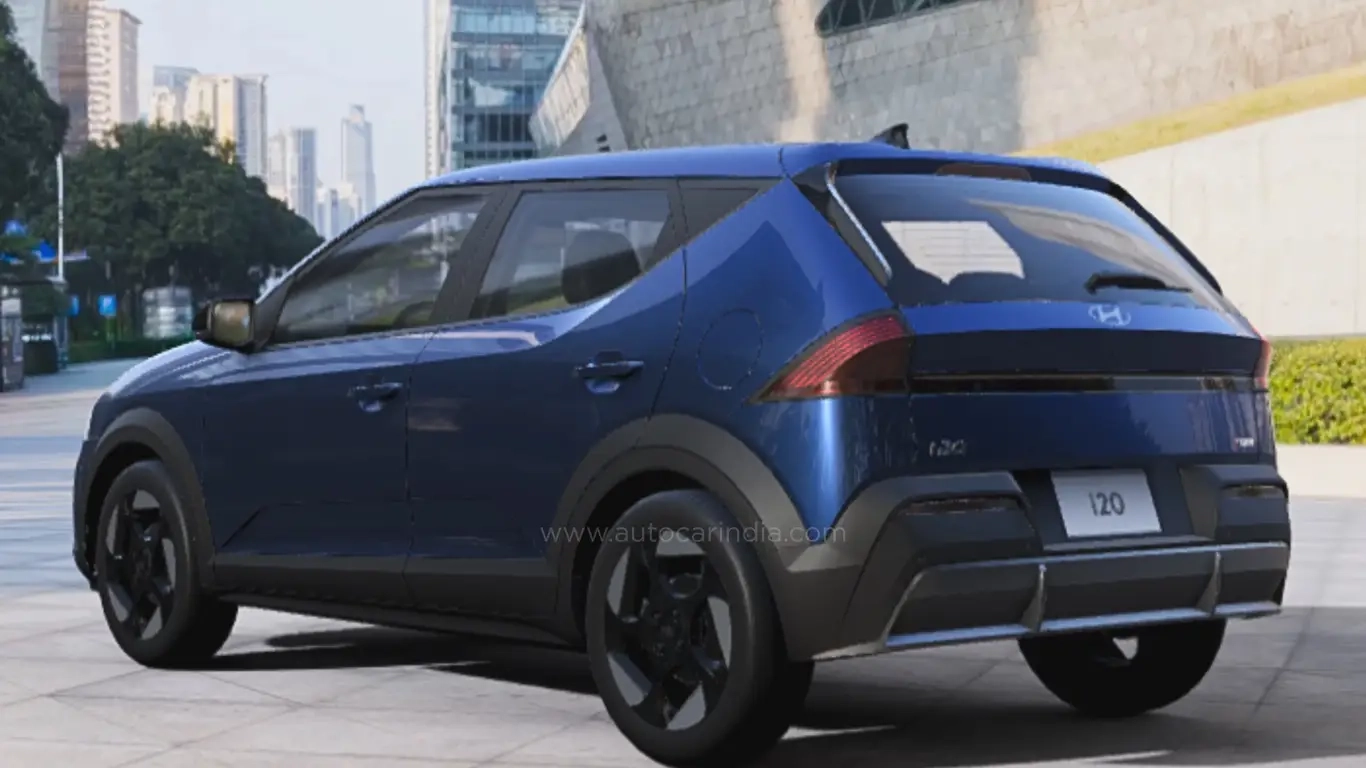

Hyundai pulled off something few people saw coming: it has turned its flagship hatchback into something that walks and talks like a crossover. Images of the all-new fourth-generation i20 have slipped out ahead of the global premiere in Brazil, and the old car’s low stance and sharp lines are simply gone. What we have now is a compact hatch with crossover-style cladding, big wheels and a noticeably more practical boot.
At the front, the new i20 gets a light bar tied into Y-shaped DRLs, two-tier pixel-style LED headlights and a redesigned bumper with a heavy black lower section. There’s also a clearly visible ADAS radar in the shots — meaning the assist suite is set to be far more serious than the current car’s. From the side, the 17-inch two-tone wheels jump out, along with thick black cladding on the arches and doors. At the rear, a slim LED bar links the C-shaped tail lights.
Dimensions haven’t been confirmed, but Autocar India reports that the fourth-gen i20 is likely to be bigger than its predecessor. The boot figure is already locked in — 346 litres. That’s 35 litres more than the current India-spec i20. For a small hatchback, that’s a serious bump: Hyundai is openly trying to keep buyers who eye compact SUVs but aren’t ready to pay full crossover money.
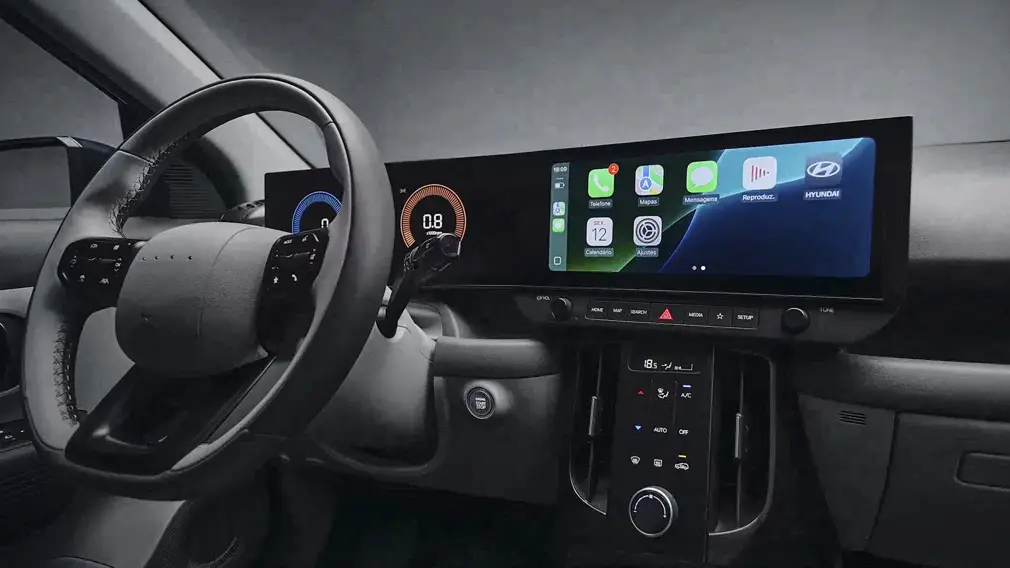
The cabin moves closer to the latest Hyundai and Kia models. Ahead of the driver sits a curved panel housing a 10.25-inch digital cluster and a larger infotainment screen, expected to measure 12.3 inches. The steering wheel is new — three-spoke, with an illuminated Morse-code “H” logo and paddle shifters. The climate panel has gone vertical, with touch buttons and a dedicated rotary dial for fan speed. In the back, there’s a 60:40 split bench, adjustable headrests and three-point belts for every passenger. The one letdown? No centre armrest.
Engine details are still under wraps. The i20 is expected to keep the 1.2-litre naturally aspirated unit with 84 hp and the 1.0-litre turbo with 120 hp; in some markets a 100-hp version may also be available. Hyundai is also developing a new 1.2-litre turbo, but whether it lands under the i20’s bonnet is still an open question.
For Brazil, five trims have been announced: Comfort, Limited, X Line, Platinum and Ultimate. The real intrigue is India. If the new i20 makes it there, it’ll have to fight not only the Baleno and the Altroz, but the entire small-SUV craze that has already rewritten the market.
Hyundai didn’t just refresh the i20. The Koreans built a hatchback aimed squarely at making buyers pause for one more minute before walking into an SUV showroom. Whether it works — we’ll find out very soon.